sutikshan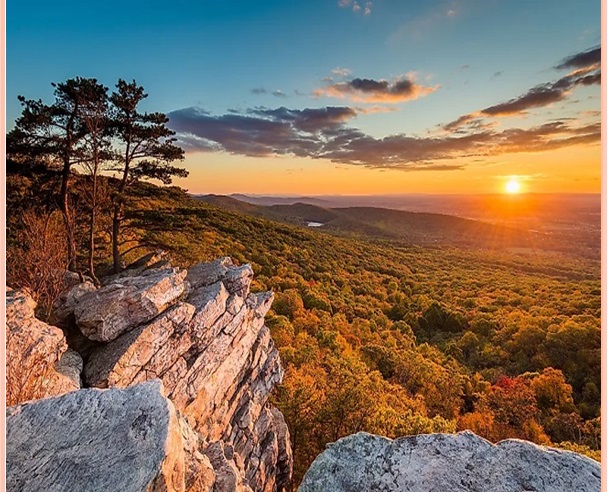
Appalachian Mountains range
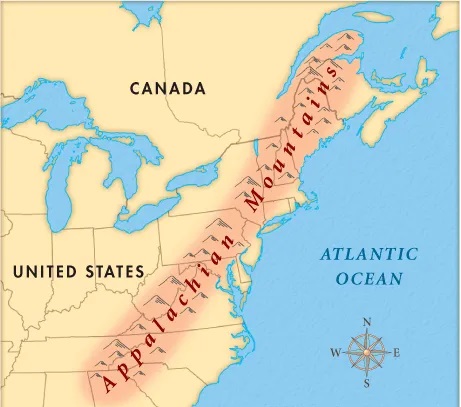
The Appalachian Mountains range is a series of mountain ranges that stretches from the eastern to the northeastern part of North America. The mountain is on the eastern side of the Rocky Mountains. The Appalachian Mountains extend for about 2896 km from the Central Alabama region in the United States to the Canadian province of Newfoundland and Labrador. These mountain ranges form a natural boundary between the eastern Coastal Plain and the Interior Lowlands of North America. The range is a popular tourist destination and is home to many ski resorts. The Appalachian Highland is also home to some of the most rugged terrain in the eastern United States and is known for forestry, farming, and is home to many different types of wildlife.
Geology of the area
Appalachian Mountain Tectonic Plates are involved in the plate tectonics that make up the Earth’s crust. Mountains are regarded as the oldest mountain chain on Earth. Research revealed that mountains were formed approximately 480 million years ago during the Ordovician period. At this time, the ancient Iapetus oceanic plate began to subduct beneath the North American Plate, leading to a period of mountain-building, known as the Taconic orogeny, which resulted in the formation of the Appalachian Mountains. Over the next 250 million years, the region experienced a series of mountain-building processes, including the Alleghenian, Acadian, Caledonian, and Hercynian orogenies.
The southern and central regions of the Appalachian Mountains are known for their coal deposits, mainly bituminous and anthracite coal. Petroleum, natural gas, and minerals like iron and zinc have also been found in the region.
Appalachian Mountains range has a deeply rugged topography due to fluvial action and relatively low elevation, reaching its highest point on Mount Mitchell at 2,037 m. Evidence of Pleistocene glaciations has been found in the northern part of the Appalachians, such as the Great Lakes. It is revealed in research that the Appalachians were initially as high as the Alps and the Rocky Mountains, but natural erosion eventually led to a reduction in the height of the mountains.
Sedimentary deposits in the Appalachian Range vary from Paleozoic rocks in the north to metamorphic and granite in the south (Blue Ridge). The features reveal that the Blue Ridge Mountains were formed before the northern part of the Appalachian Range. The Appalachian Mountain system can be divided into three large physiographic regions. See the Appalachian Mountains Map.
North Appalachian mountain range
The Appalachian mountain stretches from the Newfoundland and Labrador province in Canada to the Hudson River in New York. The mountain ranges that are found in the northern region include the Annieopsquotch Mountains, Long Range Mountains, Chic-Choc Mountains, and Green Mountains.
Also read- Geotourism And Modern Geotechniques
Central Appalachian mountain
The central region extends from the Hudson Valley to the New River, which flows through the US states of Virginia, West Virginia, and North Carolina. The Central section includes the Taconic Mountains, the Great Appalachian Valley, the New York Jersey Highlands, and a Major part of the Blue Ridge Mountains.
South Appalachian mountain range
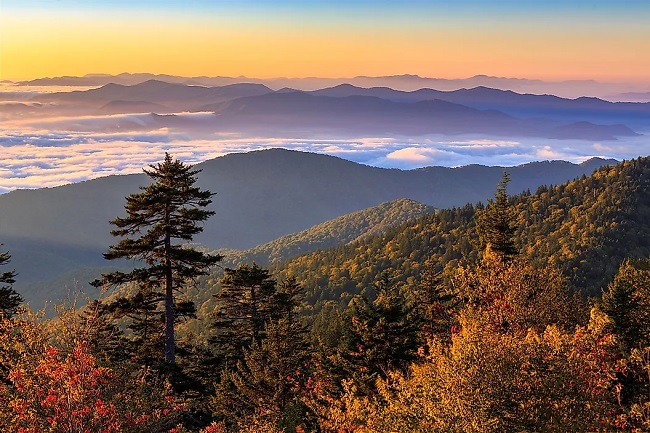
The southern section includes the Cumberland Plateau, the Ridge and Valley Appalachians, and the rest of the Blue Ridge Mountains. The highest mountain peaks in the southern section of the Appalachians include the peaks of the Black Mountains in North Carolina and the Smoky Mountains of Tennessee and North Carolina.
Famous mountain ranges in Appalachian
Smoky Mountains
The Smoky Mountains consist of Layers of limestone that were added to already existing sedimentation at the beginning of the mountain formations around 300 million years ago. The mountain structures grew to great elevation with the shifting and tilting of the underlying metamorphic rock. Erosion plays an important role in the formation of mountains. Most of the rocks in the Smoky Mountains date to the Precambrian Age.
Also read- The Spectacular Niagara Waterfalls and its Geology
Blue Ridge Mountains
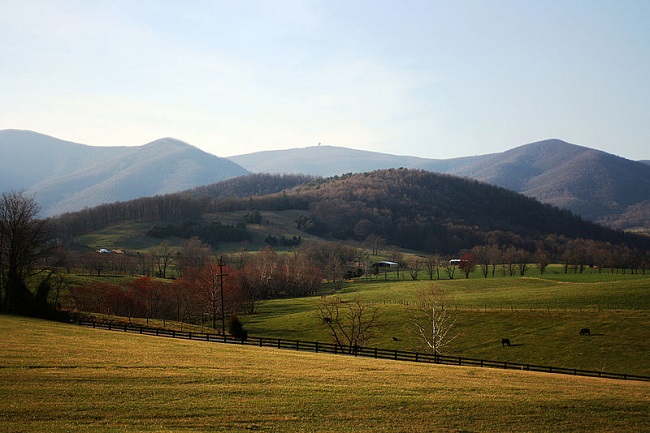
The Blue Ridge of the Appalachian Mountains is remarkably uniform in shape and elevation. The Blue Ridge Mountains have a crystalline foundation, and their basement comprises gneiss and schist transformed from volcanic rock. This indicates that volcanic flow may have been partly responsible for the formation of these mountains.
Appalachian Mountain Trail
The Appalachian Mountain Trail is a 2400 km hiking trail that runs from Georgia to Maine. The Appalachian Mountains are made up of many different types of rocks and are some of the oldest mountains in the world. The Trail is a long and difficult hiking trail, and one of the most beautiful trails in the United States.