sutikshan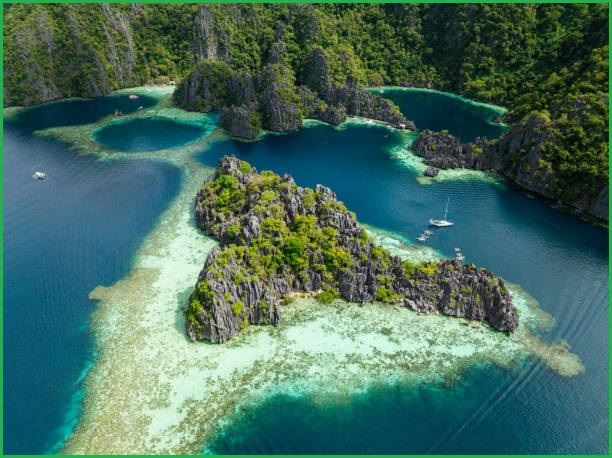
Twin Lagoon (Coron)
Twin Lagoon is one of the top three must-visit spots on an island-hopping tour from Coron, along with Kayangan Lake and Barracuda Lake, and it stands out as one of the best experiences in the area. Unlike the other two, Twin Lagoon is mostly filled with saltwater, as it is connected to the sea, and even early in the morning, the water remains pleasantly warm. Over thousands of years, natural erosion has sculpted the towering limestone cliffs, forming two stunning lagoons divided by a narrow rock wall.
Twin Lagoon is one of the top attractions in Coron, featuring two breathtaking lagoons set in an incredibly picturesque setting, ideal for swimming. These twin lagoons are divided by a narrow limestone cliff, and visitors can move between them via wooden steps during high tide or by swimming through a natural opening beneath the cliff at low tide. It’s a place so surreal, it hardly feels real.
Coron Island
Twin Lagoon is located in Coron Island, Palawan, Philippines. Coron is the third-largest island in the Calamian archipelago of northern Palawan, Philippines, and forms part of the municipality that shares its name. Located about 310 km southwest of Manila. Owing to its rich ecological significance, the entire area is protected under various legal designations. The island and its surrounding fishing grounds belong to the ancestral domain of the indigenous Tagbanwa people.
Coron Island, situated between Busuanga and Culion Islands, faces the Sulu Sea and forms the eastern boundary of Coron Bay. It stretches roughly 20 kilometres from north to south and reaches about 9 kilometres at its widest point. Geologically, the island is part of the North Palawan Block and is notable for its Late Triassic Coron Limestone formation.
The island’s rugged landscape is dotted with 15 lakes, three of which are connected to the sea through underground channels. Coastal areas are also lined with patches of mangrove forests.
What is a Lagoon and an Atoll
A lagoon is a shallow body of water separated from a larger body of water (usually the ocean) by a natural barrier like a sandbar, coral reef, or barrier island. Lagoons are often brackish and are classified into coastal lagoons and atoll lagoons, typically found in tropical regions.
Also read- The Philippines’ Magical Agno Umbrella Rocks: A Coastal Treasure
Twin Lagoon from above, spotting a breathtaking Atoll reef tucked beside the cliffs. Coron is home to its own Blue Hole—reminiscent of the one in Belize—, and its aerial view is nothing short of extraordinary.
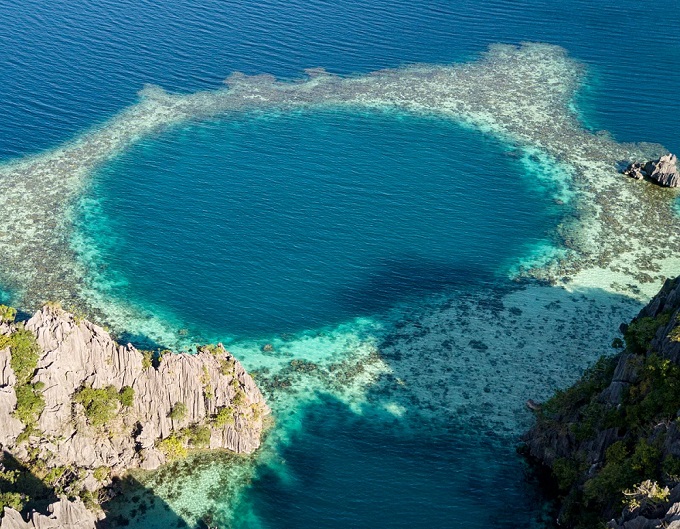
An atoll is a ring-shaped coral reef, island, or series of islets that encircles a lagoon, partially or completely. Found in warm tropical oceans, these structures form over millions of years as coral grows around a lagoon, leaving only the reef remaining.
Shipwreck Sites
The areas surrounding several shipwrecks feature striking rock formations that create excellent snorkeling spots, with underwater visibility reaching up to 24 meters. The waters here are typically calm, making exploration even more enjoyable.
Also Read- Geotourism And Modern Geotechniques
Coron is especially famous for its world-class wreck diving. Its renowned dive sites range from shallow depths of around 6 meters to deeper areas of up to 46 meters. Notable wrecks in Coron Bay include the Akitsushima, Irako, Kogyo Maru, Kyokuzan Maru, Okikawa Maru, Olympia Maru, SS Morazan, Terukaze Maru, and the Lusong Gunboat.
Twin Lagoon can get surprisingly crowded; despite its size, just a few tour groups can make it feel like rush hour. We arrived at 7:30 AM and enjoyed a full hour of swimming in complete solitude—pure bliss.
How to Reach Twin Lagoon (Coron)
To reach Twin Lagoon, fly into Francisco B. Reyes Airport and travel onward to Coron Town. From there, join an island-hopping tour—A private trip. Boats will take you to a docking area, and you can enter the inner lagoon by swimming through a narrow crevice, climbing a ladder at high tide, or paddling in by kayak.