sutikshan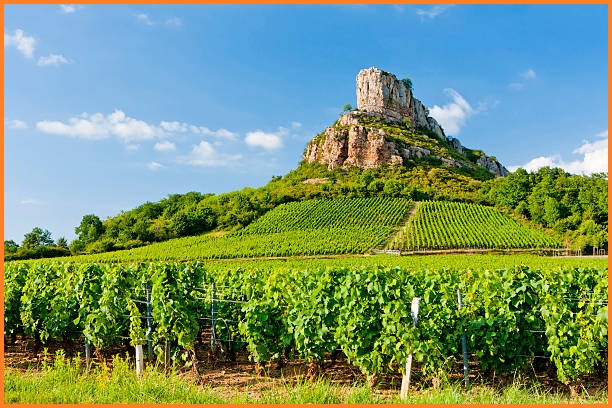
Rock of Solutré
The Rock of Solutré is a striking limestone escarpment located about 8 km west of Mâcon, France, overlooking the village of Solutré-Pouilly. It stands as one of the most iconic landmarks in the Saône-et-Loire department within the Bourgogne-Franche-Comté region.
The site is protected under the French national heritage initiative. The remarkable outcrop is a rare geological formation, a significant prehistoric site linked to the Solutrean Paleolithic culture, and home to the unique “pelouse calcaire” grasslands at its summit, rich in distinctive flora and fauna. With evidence of human presence dating back at least 55,000 years, it also lies within the renowned Pouilly-Fuissé wine region. The site gained widespread attention in the 1980s when French President François Mitterrand began his annual tradition of climbing the peak.
Geology
The iconic limestone escarpment forms when the region was submerged under warm seas during the Mesozoic era, reflected in the abundance of fossils found today. The Rock of Solutré, along with its neighbor, the Rock of Vergisson, originated from fossilized coral plateaus that formed around 160 million years ago in these ancient waters.
In the Cenozoic era, eastern Burgundy was shaped by the uplift of the Alps. As the mountains rose, the Saône basin subsided, while plateaus to the west were elevated and gradually tilted eastward.
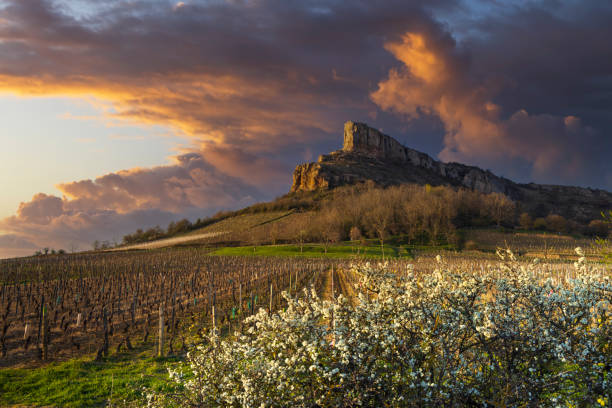
These contrasting geological processes led to uneven erosion across the landscape. Softer surrounding areas wore down into gentle, rolling hills, while the more resistant formations of Solutré and Vergisson remained as prominent monadnocks on the western side, standing in smoother slopes to the east.
Also read- La Paz Sand Dunes Philippines: Thrilling 4×4 Rides & Epic Views
The rock features a diverse and striking landscape, ranging from its rugged summit to its sweeping grassy slopes. To the east, the Saône plain stretches out, offering views of the Mâconnais in the foreground, followed by the regions of Ain and Dombes, with the Alps and even Mont Blanc visible on clear days.