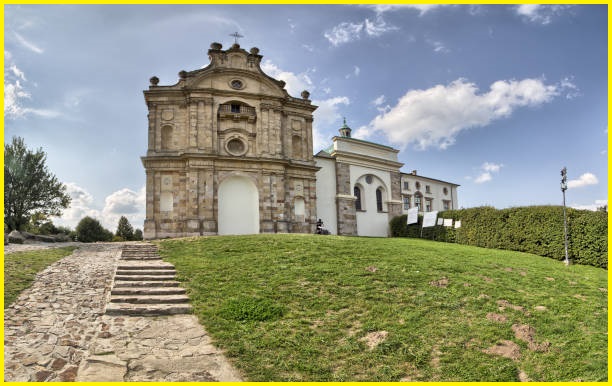
Świętokrzyskie Mountains: Poland’s Geologic Heritage

The Holy Cross Mountains Geopark

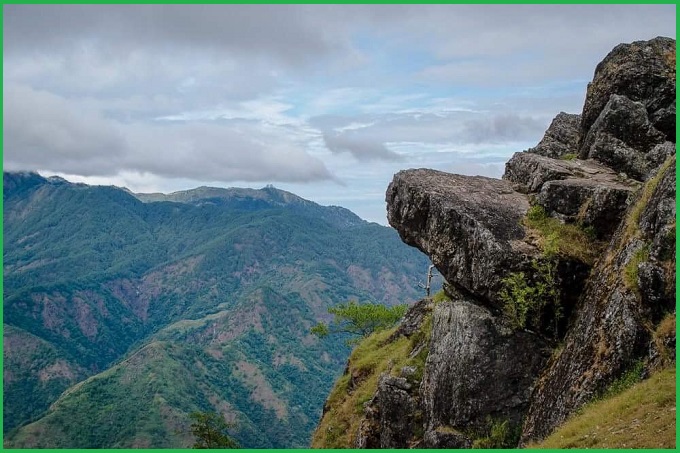
The Holy Cross Mountains Geopark is situated in Poland, specifically in the western part of Świętokrzyskie. Situated in the Świętokrzyskie Mountains, Poland’s oldest mountain range, the Holy Cross Mountains Geopark spans five communities. It boasts remarkable geo-diversity and rich cultural heritage, featuring attractions such as Paradise Cave adorned with stalagmites and stalactites, an active quarry of Upper Devonian limestone, the Royal Castle in Chęciny perched on a rocky hill, numerous church and monastic complexes, several Centers for Geological Education, fascinating museums, and more. Dating back 400 million years, its rock formations provide insights into both natural and cultural histories. The Holy Cross Mountains Geopark in Poland has earned the prestigious UNESCO Geopark Label, marking it as the first entirely operated within Poland.

The name “Holy Cross Mountains” derives from a Christian relic housed in a nearby Benedictine monastery on Łysa Góra, reputed to be a small piece of wood from the Cross on which Jesus Christ was crucified. The Geopark serves as an inviting destination for outdoor enthusiasts, showcasing stunning landscapes, numerous historic landmarks, and intangible cultural treasures. The Holy Cross Mountains Geopark stands as a true geological gem, promising a wealth of exploration and discovery.

Also, read- An Ice Town in Foot Hills of Tatra Mountain-Zakopane Poland

Key geological features of the Geopark include:

Outcrops showcasing interesting formations of middle and upper Devonian limestones.

Outcrops of tectonic forms that represent Caledonian, Variscan, and Alpine movements.

Hydrothermal veins contain calcite, barite, galena mineralization, and deposits of copper ore.

Numerous remnants of historical mining and quarrying, document the history of human activity within the region.

Numerous karst forms represent the Permian-Triassic and Cenozoic terrestrial periods. Apparent correlations between geological structures and morphology, known as structural morphology.

Rocky formations and limestone crags on hill ridges.
Świętokrzyskie Mountains

Świętokrzyskie Mountains

The Świętokrzyskie Mountains stand as one of Europe’s most ancient mountain ranges, their formation dating back to the Caledonian orogeny of the Silurian period and later rejuvenated during the Hercynian orogeny in the Late Carboniferous period. This region was once situated on the southern coast of the ancient supercontinent of Laurasia. The earliest evidence of tetrapods, dating back 395 million years, has been discovered in fossil footprints found in Zachełmie. These rocks originated from a marine tidal flat or lagoon.

Moreover, the mountains have yielded the oldest known evidence of Dinosauromorpha, indicating the presence of small, four-legged animals during the Early Triassic period around 250 million years ago, shortly after the Permian–Triassic extinction event when the environment was still in flux. Additionally, footprints of early bipedal dinosaurs known as Sphingopus, dating to 246 million years ago, have been unearthed in this remarkable geological and paleontological landscape.

The mountain range consists of several smaller ranges, with the highest known as Łysogóry. The two tallest peaks are Łysica, standing at 614 m., and Łysa Góra, at 594 m. Together with the Jura Krakowsko-Częstochowska and other areas, these mountains form the region known as the Lesser Poland Upland. Geologically, the Holy Cross Mountains also include a surrounding area that extends beyond the mountains themselves; the Owadów–Brzezinski paleontological site is located in this peripheral zone rather than within the mountains proper.

During the early Middle Ages, the mountains were renowned for extensive copper and iron mining, later becoming a notable area for limestone and red sandstone extraction. Today, the central part of the mountains is home to the Świętokrzyski National Park.


Related Posts

Mesmerizing Sand Mountain, Nevada: Experience the Magic of Singing Sands

Sand Mountain is a remarkable “singing” dune situated about 32 km east of Fallon, Nevada, along U.S. Route 50. Extending nearly two miles and reaching a height of 180 m, it is part of a sand field that spans roughly 3.25 square miles.

Incredible Salina Canyon Unconformity: Nature’s Dramatic Time Gap Exposed

The Salina Canyon Unconformity in central Utah is a spectacular, world-class geological feature along Interstate 70, where nearly vertical, red Middle Jurassic Twist Gulch Formation is capped by horizontal Paleocene Flagstaff Formation

Leave a Reply

Your email address will not be published. Required fields are marked *

You Missed

Ultimate Tracy Arm Fjord: A Breathtaking Glaciers & Hidden Wilderness

Ultimate Tracy Arm Fjord: A Breathtaking Glaciers & Hidden Wilderness

Paluxy River Tracks: The Dinosaurs and Human Footprints Mystery Revealed

Paluxy River Tracks: The Dinosaurs and Human Footprints Mystery Revealed

Roche-A-Cri Mound: Wisconsin’s Breathtaking Cliffside Treasure

Roche-A-Cri Mound: Wisconsin’s Breathtaking Cliffside Treasure

Beavertail Point, Rhode Island: A Breathtaking Dramatic Cliffs and Scenic Ocean

Beavertail Point, Rhode Island: A Breathtaking Dramatic Cliffs and Scenic Ocean

Valmeyer Anticline: A Rare and Fascinating Geologic Treasure

Valmeyer Anticline: A Rare and Fascinating Geologic Treasure

Discover the Powerful Thomson Dikes: A Rare Diabase Intrusion System

Discover the Powerful Thomson Dikes: A Rare Diabase Intrusion System