sutikshan
Los Glaciares
Earth’s most dynamic and accessible ice fields, Glacier Perito Moreno, are the stunning centerpiece of the South Patagonia Ice field, Los Glaciares. Locally referred to as Glacier Moreno, it measures 30km long, 5km wide, and 60m high, but what makes it exceptional in the world of ice. It is a constant advance of up to 2m per day, causing building-sized. It is the largest temperate glacier system of the Southern Hemisphere. These moraines were identified for the first time in the Canal de Los Témpanos from bathymetric and high-resolution seismic profiles.
Los Glaciares covers numerous glaciers, roughly half of the World Heritage property. Many of these glaciers are fed by the massive South Patagonian Ice Field, the most extensive South American relic of Quaternary glacial processes.
Glacier Perito Moreno
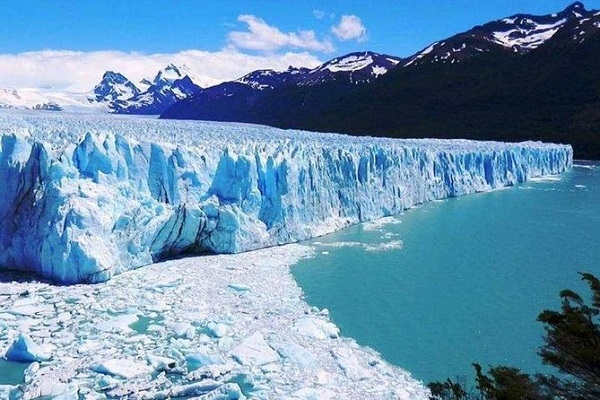
The Perito Moreno Glacier (also known as Francisco Gormaz or Bismarck Glacier) is a world-renowned natural wonder and one of the most important tourist attractions in Argentine Patagonia. Located 78 km from El Calafate within Los Glaciares National Park, this impressive ice formation spans 250 km² and is 30 km long. It is one of 48 glaciers fed by the Southern Patagonian Ice Field, the world’s third-largest reserve of fresh water, which spans the Andes shared with Chile. The glacier is named for the 19th-century explorer Francisco Moreno, who was key to defining the border between Argentina and Chile.
Trek Glacier Perito Moreno
Trekking on the Perito Moreno Glacier is exclusively done via organized tours: Minitrekking and Big Ice. Both tours include a boat transfer, safety briefing, and a guided hike on the ice using crampons, departing from El Calafate. The Minitrekking option is shorter and more accessible, featuring a one-hour hike. In contrast, the Big Ice tour is more rigorous, involving over three hours of navigation across deeper ice formations, offering a more intense experience on this advancing glacier.
Also Read- Salta Surprises- Exploring Argentina’s Cultural Heart
The Minitrekking experience offers a short, accessible guided hike lasting approximately one hour directly on the glacier. This full-day adventure, lasting around 10 hours including transfers from El Calafate, includes the necessary boat ride, crampons, safety equipment, and expert guides. It is a family-friendly option, generally suitable for guests aged 8 to 65, though moderate physical fitness is required.
The Big Ice Tour is a longer, more physically demanding trek that features over three hours of exploration directly on the glacier. This 12-hour commitment requires a good level of physical fitness to navigate the challenging terrain. The tour includes a boat ride, crampons, safety equipment, and expert guides, allowing you to venture deep inside the ice mass to see magnificent lagoons, crevasses, and ice caves. Some premium Big Ice tours may enhance the experience with a picnic lunch or a celebratory glass of whiskey served with glacier ice.
Los Glaciares National Park
Los Glaciares National Park (Parque Nacional Los Glaciares) is Argentina’s largest national park, spanning 726,927 hectares in Santa Cruz Province. Established in 1937 and declared a UNESCO World Heritage Site in 1981, the park is named for the vast Andean ice cap it hosts. This ice cap is the largest outside Antarctica, Greenland, and Iceland, feeding 47 major glaciers. These glaciers are notable for starting at an unusually low elevation of 1,500 m due to the cap’s size, descending through a well-preserved mix of Magellanic subpolar forest and Patagonian steppe. The park shares a border with Chile’s Torres del Paine National Park.
Also Read- Geotourism And Modern Geotechniques
Perito Moreno is the most famous glacier of The Los Glaciares National Park is an area of exceptional natural beauty, with rugged, towering mountains and numerous glacial lakes, including Lake Argentino, which is 160 km long. It is part of an ice field located in both Argentina and Chile that is the third-largest reserve of fresh water in the world.
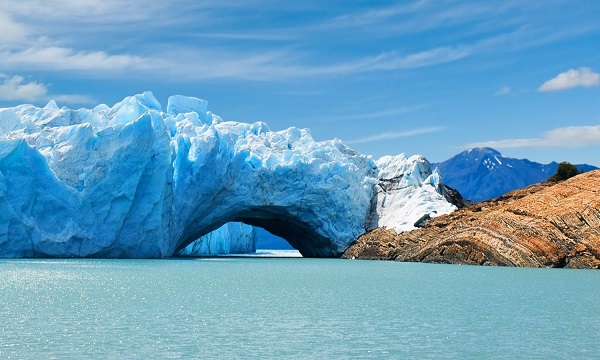
Los Glaciares National Park is embedded in the remote mountain landscape of the Patagonian Andes shared by Argentina and Chile. Dominated by rugged granite peaks, these mountains exceed 3000 MSL. The landscape is modeled by massive, ongoing glaciations.
The glaciers feed the huge mountain lakes of Viedma and Argentino. The spectacular beauty of the landscape is epitomized where the Perito Moreno Glacier meets Lake Argentino. The vast front of the slowly and constantly moving glacier, up to 60 meters high, regularly calves bluish icebergs into the waters of Lake Argentino. This phenomenon attracts visitors from all over the world.
Los Glaciares National Park is an excellent example of the significant process of glaciations, as well as of geological, geomorphic, and physiographic phenomena. This is caused by the ongoing advancement and retreat of the glaciations that took place during the Pleistocene epoch in the Quaternary period, and the neoglaciations corresponding to the current epoch or Holocene.
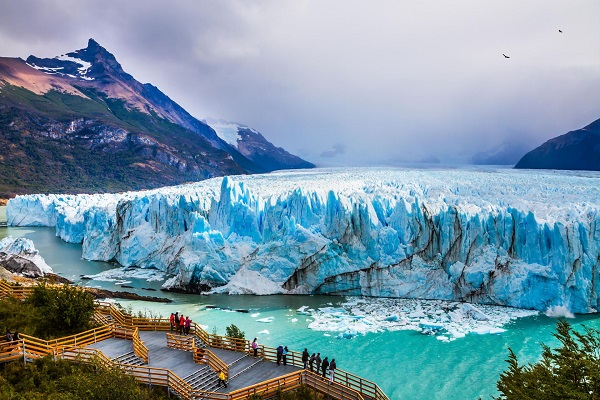
A series of steel catwalks of 4000m total and vantage points allow tourists to see, hear, and photograph the glacier. The sun hits the glacier in the morning, and the appearance changes as the day progresses and shadows shift. A closed Refugio with glass walls allows for glacier viewing in bad weather.
Best time to visit Perito Moreno Glacier
To experience the mildest weather and the highest likelihood of seeing dramatic ice calvings, plan your visit to Perito Moreno Glacier during the austral summer (December to February). Alternatively, target the shoulder seasons (spring: September–October; autumn: April–May) for a stunning experience with fewer crowds and beautiful golden landscapes.
Perito Moreno Glacier boat tour from El Calafate price
The cost of a Perito Moreno Glacier boat tour from El Calafate generally ranges from ₹11,000 to over ₹25,000, heavily depending on the tour’s specifics. Basic boat safaris start around ₹11,000, while premium or full-day guided tours and navigation packages can reach ₹25,000 or higher. Prices are determined by the operator and include inclusions, such as transfers or guided activities.