sutikshan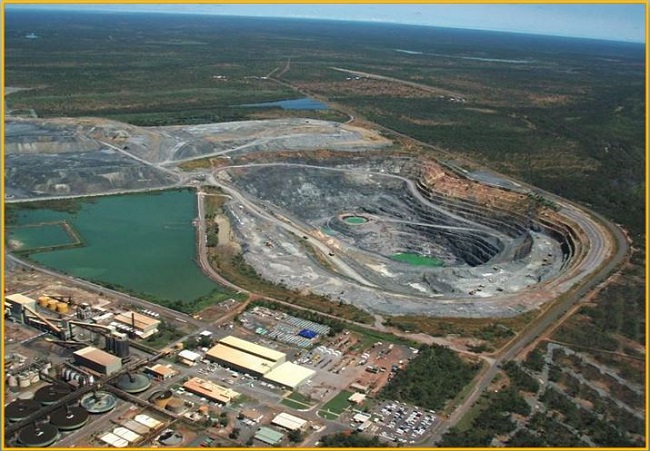
Olympic Dam Mine
Located 560 kilometers north of Adelaide, Olympic Dam is one of the world’s most significant deposits of copper, gold, silver, and uranium. Olympic Dam is made up of underground and surface operations and operates a fully integrated processing facility from ore to metal. It is the fourth-largest copper deposit and the largest known single deposit of uranium in the world.
Olympic Dam copper-uranium mine is one of the world’s biggest polymetallic ore bodies and also one of the largest copper deposits. The underground mine is made up of more than 450 kilometers of underground roads and tunnels. Ore mined underground is hauled by an automated train system to crushing, storage, and ore hoisting facilities.
The deposit was discovered in 1975 by Western Mining Corporation Ltd, which was looking for copper in buried sedimentary rocks. After considering geophysical data, a drill hole was sunk near a small stock water dam known as Olympic Dam.
It struck copper, and later drilling confirmed a resource of more than 2000 million tons of ore containing both copper and uranium. From 1979, the deposit was evaluated as a Joint Venture with British Petroleum Ltd. In 1985, it was decided to proceed with the project, and production commenced in 1988.
Geology and Host Rock
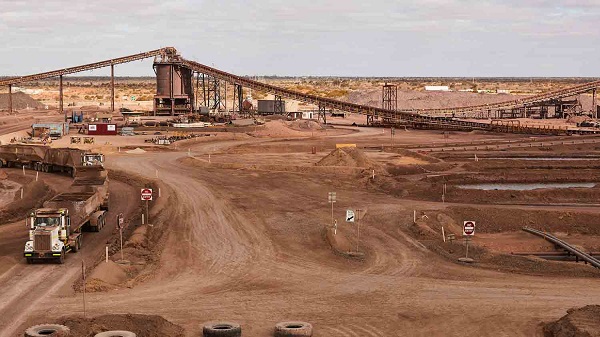
Olympic Dam is on the eastern margin of the Gawler Craton and is one of the world’s most significant deposits of copper, gold, silver, and uranium. The deposit is unconformably overlain by about 300 m of Neoproterozoic to Cambrian age, flat-lying sedimentary rocks of the Stuart Shelf. The deposit is hosted within the Olympic Dam Breccia Complex, occurring entirely within the Roxby Downs Granite.
Mineralization is contained within a granite-hosted breccia complex. The principal copper-bearing minerals in the deposit are chalcopyrite, bornite, and chalcocite, occurring as disseminated grains, veinlets, and fragments with breccia zones. Gold typically occurs as extremely fine particles within and associated with the copper sulfide grains.
Also Read- Lake Clifton Thrombolites: An Ancient Living Reef Adventure
Its capacity is 350000 tpa of copper and 4,300 tpa of uranium, plus gold and silver. Once fully complete, the expansion would have made Olympic Dam the biggest mine in the world.
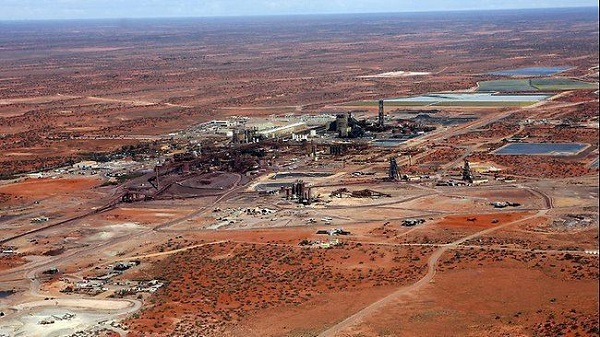
As of June 2018, the proven and probable underground sulfide reserves at Olympic Dam were estimated to be 500Mt grading 2.00% copper, 0.6 kg per ton uranium, 0.71 grams per ton (g/t) gold, and 4.5g/t silver.
Olympic Dam mine camp
The Olympic Dam mine camp, officially known as the BHP Olympic Village, provides essential accommodation for employees of the large poly-metallic mine in South Australia, which is operated by BHP. Located near the mining operation and the town of Roxby Downs, this camp offers practical amenities—such as private rooms, gyms, and internet access—to workers on a roster system, prioritizing utility over luxury.
Attraction near Olympic Dam Mine
Attractions near the Olympic Dam mine include the wildlife-focused Arid Recovery Reserve (offering tours like the seasonal Sunset Tour) and the town of Roxby Downs, which features a visitor center with an Olympic Dam video and public art. For grander regional experiences, visitors can easily access the spectacular Lake Eyre National Park and the Flinders Ranges.
Lake Eyre National Park is located about 400 km north. This is Australia’s largest salt lake. When it floods, it becomes a wetland with unique birdlife, and the area is great for camping, hiking, or taking scenic flights.
Read- Geotourism And Modern Geotechniques
Flinders Ranges is a 3-hour drive away. These ranges offer rugged scenery, deep gorges, and vibrant red rock formations. It’s a great destination for hiking and photography, with Wilpena Pound being a highlight.
How to Reach Olympic Dam Mine
Reaching the Olympic Dam mine offers several logistical options. The most straightforward methods are flying directly to Olympic Dam Airport or undertaking the drive from cities like Adelaide or Perth. Travelers seeking alternatives can opt for a multimodal journey: fly into a regional airport followed by bus and taxi transfers, or take extended bus and taxi services that route through Pimba, connecting from distant cities such as Adelaide or Brisbane.