sutikshan
Erra Matti Dibbalu
Erra Matti Dibbalu in Andhra Pradesh dissected and stabilized coastal red sediment mounds, located between Visakhapatnam and Bhimunipatnam. It is formed around 12,000 years ago due to sea-land interaction. Erra Matti Dibbalu comprises a mixture of sand (40-50%), silt, and clay with oxidation imparting a unique red colour. It was recognized as a national Geo-heritage site in 2014 by the Geological Survey of India.
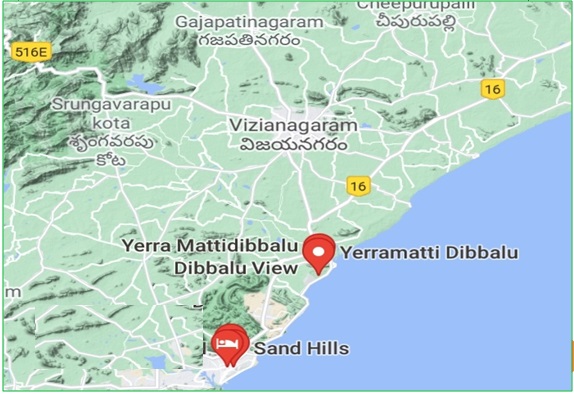
Erra Matti Dibbalu is located 20 km to the northeast of Visakhapatnam and 4 km southwest of Bhimunipatnam. The width of the parabolic (U-shaped) dunes ranges from 200 m to 2 km, extending 5 km along the coast in an east-west direction. This type of sand deposit has been reported only from three low-latitude tropical regions in South Asia: the Teri Sands of Tamil Nadu, the Erra Matti Dibbalu in Andhra Pradesh, and the Red Coastal Sands of Sri Lanka. They do not occur in any other equatorial or temperate regions worldwide.
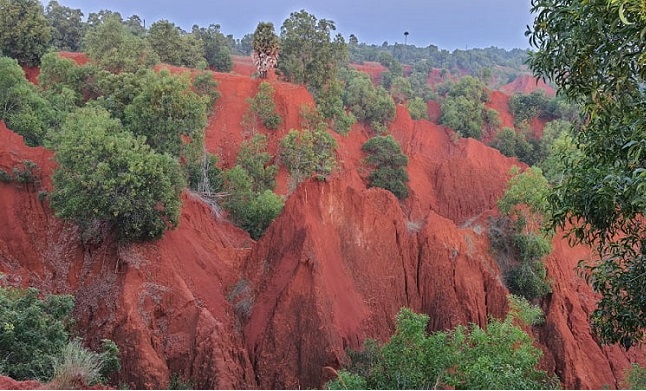
Formation of Red Sand Dunes
The towering red dunes are about 12 meters high. In the Glacial age, about 12000 years ago, a major climatic shift took place. During that period, the sea had receded about 50 kilometers from the present coastline, with a vertical drop of 120 meters. As a result, the continental shelf was exposed, and sand was transported and deposited on land. The red color is a result of geochemical alterations that happened over the years. This phenomenon is linked to the formation of the red dunes. The endless, meandering maze of these dunes is a rare geological occurrence in this part of the globe.
The red sediments are deposited over the basement of Khondalite rocks (Garnetiferous sillimanite gneiss) and comprise yellow sands at the bottom, followed upward by reddish-brown concretion-bearing sand unit, brick red sand unit, and light-yellow sand unit. The thickness of the sand units is not uniform throughout the area due to the variation in the basement terrain.
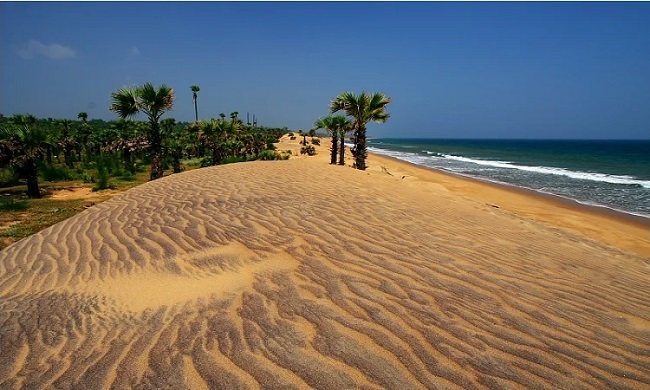
These red dunes have a peculiar characteristic of these hills. The red dunes are neither rocky nor sand-like, but have an unusual texture that binds them together. When climbing over these dunes and walking over the top of this geological site, can you get an idea of its vastness and uniqueness?
Also read- Thekkady Kerala Tourism-7 Charming Places to Visit in Thekkkady
Geological Significance:
Erra Matti Dibbalu is geologically important as they represent the geological history of the late Quaternary period and has clues about the fall of sea level and its subsequent rise, the impact of climate, and geological processes on the sediments. They are also important historically because they possibly contain Mesolithic and neolithic cultural materials as well.
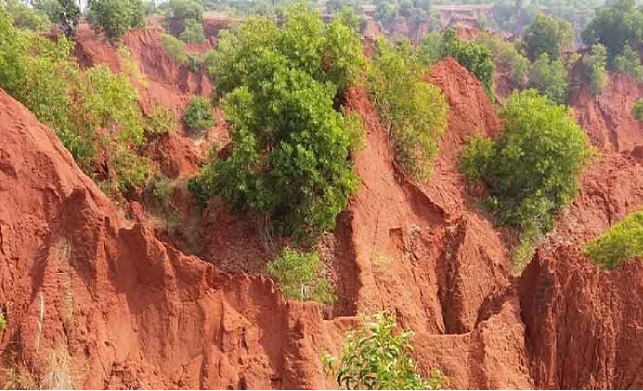
Actually, dunes, like other geologically significant sites in and around Visakhapatnam, are paleoenvironmental indicators, and these can give vital clues to the past and the future for scientists.
Also Read- Geotourism And Modern Geotechniques