sutikshan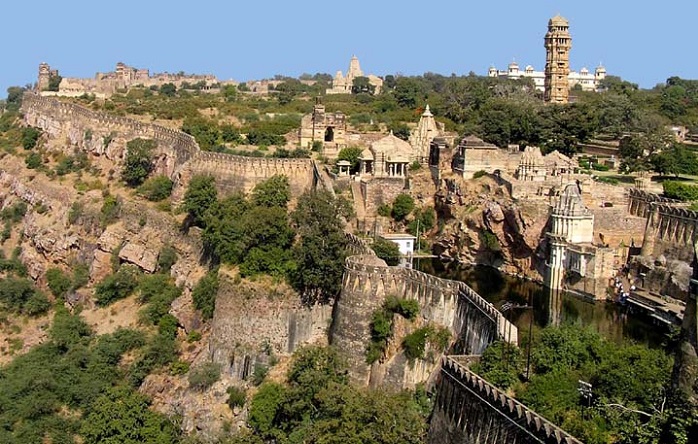
Chittorgarh Fort
Chittorgarh Fort evokes memories of great heroism and sacrifice by the king of medieval India, including the Rajput, Sisodia, and Gehlot dynasties. They had fought many battles against invaders from the Northwest or Delhi, and the city is known for its monuments and battlements as evidence of the blood and gore that went through in Indian history.
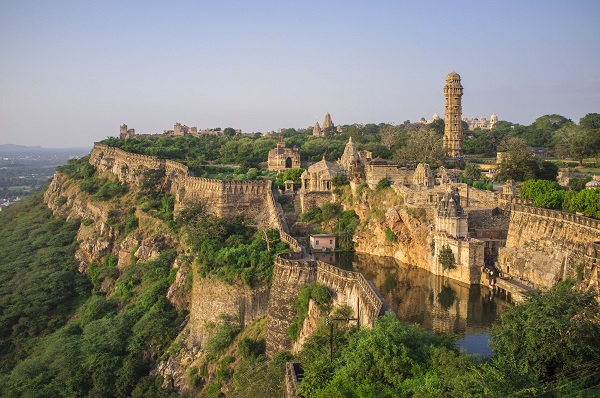
The fort of Chittor is indeed the “Pride of Rajasthan State”, which is perched atop a 590-meter high hillock and covers an area of 700 acres on the banks of the Berach River. The fort was built by the Mauryans in the 7th century, and further structures were added to it by the successive Mewar rulers. Sisodia and Gahlot’s kings ruled Mewar between the 8th and the 16th centuries, but the Chittorgarh Fort was named after Chittrangad Maurya, who belongs to the Maurya dynasty.
Chittorgarh also witnessed triumphs of the spirit when Allaudin Khilji invaded the city in 1303 A.D to covet Queen Padmini of Chittor, but before he captured her, Queen Padmini and the women of the palace sacrificed themselves in a fire. This sacrifice has been called ‘Jauhar’.
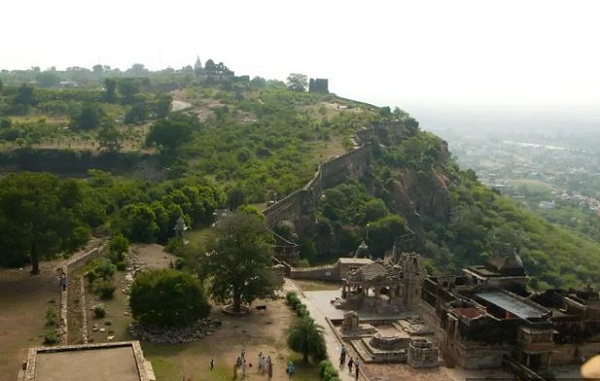
One interesting thing about the fort that perhaps you didn’t know is that 40 percent area of the Fort is given over to water bodies. The fort had 84 water bodies out of which only about 22 exist today. Every reservoir holds about one billion gallons of water and, without rainfall, enough to maintain an army of 50,000 for four years without fear of thirst.
Chittorgarh Fort was declared a World Heritage Site by UNESCO, because of its Towers and built sculptures, the fort is truly a real-life magic kingdom. The fort comprises many towers and temples, which are dedicated to different gods in the court area.
Victory Tower was built in 1440 by Maharana Kumbha to commemorate his victory over Mohamed Khilji. This 9-story tower is adorned with sculptures of Hindu deities around. The tower, when illuminated in the evening the tower reflects a mesmerizing effect.

The Tower of Fame is dedicated to Adinathji, the 1st Jain Tirthankara, adorned by the naked figures of the Digambar. Apart from this, Chittor Fort houses Rana Kumbha Palace, which is believed to have underground cellars, where Rani Padmini and other women committed Jauhar. Padmini Palace, Meera Temple (Meera Mandir), Jain Temples’ ornamental pillars, and Gaumukh reservoir are also famous for their sculptures and historical incidents.
Stay to see an impressive light-and-sound show that takes place every evening in the fort to show more stories of other important characters like Bappa Rawal, saint-poet Meerabai, Rana Kumbha, Rana Sanga, and other historical characters from the fort’s history.
Geological History-
The area around Chittorgarh Fort provides you ultimate view to exploring Geotourism and the Geological sequence in the area. At the foothills of the fort, you can see the Berach River section, which follows a great boundary fault. You can find one of the most complete sections of the Great Boundary Fault in the Chittorgarh fort.
The area around Chittorgarh Fort provides you ultimate view to exploring Geotourism and the Geological sequence in the area. At the foothills of the fort, you can see the Berach River section, which follows a great boundary fault. You can find one of the most complete sections of the Great Boundary Fault in the Chittorgarh fort.
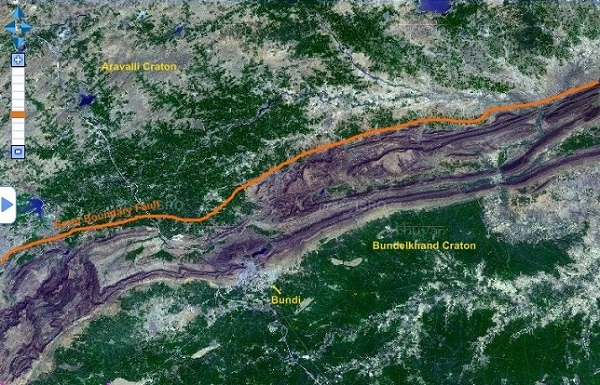
The great boundary fault runs close to the boundary between the sedimentary rocks of the Vindhya supergroup and Berach granite/metasedimentary of the Archean age (Aravalli Supergroup). The base of the fort area is Sandstone, which belongs to the Semri group of rocks. In the Berach River section, you can see Local brecciation, fault-related structures in different scales, and stratigraphic sequences.
How to Reach Chittorgarh Fort
To reach Chittorgarh Fort, you can travel by train (nearest is Chittorgarh Railway Station/Chanderiya) or bus (Chittorgarh SRTC), often connecting from cities like Udaipur; then, inside the vast fort complex, use auto-rickshaws or hired cars for convenience, as it’s a UNESCO site rich in history and sites like Padmini’s Palace and Vijay Stambh.