sutikshan
Geevor Tin Mine
Geevor Tin Mine, formerly known as North Levant Mine, is located in the western part of Cornwall, England, between the villages of Pendeen and Trewellard. Operating from 1911 to 1990, the mine produced approximately 50,000 tons of black tin. Today, it serves as a museum and heritage centre, preserving the history of a working tin mine. It has been part of the UNESCO World Heritage Site known as the Cornwall and West Devon Mining Landscape.
Geology
The Tin mine’s lodes occur within an outer zone of coarse-grained biotite granite of Carboniferous age, which intruded into the surrounding Devonian “killas”—a sequence of metamorphosed sedimentary and volcanic rocks visible along the northwestern cliffs near the mine. As the influence of the granite increases toward the contact zone, the killas progressively transform, first showing cordierite spotting, then developing into mica-rich phyllites, and ultimately forming banded hornfels and tourmaline schist at the point of contact.
The tin is present as cassiterite (containing approximately 65–70% tin) within mineral veins associated with quartz, tourmaline, metal sulphides, and fluorite. These veins are mainly oriented northwest to southeast, with cassiterite making up about 1% of the total vein material.
Geevor tin mine History
Geevor Tin Mine is one of the best-preserved examples of Cornwall’s rich tin mining heritage. Its story reflects both the rise and decline of the region’s mining industry. Mining in the Geevor area dates back centuries, with small-scale workings and nearby mines such as Levant operating as early as the 18th century. However, Geevor itself began modern development in the early 20th century, building on earlier exploratory work in the region.
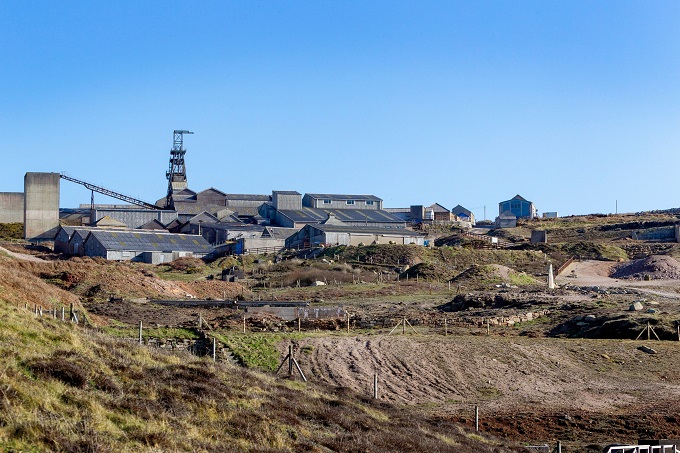
Geevor officially opened in 1911 as a modern deep tin mine. During its early years, it expanded rapidly, developing extensive underground tunnels that extended beneath the Atlantic Ocean.
Despite economic challenges, including fluctuating tin prices and World War I, the mine managed to survive and gradually grow.
After World War II, Geevor became one of the most productive tin mines in the UK. It absorbed nearby operations, including parts of the Levant Mine, and modernized its equipment and infrastructure. At its peak, Geevor employed hundreds of miners and produced significant quantities of “black tin” (concentrated ore).
Also read- Discover the Ancient Wonders: Dinosaur Trackway in Connecticut
Decline and Closure
By the late 20th century, the global tin market had declined sharply. Falling prices made mining increasingly unprofitable.
In 1990, Geevor Tin Mine officially closed, marking the end of centuries of large-scale tin mining in Cornwall.
Geevor Tin Mine Museum
Geevor Tin Mine is now a museum and heritage centre spanning 67 acres, making it the largest preserved tin mining site in Great Britain. It forms a significant part of the Cornwall and West Devon Mining Landscape, which was designated a UNESCO World Heritage Site in 2006.
Also read- Geotourism And Modern Geotechniques
The museum brings to life the history of tin mining in Cornwall, focusing on Geevor, both surface and underground operations, and the everyday experiences of the miners, including oral history recordings. Visitors can explore the preserved mine buildings to view original machinery, and guided underground tours are available into Wheal Mexico, an 18th-century mine. The site also features a souvenir shop and a café overlooking the Atlantic Ocean, along with interactive activities such as gold and gemstone panning.
How to Reach Geevor tin mine
Geevor Tin Mine is located in Pendeen, near Penzance (TR19 7EW), Cornwall, and is easily accessed via the B3318 from the A30. Regular buses (4, 17) operate from Penzance, St Ives, and St Just. It is open to visitors as a museum, generally closed on Saturdays, and features, with parking available on-site.