 sutikshan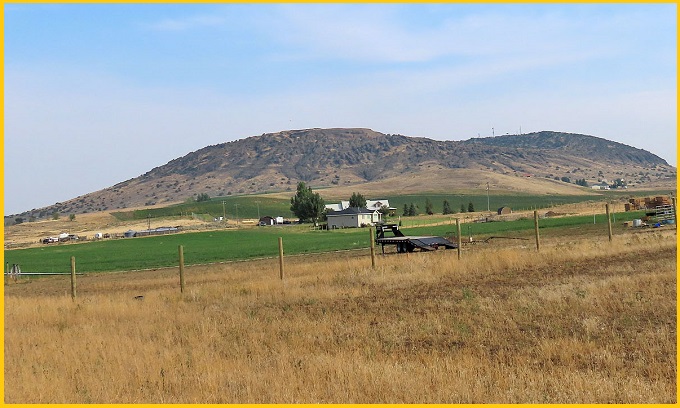
The Menan Buttes
The Menan Buttes are two prominent volcanic cones rising from the Snake River Plain in southern Idaho, but they are unique among the many cones scattered across the region. Unlike typical volcanic formations, the Menan Buttes are rare tuff cones—created when magma erupts through water. They are the only freshwater-formed tuff cones in the United States and rank among the largest of their kind worldwide.
Geology
The North and South Menan Buttes, along with four smaller associated cones, form the Menan Complex, aligned along a north–northwest trend. Rising 250 meters above the Snake River Plain, these features date back to the late Pleistocene Epoch, around 10,000 years before present.
The South Menan Butte remains privately owned, while the North Menan Butte is protected. It has been designated both a National Natural Landmark and a Research Natural Area by the United States Congress. Additionally, the Bureau of Land Management has classified the North Butte as an Area of Critical Environmental Concern (ACEC).

Formation
The surrounding landscape is largely farmland, while to the south, Henry’s Fork and Snake River converge. The proximity of these rivers played a crucial role in the formation of the cones.
The Menan Buttes rank among the largest tuff cones on Earth. The North Menan Butte measures roughly 1,800 meters in diameter, rises about 250 meters above the surrounding plain, and has an estimated volume of 0.7 cubic kilometers. The smaller South Menan Butte has a volume of about 0.3 cubic kilometers. For comparison, the well-known Diamond Head in Hawaii is about 1.2 kilometers wide with a volume of 0.6 cubic kilometers and was formed when magma erupted into seawater.
Also read- Geotourism and Modern Geotechniques