 sutikshan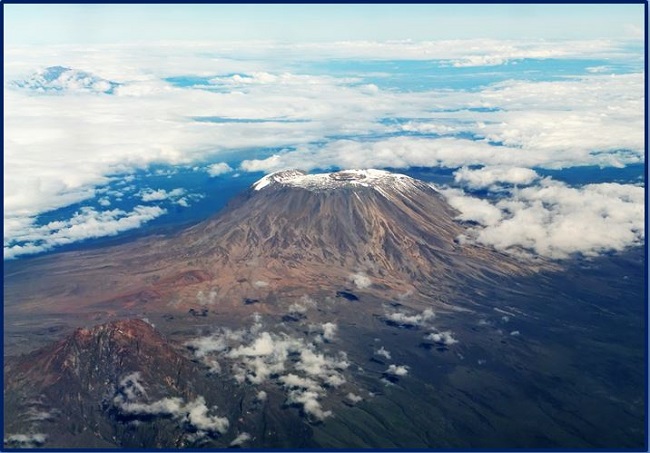
Mount Kilimanjaro
Mount Kilimanjaro is Africa’s tallest mountain at about 5,895 meters and is located in Tanzania. Kilimanjaro is the largest free-standing mountain, which means it is not part of a mountain range. Kilimanjaro is usually a result of volcanic activity. Volcanic mountains are formed when molten rock erupts and piles upon the surface. It is also called a stratovolcano, a term for a very large volcano made of ash, lava, and rock. Kilimanjaro is located near the eastern flank of the southern end of the East African Rift Valley.
The EAR is part of an active continental rift system where the continental lithosphere is being stretched and forms two new plates: the Nubian and the Somalian plate. The rifting on the eastern African rift began in the Miocene around 22-25 million years ago and continues today. It is thought that as the Nubian and Somalian plates continue to drift further away from each other, the lithosphere between them will grow thinner and drop below sea level. This ‘hot spot’ is forcing the region upwards.
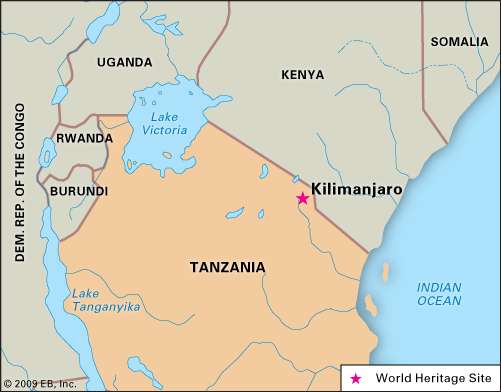
Mount Kilimanjaro Map
Map showing Mount Kilimanjaro locations in Tanzania:
Mount Kilimanjaro: The iconic mountain itself, featuring its three volcanic cones. Kilimanjaro Summit: The snowy peak of the world’s tallest walkable mountain. Mount Kilimanjaro National Park: The surrounding national park that protects the mountain and is home to diverse wildlife and hiking routes.
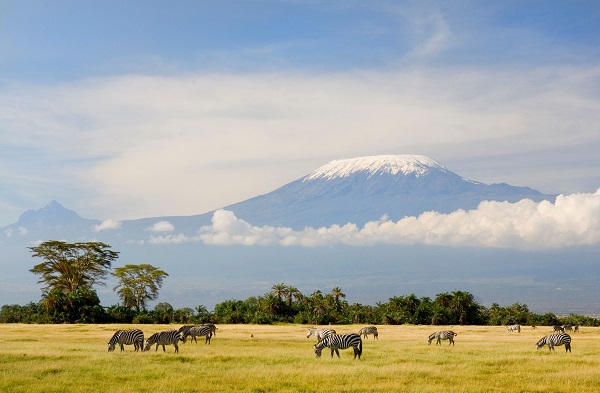
Mount Kilimanjaro formed as a result of active continental rifting and is made up of three cones:
- Kibo- 5895 meter
- Mawenzi, and- 5149
- Shira- 3962
Kibo is the tallest mountain of the three volcanic formations. While Mawenzi and Shira are extinct, Kibo is dormant and could erupt again. Scientists’ research says that the last time it erupted was 360,000 years ago. The highest point on Kibo’s crater rim is called Uhuru, the Swahili word for “freedom.”
Mawenzi is the third-highest peak in Africa, after Kibo and Mount Kenya. Shira is no longer a peak. It is estimated to have been about 16,000 feet high before it collapsed, creating the Shira Plateau on the western side of the mountain.
What is a Freestanding Mountain?
When we think of the highest mountains in the world, Mount Everest suddenly comes to mind, but when we ask for the highest Free-standing mountain, it is a little tricky. A freestanding mountain means it stands alone and is not part of a mountain range. Usually, these are volcanic mountains.
So, when measured from sea level, Mount Everest, 8,849 m., is the tallest mountain in the world than any other peak in the world. When do we ask what the largest free-standing mountain is in the world? The answer is Mount Kilimanjaro. Mount Kilimanjaro is the tallest mountain on the African continent and the highest free-standing mountain in the world.
In 1973, the mountain and its six surrounding forest corridors were declared Kilimanjaro National Park in order to protect its unique environment. The park was named a UNESCO World Heritage site in 1987. A variety of animals live in the area surrounding the mountain, including the blue monkey.
Read more- Geotourism and Modern Geotechniques
Mount Kilimanjaro was first climbed in 1889 by German geologist Hans Meyer. He became the first person on record to reach the summit of Kilimanjaro. Since then, Kilimanjaro has become a popular hiking spot for locals and tourists. Because experience is not needed to reach the peak, thousands of climbers ascend the mountain each year.
Mount Kilimanjaro’s unique position just below the equator offers an opportunity to experience five different habitats from bottom to top. Tanzania makes an ascent of the mountain undeniably special. When you climb Kilimanjaro from the equator to what feels like the Arctic, moving through grasslands, tropical rainforests, alpine meadows, moorlands, and desert uplands to snow and ice.
How long does it take to climb Mount Kilimanjaro?
Mount Kilimanjaro climbs range from 5 to 9 days, but experts strongly recommend opting for a longer duration—particularly routes like the 9-day Northern Circuit—to ensure proper acclimatization and mitigate the risks associated with shorter, 5- or 6-day ascents.
Read- Serengeti National Park-Africa’s Iconic Adventure Place
March to the end of May is the wet season on Mount Kilimanjaro. The rest of the year is good for climbing the summit. The main seasons are traditionally December to March and June to October. After all, you want to be in with a chance of catching your summit on a clear day to get an amazing view from the highest point in Africa.
How to Reach Mount Kilimanjaro
The primary airport for reaching Mount Kilimanjaro is Kilimanjaro International Airport. After landing, travelers take a transfer to the nearby towns of Moshi or Arusha, where crucial pre-trek activities—such as guide meetings, gear checks, and initial acclimatization—are completed before the final drive to the park gate to start the climb.
Source- nationalgeographic.co.uk, britannica.com