 sutikshan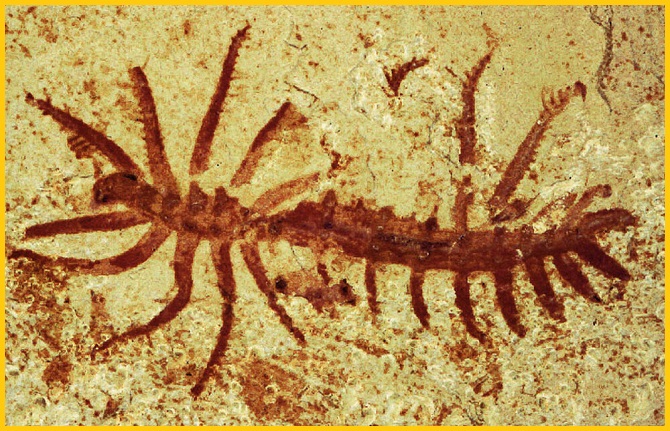
Chengjiang UNESCO World Heritage Site
Chengjiang is a city in Yuxi, Yunnan Province, China, situated just north of Fuxian Lake. A hilly 512-hectare site in, Chengjiang contains fossils that provide the most comprehensive record of an early Cambrian marine community, with exceptionally preserved organisms showcasing both hard and soft tissue anatomy across a wide range of invertebrate and vertebrate species. These fossils capture the early development of a complex marine ecosystem, documenting at least sixteen phyla, several enigmatic groups, and around 196 species. They offer extraordinary evidence of the rapid diversification of life on Earth about 530 million years ago, when nearly all major animal groups first.
Chengjiang Fossils site
Chengjiang is renowned for its exceptional soft-tissue fossil discoveries from the Maotianshan Shales, dating to less than 518 million years ago during the Cambrian explosion. These fossils, described as being “as spectacular as the Burgess Shale fauna, and significantly older,” are regarded as one of the most important paleontological finds of the 20th century. They exhibit remarkable detail, represent a diverse array of fauna, and provide critical insights into the early evolution of life on Earth. In recognition of its significance, the Chengjiang Fossil Site was inscribed as a UNESCO World Heritage Site in 2012.
Chengjiang formation (Maotianshan Shales)
The Maotianshan Shales are Early Cambrian sedimentary deposits within the Chiungchussu or Heilinpu formations, renowned for their Konservat Lagerstätten—sites of exceptional fossil preservation. These shales are among roughly 40 Cambrian fossil localities worldwide and are notable for preserving non-mineralized soft tissues with remarkable detail, comparable to the Burgess Shale in British Columbia, Canada. Named after Maotianshan Hill in Chengjiang County, Yunnan Province, China, they belong to the “Eoredlichia-Wutingaspis Zone” of South China. Within this formation, a 512-hectare area known as the Chengjiang Fossil Site was inscribed as a UNESCO World Heritage Site in 2012.
The fossils were initially described in 1912 by Henri Mansuy and Jaques Deprat, a year after Charles Walcott’s first reports on the Burgess Shale. However, their true importance was not fully understood until 1984, when Hou Xian-guang of Yunnan University, Kunming—then affiliated with the Palaeontological Institute, Chinese Academy of Sciences, Nanjing—recognized the site’s extraordinary value.
Chengjiang is an underdeveloped city rich in phosphate deposits located both above and below the formation containing the lagerstätte. Phosphate mining, which began around the time Hou Xian-guang discovered the fossil-bearing deposits, accounted for approximately two-thirds of the city’s revenue in 2003.
Chengjiang Biota
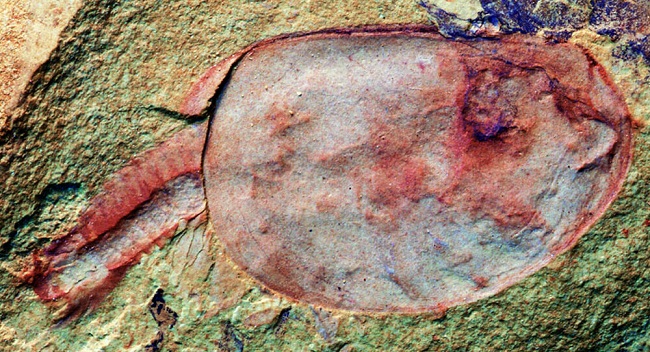
The Chengjiang biota represents an exceptionally diverse faunal assemblage, with approximately 185 species documented in the literature as of June 2006. Nearly half of these species are arthropods, most lacking the hard, mineralized exoskeletons typical of later arthropods; only about 3% of the organisms possess hard shells. Among these are five species of trilobites, all remarkably preserved with traces of legs, antennae, and other soft tissues—an extremely rare occurrence in the fossil record.
Other well-represented groups include Porifera (sponges; 15 species) and Priapulida (16 species), along with Brachiopoda, Chaetognatha, Cnidaria, Ctenophora, Echinodermata, Hyolitha, Nematomorpha, Phoronida, and Chordata. Possible molluscan representatives include Wiwaxia.
About one in eight organisms are problematic forms of uncertain affinity, possibly short-lived evolutionary experiments that emerged as benthic environments shifted rapidly during the Cambrian. Chengjiang is also the richest known source of Lobopodia, an early group of panarthropods, with six genera present: Luolishania, Paucipodia, Cardiodictyon, Hallucigenia (also found in the Burgess Shale), Microdictyon, and Onychodictyon.
The Chengjiang biota is thought to have lived in a delta-front environment characterized by oxygen-rich waters, high sedimentation rates, and significant fluctuations in salinity, which were the primary environmental stressors.