sutikshan
Marine Gondwana Fossil Park
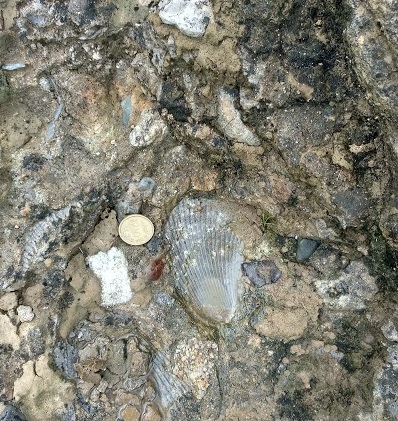
Marine Gondwana Fossil Park, located at Manendragarh, Sarguja district, Chhattisgarh, is a unique exposure of fossiliferous Rocks. The marine Permian rocks of the Talchir Formation belong to the Gondwana Supergroup of 280 Ma years old. The formation is exposed for a length of about one km upstream to the confluence of the Hasdeo River and Hasia Nala. The marine fauna is represented by the dominance of pelecypods/ lamellibranchs like Eurydesma and Aviculopecten within the shale, besides Bryozoans, Crinoids, and foraminifers.
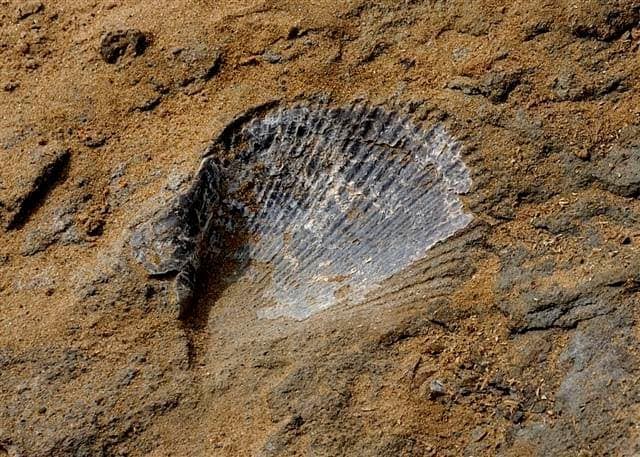
Crinodal stems and bryozoans are numerous in these rocks. The stretch of fossiliferous strata is approximately 1 km. On the upstream of the river Hasdeo, which is not properly Guarded and is exposed at many places, the fence erected by the forest department is broken and deteriorated.
These fossils were first discovered by forest officials a few years ago. Following this, Birbal Sahni Institute of Palaeobotany, Lucknow, was consulted about it, and a team of scientists was sent to the area, who confirmed the presence of marine fossils and suggested that it should be developed as a geo-heritage center.
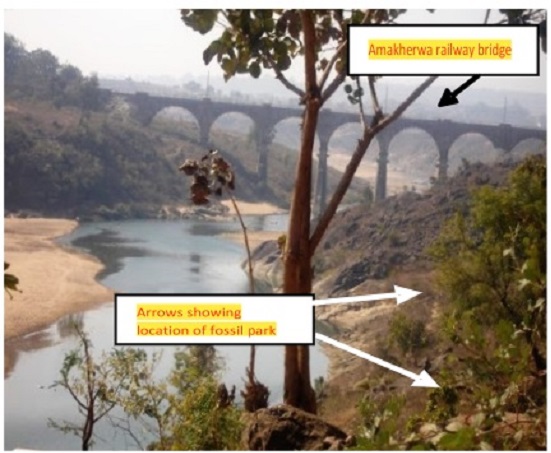
In the year 2014, the department of the forest of the state government developed the park with the help of the Chhattisgarh government in the Amakherwa area in Manendragarh. The proposal to develop a park was aimed at conserving the fossils and the rare and endangered flora and fauna in the area.
Also read- The Celestial Beacon: ‘Eye of the Sahara,’ An Astronaut’s Global Landmark
Similar formation
Marine beds of the same age rocks are known to be exposed at the Umaria district, Madhya Pradesh. The Umaria Marine Beds comprises of 3 meters of shelly limestone containing fossils of shells of Productus, Spiriferina, Reticularia, and others. However, the total absence of Productus in the Menendragarh area and the abundance of Eurydesmids make these beds distinctly different from those at Umaria.
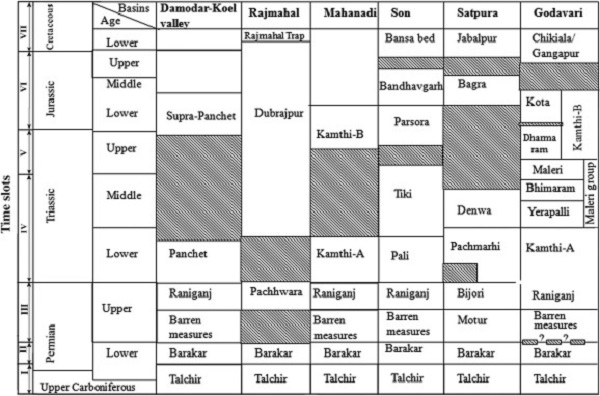
The Umaria Marine Beds overlies the Talchir Boulder Beds but passes upwards without any visible break into the overlying Barakar rocks. The fossil assemblage is suggestive of the Lower Permian age and warmer climate. In Rajasthan, marine beds equivalent to Umaria Marine Beds are known as Bap Beds after Bap village near Jaisalmer.
Read- Geotourism And Modern Geotechniques
Marine Gondwana Fossil Park, also called the Lower Permian Marine bed at Manendragarh, has been declared a National Geological Monument of India by the Geological Survey of India (GSI) for their protection, maintenance, promotion, and enhancement of geotourism.
How to reach Marine Gondwana Fossil Park
The area is located on the right bank of the Hasdeo River, near the railway bridge between milestones 937 and 938 of the Anuppur Chirmiri branch of Southeastern Railway and about 2.5 km southeast of Manendragarh railway station near Ammakherwa village. Park can be visited around the year except for the rainy season when the fossiliferous horizon is flooded by the Hasdeo river.