sutikshan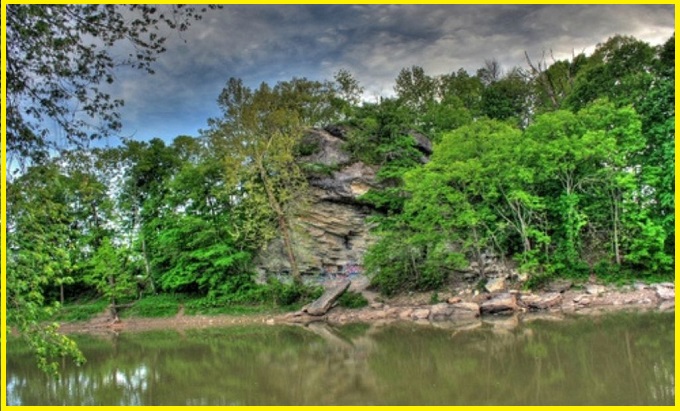
Hanging Rock Klint, Indiana
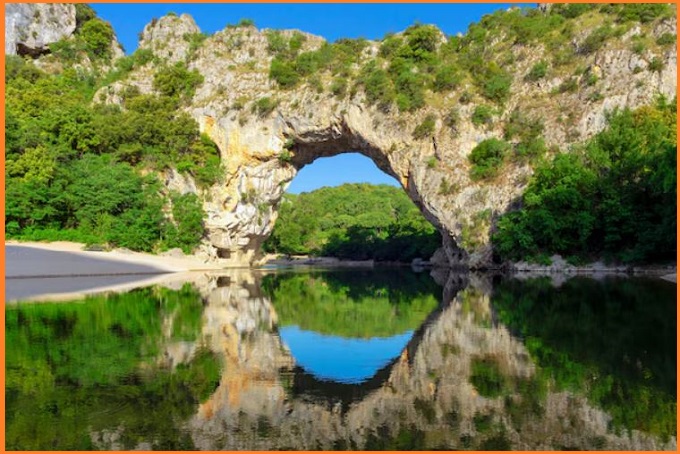
Hanging Rock National Natural Landmark is a 4-acre site in Wabash County, Indiana, designated in May 1986. Situated along the southern bank of the Wabash River near the town of Lagro, it features a striking natural exposure of a fossilized coral reef from the Silurian Period, dating back around 400 million years. The limestone reef rises approximately 23 m. above the river and is gradually being eroded beneath, creating its distinctive “hanging” appearance.
Formation
Hanging Rock was formed when Indiana and much of the Midwest lay beneath a warm, shallow sea. Over time, the river eroded the base of the rock, leaving its upper portion—about 65 feet above the Wabash Valley—jutting outward, which inspired the preserve’s name. A short trail now loops around the 200-foot-wide base of Hanging Rock.
In both prehistoric and historic periods, people used Hanging Rock for navigation, astronomical observations, and military purposes. The Miami and other Indigenous groups, as well as European settlers, relied on it as a prominent landmark and vantage point.
Also Read- Ultimate Punta Cormorant: Hidden Beach & Wildlife Adventure
Coral Reef
Hanging Rock and Wabash Reef comprise two one-acre sites along the southern bank of the Wabash River. Both feature natural exposures of limestone reef deposits. The exposures will be well exposed in nearby quarries. Hanging Rock is a striking example of an exposed ancient reef, rising about 75 feet above the river. Wabash Reef, one of the most well-known fossil reefs in the world, has been extensively studied and has played a key role in shaping modern reef theory.
Also read- Geotourism And Modern Geotechniques
How to reach-Hanging Rock Klint, Indiana
Hanging Rock National Natural Landmark in Lagro, Indiana, can be reached via E 4552 E, Hanging Rock Road, just off US 24W/Blue Star Highway. Managed by ACRES Land Trust, the site features a 0.3-mile loop trail with scenic views of the Wabash River, along with a spacious parking area, and is open to visitors for hiking.