sutikshan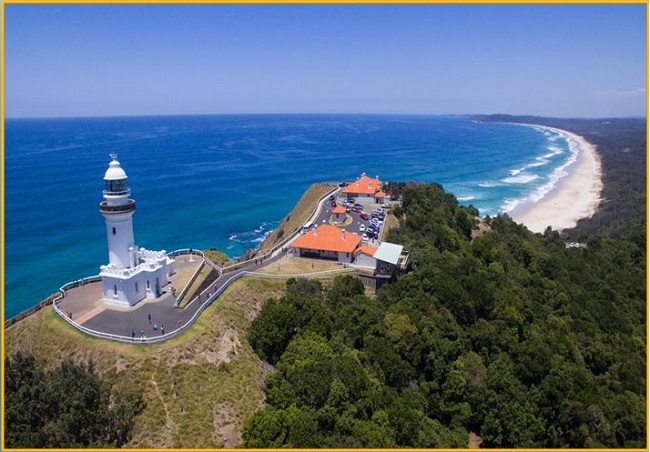
Byron Bay
With its stunning natural attractions and Amazing scenery, Byron Bay on the North Coast of New South Wales is one of the world’s most famous coastal towns. Byron Bay is located 772 kilometers north of Sydney and 165 kilometers south of Brisbane. Cape Byron, a headland adjacent to the town, is the easternmost point of mainland Australia. It is the largest town in Byron Shire. You’ll be surprised by gorgeous beaches, breathtaking hinterland rainforest, spectacular coastal trails, and a buzzing food scene in the Bay Area.
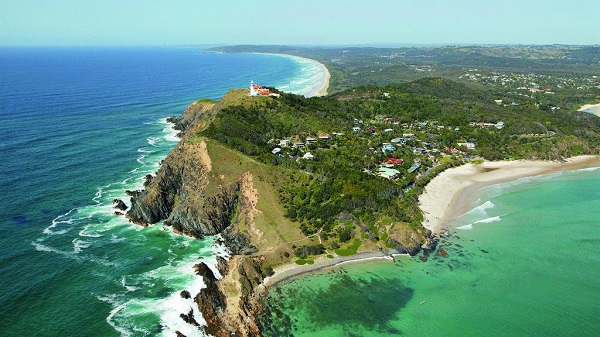
Cape Byron was encountered in 1770 by Capt. James Cook, who named it for Admiral John Byron, grandfather of the poet Lord ByroByron. Byron Bay was founded in 1860 as a timber port. It was declared a town in 1896 and a shire in 1906.
Bayron Bay weather
Byron Bay enjoys a subtropical climate characterized by hot, humid summers and mild winters. Summer (December–February) is the wettest period, featuring average highs around 27 °C. In contrast, winter (June–August) is cooler and drier, with average highs of approximately 19°C, offering the added benefit of fewer crowds.
Byron Bay’s subtropical climate offers distinct seasonal variations.
Summer (December–February) is the wettest period, characterized by hot and humid conditions with average highs of 27 °C and lows of 18 °C (expect around 165 mm of rainfall monthly).
Autumn (March–May) transitions into mild weather, featuring comfortable average highs of 25C and lows of 14°C.
The best conditions are often found in Winter (June–August), which is the mildest and driest season, boasting clear, sunny days, average highs of 19 °C (low 8°C), and still-warm ocean temperatures.
Spring (September–November) sees temperatures begin to climb again, with average highs reaching 24 °C and lows around 13 °C.
Also Read- Murphy’s Haystacks: A Breathtaking Granite Inselbergs of Australia
Geology
Byron Bay is part of the erosion caldera of an ancient shield volcano. This shield volcano is known as Tweed Volcano, which erupted 23 million years ago. The volcano formed as a result of the Indo-Australian Plate moving over the East Australia hotspot.
The Tweed is an area of rugged terrain, large local relief, and spectacular scenery. The area is dominated by a huge erosion of caldera, the Tweed Valley, and remnants of the shield over 1000m. in altitude produced by a large and complex volcano centered on Mt Warning. Mt Warning erupted 23 million years ago and built up into a large and complex central volcano.

Byron Bay is a great place to get active, be it surfing, kayaking, fishing, sailing, or just enjoying a swim at a beautiful beach. You can see the glorious sunrise from a hot-air balloon. Climb Mount Warning, part of an extinct volcano, and walk in an ancient rainforest with Byron Bay Adventure Tours.
Attraction near Bayron Bay
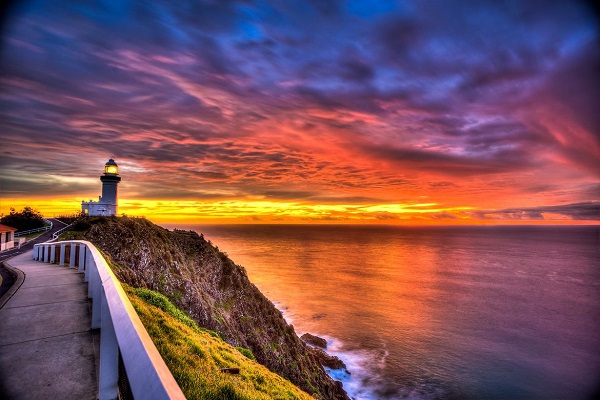
Sunrise at Cape Byron Lighthouse
Sunrise from Australia’s most easterly point at the Cape Byron Lighthouse is the most spectacular view of Byron Bay. From Cape Byron Lighthouse to trek the 3km from Byron township and enjoy one of the most spectacular coastal Scenes of the area.
The Cape Byron Lighthouse walk is a 3.7 km loop that generally requires 1 to 3 hours to complete. While the track is well-maintained, its Grade 3 difficulty rating stems from steep hills and stairs. This makes the trek manageable for most fitness levels, but it may pose a challenge for individuals with mobility concerns.
Arakwal National Park
Arakwal features 3 km of stunning coastline bordered by dunes and is a haven for birds and wildlife. Explore the walking trails that cover some diverse terrain, breathtaking views, and vistas.
Read- Geotourism And Modern Geotechniques
Whale Watching
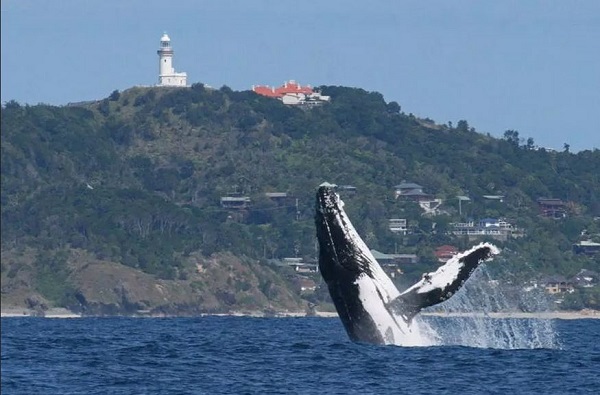
Enjoy whale watching at Australia’s most easterly point between May and November as the majestic creatures migrate to this point. The best land-based vantage point is Cape Byron Lighthouse; you might even get lucky and view whales while snorkeling at Julian Rocks.
Explore the town of Ballina, located at the mouth of the Richmond River and home of the Big Prawn, one of Australia’s things. At Lennox Head, a seaside village between Ballina and Byron Bay, is the world-famous surf break Point.
How To Reach Byron Bay
Byron Gateway Airport is located 5 km from Ballina’s town center and 35km from Byron Bay. Use the shuttle bus or taxi services to make the short trip to these coastal destinations. You can rent a car from the hire services available at the airport and explore the region at your own pace. Jetstar, Virgin Australia, and Regional Express operate daily direct flights to Sydney, Newcastle, and Melbourne.