sutikshan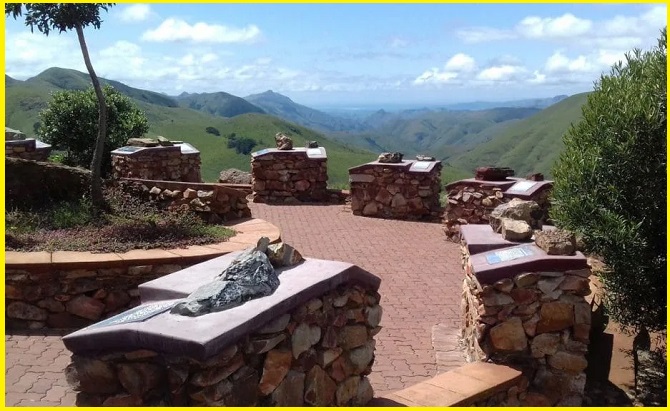
The Barberton Makhonjwa Mountains
The Barberton Makhonjwa Mountains, often called the Makhonjwa Mountains, consist of a compact range of hills and small mountains covering about 120 by 60 kilometers. Roughly 80 percent of the range lies within South Africa’s Mpumalanga province, while the remainder extends into Eswatini. They account for around 40 percent of the Barberton Greenstone Belt.
Geography
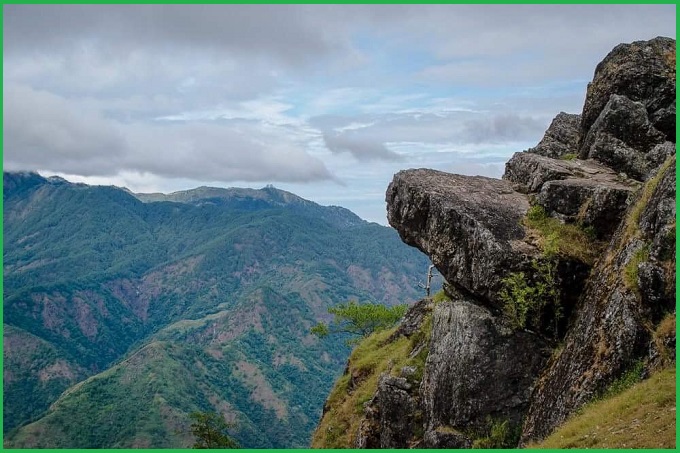
The landscape varies in elevation from 600 to 1,800 metres above sea level and includes rocky hills, moist grass-covered uplands, and forested valleys. Situated within the Barberton Centre of Endemism, the area receives about 600 to 1,150 millimetres of rainfall annually, with wet summers and dry winters.
Geology
Located along the eastern edge of the Kaapvaal Craton, the Makhonjwa Mountains contain some of the oldest exposed rocks on Earth, dating from 3.2 to 3.6 billion years ago during the Paleoarchean era. Their exceptional age and preservation provide some of the earliest confirmed evidence of life, offering a rare view into the extreme Precambrian environments where life began—earning the region the nickname “Genesis of Life.” The mountains are also known for their rich gold deposits and for hosting many komatiites, rare ultramafic volcanic rocks named after the Komati River that flows through the area.
In April 2014, researchers announced evidence of what may be the largest known meteor impact on Earth, estimated to have occurred about 3.26 billion years ago, caused by an impactor measuring roughly 37–58 km in diameter. The crater from this event has not yet been located. Later, in May 2019, scientists discovered extraterrestrial organic material preserved in 3.3-billion-year-old volcanic rocks from the Makhonjwa Mountains.
Also read- Chand Baori: An Ancient geometric water reservoir
Barberton Makhonjwa Mountains World Heritage Site
This area contains a rare remnant of Earth’s early crust, presenting one of the oldest and most complete sequences of volcanic and sedimentary rocks known. These exceptionally preserved layers record an unbroken 340 million years of geological history, starting 3.6 billion years ago. Their physical, chemical, and biological characteristics provide extraordinary insights into early Earth, shedding light on the formation of continents, the flow of ultra-hot lavas, frequent meteorite impacts, oxygen-depleted oceans and atmosphere, and the conditions that fostered the first single-celled life. Its global significance lies in the abundance.
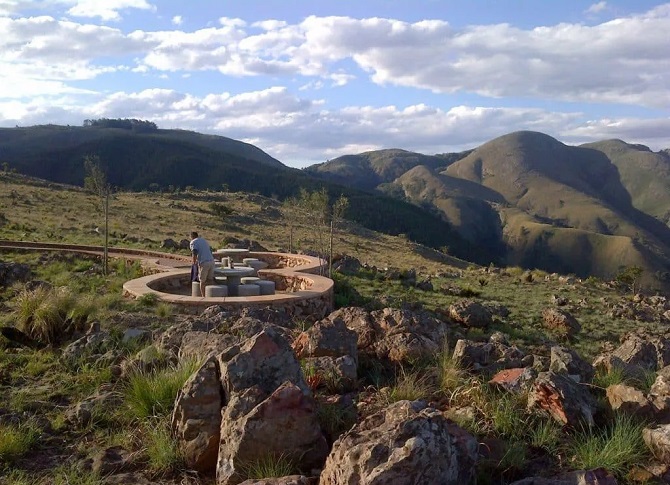
The Barberton Makhonjwa Mountains comprise about 40 percent of the Barberton Greenstone Belt, one of the oldest known geological formations on Earth. The site preserves an exceptionally intact sequence of volcanic and sedimentary rocks dating from 3.6 to 3.25 billion years ago, providing a remarkable record of early Earth processes such as surface conditions, meteorite impacts, volcanic activity, continental formation, and the environments where early life first emerged.
Their physical, chemical, and biological characteristics provide an unparalleled glimpse into the early Earth, revealing signs of the first continental formation, the eruption of ultra-hot lavas, repeated meteorite impacts, and an oxygen-free ocean and atmosphere—the conditions under which the earliest single-celled life began. The real significance of these rocks lies in the wealth of scientifically important sites they encompass, forming a singular and still only partially explored record of Earth’s ancient past. The sites’ Outstanding Universal Value qualifies them as part of the UNESCO World Heritage, recognizing their global scientific and historical significance.
Barberton Makhonjwa Mountains Facts
The Barberton Makhonjwa Mountains, also called the Barberton Greenstone Belt, form a 3.5-billion-year-old geological complex spanning South Africa and Eswatini, and were inscribed as a UNESCO World Heritage Site in 2018. Among the oldest mountain ranges on Earth, they preserve some of the planet’s most ancient and well-maintained volcanic and sedimentary rocks, offering a rare record of early Earth—including the formation of the first continents, the presence of primordial oceans, and the impact of giant meteorite strikes.
Also read- Business Leaders Success Story
Age and origin: Estimated at 3.5–3.6 billion years old, the Barberton Greenstone Belt contains some of the oldest known rocks on the planet. UNESCO status: Inscribed as a World Heritage Site in 2018 for its outstanding universal value, recognized as a place of global natural significance.
Geological importance: The rocks offer an exceptional record of early Earth, shedding light on the formation of the first continents, the evolution of the oceans and atmosphere, and the effects of major meteorite impacts. Earliest life evidence: The region preserves some of the oldest traces of single-celled organisms. Ancient impacts: This includes rare meteorite-impact fallback breccias—rocks formed from the debris of colossal meteorite strikes during the Early Archean Eon.
Location: The mountain range spans the border between South Africa and Eswatini, covering an area of approximately 120 × 60 km. Protected areas: Key parts of the site lie within protected reserves such as Mountainlands, Songimvelo, and Nkomazi.
Barberton Makhonjwa Mountains Activities
Visitors to the Barberton Makhonjwa Mountains can experience a range of activities, from hiking the Queen Rose Trail and taking scenic mountain drives to exploring the Barberton Museum and Heritage Walk. For adventure seekers, the area also features skydiving opportunities and 4×4 routes such as the well-known Ebutsini Trail.
Hiking: Walk scenic routes like the Queen Rose Trail and enjoy designated picnic spots. 4×4 Adventures: Tackle rugged terrain on routes such as the Ebutsini 4×4 Trail. Skydiving: Experience high-adrenaline jumps with panoramic mountain views. Scenic Drives: Tour the mountain roads and take in breathtaking landscapes.
Culture & History
Barberton Museum: Discover the region’s rich history and remarkable geology. Heritage Walk: Visit historic landmarks, including the Barberton Steam Locomotive. Town Tour: Explore Barberton’s historic sites, including the old mining settlement of Eureka City.
Nature & Wildlife
Barberton Nature Reserve: Observe indigenous flora and fauna in a protected setting. Makhonjwa Geotrail: Follow this self-guided route to explore ancient rock formations and learn why the area is a UNESCO World Heritage Site.
How to Reach Barberton Makhonjwa Mountains
You can reach the Barberton Makhonjwa Mountains by driving to the town of Barberton in South Africa, where the 38 km self-guided Barberton Makhonjwa Geotrail begins. This route takes you through the mountain range and provides access to its remarkable geological sites.