sutikshan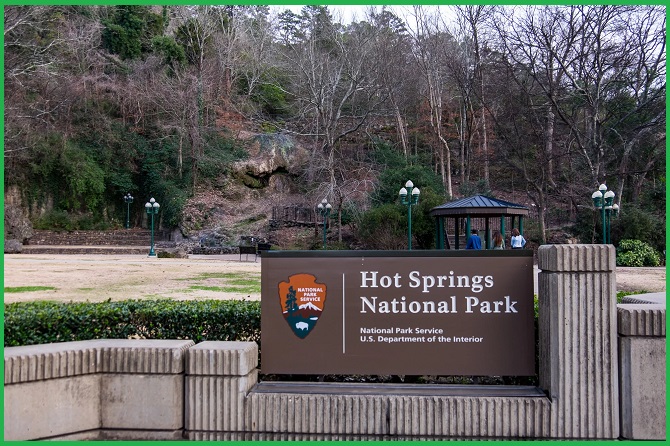
Hot Springs National Park
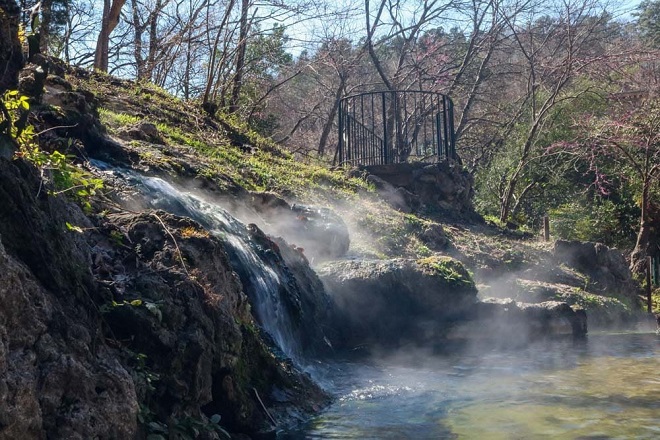
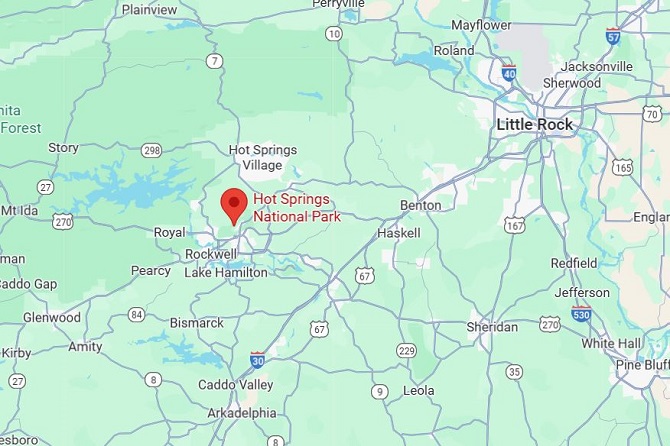
Hot Springs National Park, located in central Garland County, Arkansas, borders the city of Hot Springs and is one of the United States’ earliest protected areas. The park’s hot springs have been celebrated for centuries for their reputed medicinal properties and were central to legends among several Native American tribes. Encompassing portions of downtown Hot Springs, the park is among the most accessible national parks in the United States. Visitors can explore numerous hiking trails and camping areas, while bathing in the spring water is offered at designated facilities for an additional fee.
The hot springs originate on the western slope of Hot Springs Mountain, part of the Ouachita Mountain range. Within the park, the springs are not left entirely in their natural state but are carefully managed to provide a continuous supply of clean, uncontaminated water for public use. The surrounding mountains are also conserved to protect the hydrological system that feeds the springs.
Hot Springs National Park Map
The large map shows the entire park, highlighting trails, roads, and buildings, while the two inset maps provide a closer view of Bathhouse Row and its surrounding area.
Geology
The thermal springs of Hot Springs National Park are situated in the Ouachita Mountains of central Arkansas, emerging from a gap between Hot Springs Mountain and West Mountain that spans roughly 460 m in length and 120 m in width, at elevations between 176 to 208 m. These springs are primarily composed of hot water rising from deep underground, mixed with a smaller portion of shallow cold groundwater. Currently, 43 thermal springs are believed to be actively flowing, with water from 33 of them collected and managed at a central reservoir, which distributes the combined flow for public use and consumption. The area’s geology includes shale, which generally restricts groundwater movement, alongside fractured chert, novaculite, and sandstone, which promote groundwater flow.
The water feeding Hot Springs originates from rainfall in the mountains to the north and northeast. As it slowly percolates downward through fractured rock at about one foot per year, it reaches depths of approximately 1,400 to 2,300 m, where it is naturally heated by the increasing temperature of the surrounding rock. The hot water then rises through faults and fractures under artesian pressure, emerging from the Hot Springs Sandstone between the traces of two thrust faults along several northeast-trending lineaments. Some shallow rainwater near the springs mixes with the deep, heated water before it reaches the surface. While the downward journey takes around 4,000 years, the ascent of the thermal water occurs in about one year.
Also read- Lake Powell Page and Horseshoe Bend-A Stunning Landscape in the USA
The heat comes solely from the natural warming of rocks with depth, and chemical analysis confirms that the water is heated rainwater with no connection to magmatic or volcanic activity. This produces a mildly alkaline, pleasant-tasting water rich in dissolved calcium carbonate.
Rock type-
The rocks around the thermal springs are predominantly sedimentary, dating from the Ordovician to Mississippian periods. Some younger Cretaceous igneous rocks are found in two small areas—about 9.7 km and 17.7 km southeast of the springs at Potash Sulfur Spring and Magnet Cove, respectively—as well as in numerous small dikes and sills, most measuring less than 1.5 m wide. Around 80 dikes have been identified, roughly 6.4 km southeast of Hot Springs, near the Ouachita River. No igneous rock occurs at the locations where the thermal springs actually emerge.
Hot Springs National Park Camping
Camping is offered exclusively at Gulpha Gorge Campground, which features 40 full-hookup sites for tents and RVs, including water, electricity, and sewer connections. Reservations are required and can be made through Recreation.gov. The campground provides picnic tables, grills, and modern restrooms, though there are no on-site showers; however, shower facilities are available at Bathhouse Row in downtown Hot Springs.
Swimming Hot Springs National Park
Hot Springs Health & Fitness
Voted one of Arkansas’ top three health clubs, Hot Springs Health & Fitness features a spacious indoor facility and an outdoor swimming area suitable for all ages. The outdoor area includes an adult pool, a kiddie pool with water features, and a splash pad. Guest passes grant access to both the gym and the pools. The gym offers a wide range of amenities, including a sauna and spa, strength training and cardio equipment, over 55 group exercise classes, as well as a tennis court, indoor basketball and racquetball courts, and more.
Arlington Resort Hotel & Spa
The city’s most iconic property, the Arlington Resort Hotel & Spa, boasts a multilevel mountainside swimming area with two pools and a 15-person hot tub. Surrounded by lush mountain scenery, it feels secluded despite being in the heart of downtown Hot Springs. Opened on New Year’s Eve in 1924, the hotel came under new ownership in July 2017. Since then, approximately $4 million has been invested in upgrades, with plans underway for a major renovation to further enhance the property.