sutikshan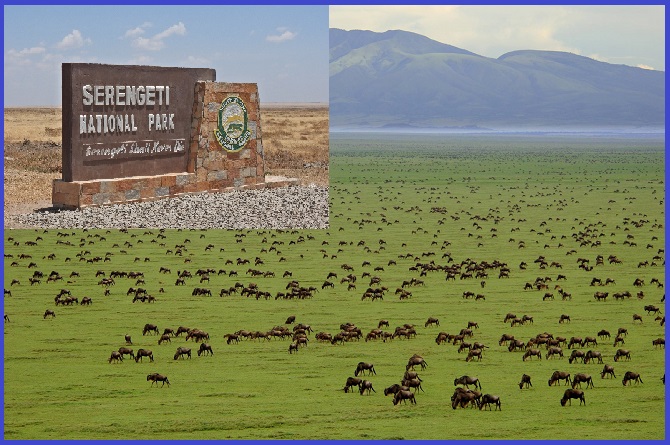
Serengeti National Park
Serengeti National Park, situated in northern Tanzania, spans 14,763 km² across the eastern Mara and northeastern Simiyu regions, encompassing over 15,000 km² of untouched savanna. Established in 1940, the park is world-renowned for hosting the largest annual animal migration on Earth. Each year, immense herds of herbivores, including wildebeest, gazelles, and zebra, migrate toward permanent water sources, trailed by their predators, creating one of the world’s most spectacular natural events. The annual migration of over two million wildebeests, along with hundreds of thousands of gazelles and zebras, pursued by their predators in search of pasture and water, creates one of the world’s most spectacular natural events. The park also boasts remarkable biological diversity, sheltering at least four globally threatened or endangered species: the black rhinoceros, the elephant, the wild dog, and the cheetah.
Geography
The park spans 14,750 km² and encompasses grassland plains, savannas, riverine forests, and woodlands. Situated in northwestern Tanzania, it borders Kenya to the north, where it seamlessly connects with the Maasai Mara National Reserve. To the southeast lies the Ngorongoro Conservation Area, the Maswa Game Reserve is located to the southwest, the Ikorongo and Grumeti Game Reserves stretch along the western boundary, and the Loliondo Game Control Area lies to the northeast and east.
The Serengeti Plain’s landscape is remarkably diverse, ranging from open grasslands to hilly woodlands and expansive savannas. This geographic variety is largely shaped by the region’s extreme weather conditions, particularly the intense combination of heat and wind. The area’s diverse habitats are thought to have originated from volcanic activity, which sculpted the terrain by creating mountains and craters across the plain.
Geology
The basement complex of the Serengeti region consists of Archaean Nyanzian System greenstones (2.81–2.63 Ga) and Archaean granite-gneiss plutons (2.72–2.56 Ga), which were uplifted around 180 million years ago to form koppies and elongated hills. It also includes the Neoproterozoic Mozambique Belt, composed of quartzite and granite, and the Neoproterozoic Ikorongo Group, made up of sandstone, shale, and siltstone that form linear ridges. In the park’s southeastern area, Neogene-aged volcanic rocks and Holocene volcanic ash from Oldoinyo Lengai are found. Several major rivers—the Grumeti, Mara, Mbalageti, and Orangi—flow westward into Lake Victoria, while the Oldupai River drains eastward into the Olbalbal Swamps.
Also read- Ngorongoro Crater: A UNESCO Treasure in the Heart of Africa
The eastern portion of the park is characterized by the Serengeti volcanic grasslands, part of the Tropical Grassland Ecozone. These grasslands developed on layers of volcanic ash deposited by the Kerimasi Volcano approximately 150,000 years ago, along with material from later eruptions of Ol Doinyo Lengai. The eruptions produced calcareous tuff and calcitic hard-pan soils (vertisols) through the rapid weathering of the unique natrocarbonatite lava emitted by these volcanoes.
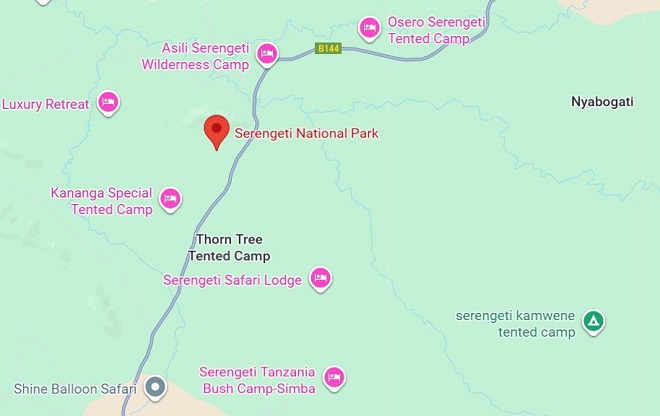
Serengeti National Park Map
Map showing Serengeti National Park, a detailed location map, and Serengeti safari camps & lodges.
Serengeti National Park Safari
A safari in Serengeti National Park, Tanzania, promises an unforgettable wildlife experience, featuring the legendary Great Migration of millions of wildebeests, zebras, and gazelles, accompanied by iconic predators such as lions, leopards, and cheetahs. Visitors can enjoy a variety of activities, including game drives, hot-air balloon rides, and guided walking safaris. Accommodation options range from budget-friendly campsites to luxurious lodges, offering travelers the chance to explore the park’s diverse landscapes—sprawling grasslands, rocky kopjes, and lush riverine forests.
The Great Migration: Witness one of nature’s most spectacular events as millions of wildebeests, zebras, and gazelles journey across the plains in search of fresh grazing. The Big Five: Spot lions, leopards, cheetahs, elephants, and buffalo, along with giraffes, hippos, and numerous antelope species. Diverse Landscapes: Explore the park’s varied scenery, from vast savannas and woodlands to riverine forests and distinctive kopjes—rocky outcrops often used as vantage points by lions.
Serengeti National Park Weather
Serengeti National Park Tanzania, experiences a generally warm climate with clearly defined wet and dry seasons. Daytime temperatures typically range from 24–30°C and drop at night. The wet season, from November to May, brings higher temperatures and increased rainfall, while the dry season, from June to October, is cooler and ideal for safaris. The park experiences two main rainfall periods: the short rains (November–December) and the long rains (March–May).
Seasons
Dry Season (June–October): Cooler temperatures and minimal rainfall make this the best time for wildlife viewing, as animals gather around water sources. Wet Season (November–May): Higher temperatures and abundant rainfall create lush landscapes and support the spectacular Great Migration.
Best time to visit Serengeti National Park
The dry season, from June to October, is generally regarded as the best time to visit Serengeti National Park, offering optimal wildlife viewing and dramatic river crossings during the Great Migration. The wet seasons, by contrast, bring fewer tourists and lower prices. From March to May, during the long rains, wildebeests give birth, making it an ideal period to witness newborn animals, while the short rains from November to December also provide excellent wildlife viewing amid lush, green landscapes
Serengeti National Park Animals
Serengeti National Park is renowned for the Great Migration, where massive herds of wildebeests, zebras, and gazelles traverse the plains, closely followed by predators such as lions, leopards, cheetahs, and spotted hyenas. The park is also home to elephants, buffalo, rhinos, giraffes, hippos, and crocodiles, as well as more than 500 bird species, including ostriches, vultures, and flamingos.
The Big Five: Lions, leopards, elephants, buffalo, and rhinos can all be found in the park, making them key highlights for visitors. Great Migration: Each year, over a million wildebeests, along with hundreds of thousands of zebras and gazelles, migrate across the plains in search of fresh grazing. Other Herbivores: The park also hosts a variety of ungulates such as elands, impalas, topi, and dik-diks.
Big Cats: Serengeti boasts a high density of predators, with lions, leopards, and cheetahs frequently spotted across the plains. Other Carnivores: Spotted hyenas, African wild dogs, and jackals are also common, adding to the park’s rich predator-prey dynamics.
Things to do in Serengeti National Park
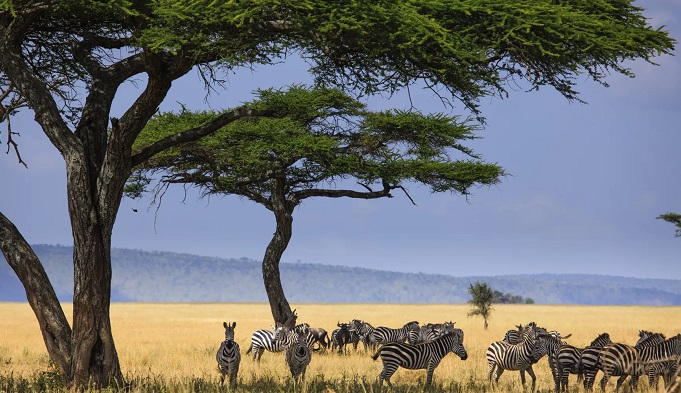
In Serengeti National Park, Tanzania, visitors can enjoy game drives and hot-air balloon safaris to witness the Great Migration and spot wildlife such as lions, leopards, and hippos. Additional activities include guided walking tours, exploring Olduvai Gorge, immersing in Maasai culture, and camping under the stars. The park’s diverse landscapes—from grassy plains dotted with termite mounds to rocky kopjes—provide excellent wildlife viewing opportunities year-round.
Serengeti National Park Hotels
Serengeti National Park offers a diverse range of accommodations to suit various preferences and budgets, from luxurious lodges to more affordable tented camps. Here are some notable options-
How to Reach Serengeti National Park
To reach Serengeti National Park, travelers can fly into Kilimanjaro International Airport (JRO) or Arusha Airport (ARK) in Tanzania, then either take a short connecting flight to one of the park’s airstrips or embark on a guided vehicle safari. The drive from Arusha is scenic but bumpy, taking around eight hours through the Ngorongoro Conservation Area, while flying provides a faster, more comfortable, and equally picturesque alternative.