sutikshan
Pokhara Nepal
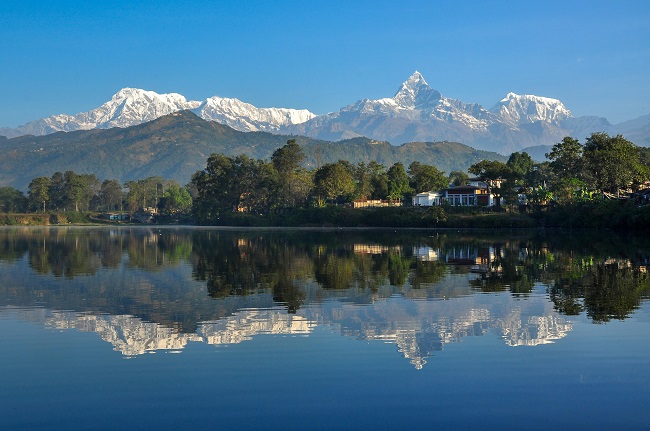
Pokhara is a metropolitan city in central Nepal and the capital of Gandaki Province. Known as the country’s “tourism capital,” it is Nepal’s second-largest city after Kathmandu. Located about 200 kilometres west of Kathmandu, Pokhara lies on the shores of Phewa Lake at an average elevation of 822 meters above sea level. The city offers stunning views of the Annapurna Range, which includes three of the world’s ten highest peaks—Dhaulagiri, Annapurna I, and Manaslu—situated just 24 to 56 kilometres away by air.
Geography
Western Nepal, with its dense population and frequent natural hazards, is regarded as one of the world’s most disaster-prone regions. Pokhara, in particular, is highly vulnerable to earthquakes and floods due to the Seti Gandaki River flowing through the city. The devastating 2015 Nepal earthquake is one such example of the seismic risks faced by the region.
Situated in the northwestern part of the Pokhara Valley—a broad expansion of the Seti Gandaki Valley—Pokhara lies within the Himalayan mid-hill region (Pahad). Here, the landscape is theatrical, with elevations rising sharply from around 1,000 metres to over 7,500 metres within a span of just 30 kilometres.
Pokhara Tourism
In recent decades, Pokhara has emerged as one of Nepal’s leading tourist destinations, widely regarded as the country’s tourism capital. It is especially known for adventure activities and as the gateway to the renowned Annapurna Circuit trek. Tourism and hospitality play a vital role in the local economy, serving as the primary source of income for both residents and the city as a whole. Pokhara hosts two five-star hotels along with around 305 other accommodations, including one four-star, five three-star, fifteen two-star, and numerous non-star hotels.
Pokhara weather
Pokhara enjoys a generally mild climate, classified as humid subtropical with distinct wet and dry seasons. Its higher elevation keeps temperatures cooler than typical subtropical regions. The city receives heavy rainfall during the summer monsoon (June–September) and experiences dry, pleasant conditions in winter (December–February). Spring and autumn bring warm weather, clear skies, and ideal conditions for sightseeing.
Summer (June–September): Monsoon season brings heavy rains, high humidity, and warm temperatures, often moderated by frequent showers.
Autumn (September–November): The rains subside, skies clear, and temperatures become moderate. This is one of the best times to visit, offering excellent mountain views.
Winter (December–February): Dry, cool days and chilly nights dominate the season. The crisp air provides stunning Himalayan vistas.
Spring (March–May): Temperatures rise, creating warm and humid conditions, with occasional pre-monsoon showers.
Places to see near Pokhara
Sarangkot Sunrise
Sarangkot Hill is renowned for its stunning sunrise views over the Annapurna Range and Fishtail Mountain (Machhapuchhare). Climb the hill or take the steps to enjoy a panoramic vista of the Himalayan peaks, stretching from Dhaulagiri (the world’s 7th highest mountain) in the west to Annapurna II in the east.
Phewa Lake
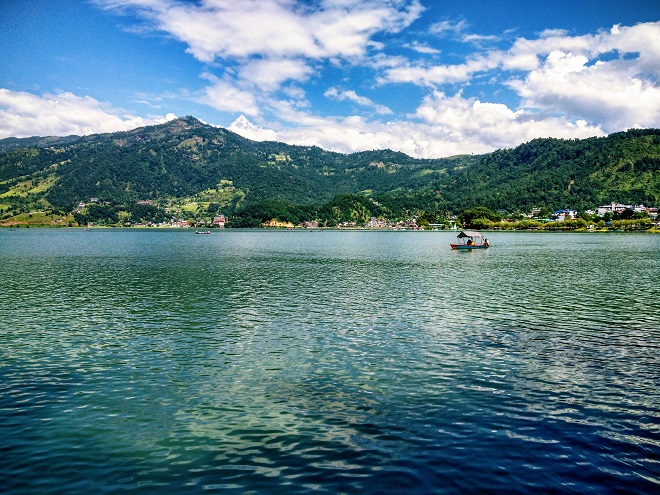
Phewa Lake, formerly known as Baidam Tal, is a freshwater lake located in the southern part of the Pokhara Valley, encompassing Pokhara city as well as parts of Sarangkot and Kaskikot. It is the second-largest lake in Nepal and the largest in Gandaki Province, second only to Rara Lake in terms of size among Nepal’s water bodies.
Situated at an altitude of 742 m. Phewa Lake covers an area of approximately 5.7 km². Its average depth is around 8.6 m, reaching a maximum depth of 24 m., and it holds a total water capacity of roughly 43 million cubic metres. Today, it stands as the most popular and frequently visited lake in Nepal, attracting both domestic and international tourists.
Davy’s Fall
Devi’s Fall, locally known as Patale Chhango (“Underworld’s Waterfall”), is a striking natural attraction located southwest of Pokhara, Nepal. The waterfall is unique because its waters plunge into an underground tunnel, giving it a mysterious and dramatic appearance.
The fall is named Devi’s Fall after a Swiss woman who tragically lost her life there in 1961. Its local name reflects the belief that the water disappears into the underworld. Today, it is one of Pokhara’s must-visit sights, drawing both tourists and nature enthusiasts for its scenic beauty and intriguing geology.
Gupteshwor Cave
Gupteshwor Mahadev Cave is a renowned natural cave and important Hindu pilgrimage site in Pokhara, Nepal, located directly opposite Davi’s Falls. To reach the sacred Shiva Linga inside, visitors descend over 200 steps, and photography is prohibited within the temple area.
The cave is celebrated for its impressive limestone formations, its temple dedicated to Lord Shiva, and the fascinating phenomenon of water from Davi’s Falls flowing through the cave, creating a unique and captivating sight for visitors.
Bindhyabasini Temple
Bindhyabasini Temple is an ancient and highly revered Hindu temple perched on a hilltop in Pokhara, Nepal. Dedicated to Goddess Bindhyabasini, an incarnation of Kali, the temple is both a significant religious site and a popular tourist attraction.
As the oldest temple in Pokhara, it is renowned for its spiritual ambiance and cultural importance, while offering visitors panoramic views of the city and the Annapurna mountain range.
Things to Do in Pokhara
In Pokhara, you can choose between thrilling adventure sports and peaceful leisure activities. Adventure seekers can enjoy paragliding, ziplining, and mountain biking, while those looking for relaxation can take a serene canoe ride on Phewa Lake. The city is also rich in cultural and natural attractions, including the breathtaking sunrise at Sarangkot, the dramatic Davi’s Fall, the mystical Gupteshwor Cave, and the informative International Mountain Museum. Beyond its own charms, Pokhara is the gateway to the Himalayas and the starting point for iconic treks like the Annapurna Base Camp and Annapurna Circuit.
Paragliding and Ziplining: Soar through the skies for spectacular panoramic views of the Himalayas and lush valleys.
Mountain Biking: Ride through scenic trails and explore the diverse landscapes around Pokhara.
Trekking: Embark on world-renowned trekking routes such as the Annapurna Base Camp trek and the Annapurna Circuit, both beginning in Pokhara.
Boating
Boating is an essential means of transport for reaching the Tal Barahi Temple, located on an island in Phewa Lake. It also serves as a convenient alternative to walking up and down hills when crossing to the opposite shores of the city’s lakes. The activity is most popular on Phewa Lake and Begnas Lake, with more than 750 boats operating on Phewa Lake and over 250 on Begnas Lake.
Cable cars
The Annapurna Cable Car transports visitors between Lakeside and Sarangkot, offering a quick and scenic journey. Another cable car line is under construction to connect Phewa Lake with the World Peace Stupa.
Pokhara Hotels
Whether you’re a backpacker or a luxury traveler, Pokhara has something for every budget. The Lakeside area is the most popular, filled with boutique hotels, cozy lodges, and hostels offering lake or mountain views. For those seeking luxury, Pokhara boasts five-star resorts with spa facilities and infinity pools overlooking the Annapurna range. Mid-range travelers can find modern hotels with comfortable amenities, while budget-friendly guesthouses provide affordable stays without compromising on location.
Kathmandu to Pokhara flight
Flying from Kathmandu (Tribhuvan International Airport) to Pokhara Airport is the fastest and most convenient way to travel between Nepal’s capital and its famous lakeside city. The flight takes approximately 25–35 minutes, offering scenic aerial views of the Himalayas and surrounding valleys. Buddha Air, Yeti Airlines, Tara Air, and Summit Air are the main sources for air travel.
How to Reach Pokhara, Nepal
Pokhara, one of Nepal’s top tourist destinations, is well-connected by air, road, and even private vehicles. From Kathmandu: Daily flights from Tribhuvan International Airport (KTM) to Pokhara Airport (PKR) take about 25–35 minutes. Airlines: Buddha Air, Yeti Airlines, Tara Air, Summit Air.