 sutikshan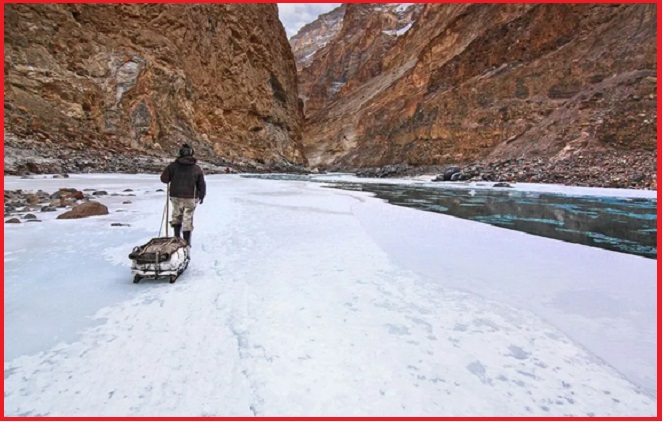
Zanskar Valley
The greatest geological events in the Earth’s history happened around 70 million years ago, when the Indian subcontinent separated from the Tethys Sea. Due to this immense stress generated by the Tectonic impact over the next 50 million years. The Indian plate and Asian plates folded and thrust up thousands of meters into the air to form the highest mountain chain on the surface -the Great Himalaya.
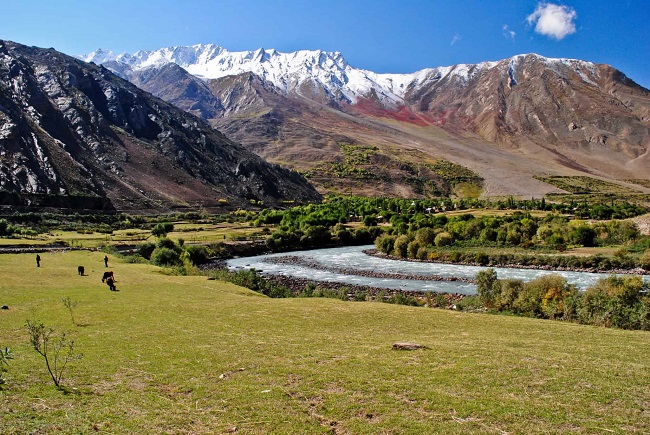
Layers of sediment from the ocean floor were ejected due to the collision of the plate and settled into convoluted masses of shorter mountain ranges and valleys on the northern flank of the Himalaya. One of these is the Zanskar valley.
Geology
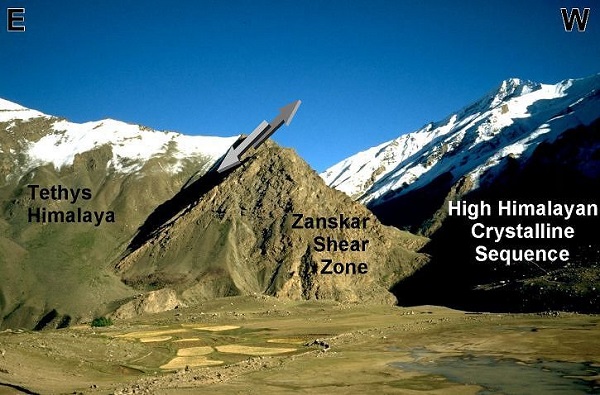
Along with the neighboring areas of Upper Lahul and Spiti, Zanskar represents an exciting place for the study of the sedimentary series deposited on the northern margin of the Indian plate. The lithology of Zanskar Valley is represented by the rocks belonging to the pre- and post-collision history. The sedimentary sequences span from Proterozoic to Eocene, while the Higher Himalayan Crystalline (HHC), dominated by migmatitic ortho/para-gneisses, is extensively intruded by the leucogranitic dikes.
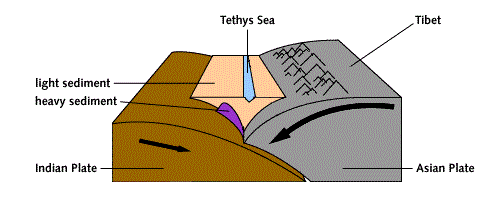
The sedimentary formations belonging to the Tethyan Sedimentary Sequence (TSS) contain rocks ranging from Late Carboniferous to the India–Asia continental collision around the Eocene. The Zanskar shear zone is one of the major structures that is represented by the normal sense of faulting and is equivalent to the South Tibetan Detachment System (STDS). The Suru and Doda rivers broadly follow the trace of the Zanskar shear zone.
The modern glaciers are preferentially located on the northern fringes of the HHC (southern part of the Zanskar hill ranges) and flow towards the north into the northeast-southwest trending river. In nearly all sections, it has been examined that the schists seem to pass gradually into the overlying slates, phyllites, and quartzites of the overlying Haimantas series.
UNESCO World Heritage Site
Zanskar Valley comes under the Cold Desert Cultural Landscape of the Himalayas. It was declared the 16th Biosphere Reserve of India in 2009, which includes Pin Valley National Park and stretches from Ladakh in the north to Kinnaur in the state of Himachal Pradesh. The region constitutes a Cold Desert biome with harsh climatic conditions.
Apart from this, the region also contains various fossils of Flora and Fauna. The trilobites at the Kurgiakh region of the Zanskar Valley are from the early Cambrian age and are similar to those found in south China and parts of Pakistan. They are also proof that millions of years ago, the Himalayan mountains were certainly submerged under the Tethys sea
Zanskar valley a beautiful landscape
Zanskar is a small town in the Kargil district of Jammu-Kashmir, located in a remote corner of Ladakh, and is one of the most enchanting places to visit in the Himalayas. It is separated from Ladakh by the Zanskar mountain range. This valley is a semi-desert with a known affinity for Buddhist beliefs. The Zanskar River runs in summer wild between the deep canyons of the Himalayas, but in the winter, it becomes a road of ice.
Also read- Ultimate Wonder: Belize Blue Hole, A Captivating Oceanic Mystery
Valley is eternally famous for its high snow-capped mountains and surrounding landscape, featuring geographical attributes that are unique to this region. You will be introduced here to sparkling clean river waters and a pleasant climate that makes it worth exploring. Zanskar Valley, located 105 km away from Leh, has earned fame among adventure enthusiasts due to its breathtaking scenery.
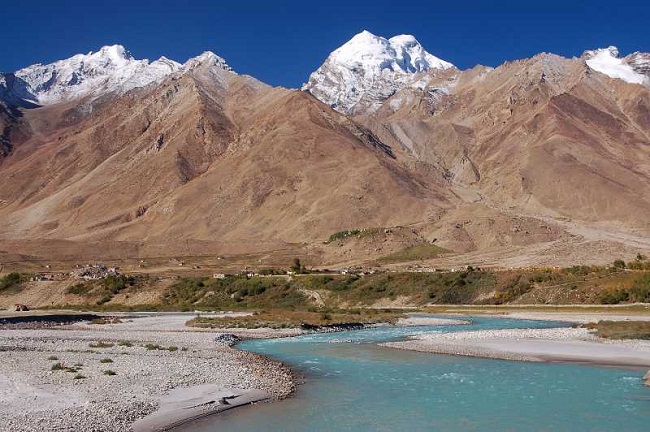
Zanskar Valley is more like Ladakh and Spiti Valley. Once you visit this wonderland, you will realize how beautiful the place is. Valley offers wide-open vistas, fresh aqua blue water, total remoteness, and the massive glaciers, which appear to be just a touch away.
Famous Places
Sani Gonpa
This castle is located 7 km before Padum. Unlike other monasteries of Ladakh, these monasteries are built on level ground. The origin of this is associated with Kanishka, a Kushan ruler of the 2nd century AD, on account of the Kanishka Stupa, which stands in the backyard of the walled complex.
Karsha Gompa
9 km from Padum, this is the largest monastic establishment in the Zanskar valley. The complex of white-washed structures is perched in the cliff of a mountain and can be seen from Padum. The monastery was founded during the 14th century.
Read- Geotourism And Modern Geotechniques
Stongde Monastery
Stongde monastery is located 14 km from Padum. This monastery is associated with the famous Tibetan Yogi Marpa, who is said to have founded it and is also known as Marpa Ling.
Burdan Monastery
Burdan monastery, located around 12 km from Padum in the Lungnak valley, is an isolated monastery perched atop a rock rising vertically from the river Zanskar. It was founded by Deba Gyatso during the early 17th century. But it is famous as the seat of Lama Barapa.
Phugtal Gompa
This is one of the superb cave monasteries of Zanskar and is picturesquely situated in the Lungnak valley. It was founded by Phagspa Sherab Zangpo in the 11thcentury.
Zangkul Gompa
The meditation retreat of famous Indian yogi Naropa (10th century ) Zankul, is situated near Ating village and falls in route of the Padum–Kishtwar trek.
Best time to travel
The best time to travel to Zanskar Valley is from June to September. Zanskar Valley’s temperature is also quite pleasant during these months of the year.
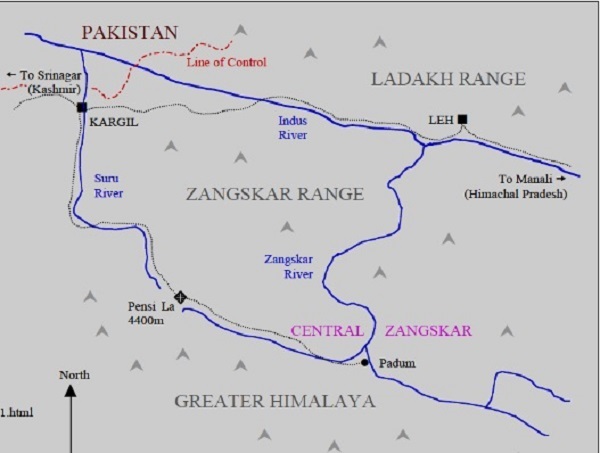
The shortest route to reach Zanskar Valley from Delhi is to travel first to Srinagar and then take the Srinagar–Leh highway to reach Kargil. The rest of the 250 KM can be traveled to Padum on the Kargil Padum road.