 sutikshan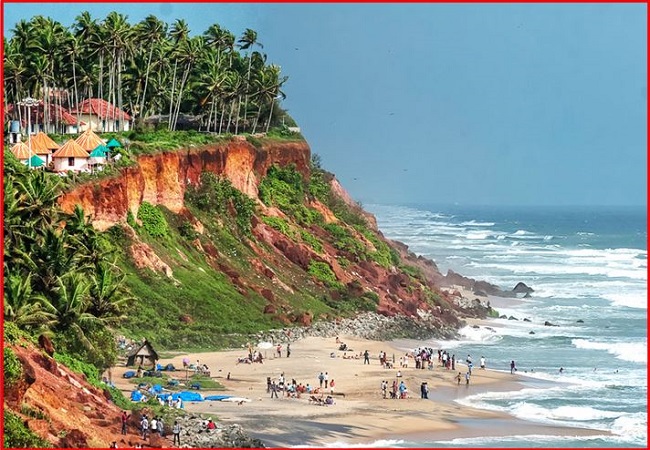
Varkala
Varkala is a major coastal municipality in Kerala and a northern suburb of the capital, Thiruvananthapuram. Historically called Balita, the region is famous for its unique geology: it is the only place in Kerala where cliffs are found adjacent to the Indian Ocean. These Cenozoic sedimentary cliffs, known as the Varkala Formation, have been designated both a National Geological Monument and a geo-heritage site by the Geological Survey of India to protect the feature and promote geotourism. Furthermore, Varkala is recognized in Kerala legends and myths, such as the Kerala Mahatmyam, as a sacred location.
Varkala weather
Varkala, Kerala, experiences a tropical climate characterized by high year-round humidity and three distinct seasons. The best time for tourism is the pleasant, sunny, and dry winter (October to March), with temperatures ranging from 20-30 °C. The region then shifts into a hot summer (April to May), where temperatures can reach 40 °C. Finally, the monsoon season (June to September) brings heavy, non-stop rainfall and lush greenery, with warm temperatures averaging 24- 29 °C.
Winter (October – March): The peak tourist season. Expect clear skies, pleasant temperatures (around 20-30°C), cool evenings, and ideal conditions for beaches and water sports.
Summer (April – May): Hot and humid, with temperatures often reaching up to 40°C, making it less comfortable for some tourists.
Monsoon (June – September): Heavy rainfall, lush landscapes, and dramatic seas. Temperatures are warm (24-29°C), but heavy downpours can disrupt plans.
Varkala Beach
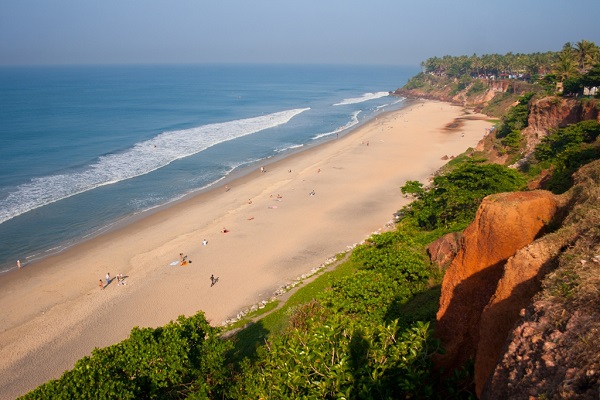
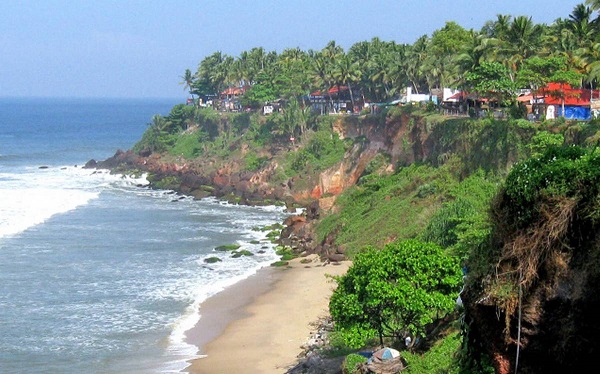
Varkala Beach in Kerala is famous for its dramatic red laterite cliffs overlooking the Arabian Sea, offering spectacular sunset views. This scenic and laid-back destination offers a vibrant mix of activities, including cafes, shops, yoga, and Ayurveda on the North and South Cliffs. Visitors can enjoy swimming, sunbathing, surfing, and fresh seafood, alongside spiritual exploration at sites like the ancient Janardhana Swamy Temple. Varkala is treasured for its unique blend of natural beauty and spiritual significance, though the beach’s size varies seasonally.
Geology
The cliffs of Varkala expose lithological units formed about 15 to 20 million years ago. Here, the Precambrian rocks are overlain by sedimentary rock belonging to the Warkalli Formation of the Mio-Pliocene age. The Warkalli formation, along with the Quilon formation, represents sediments exposed in the Kerala basin. The Quilon formation of the Miocene age is made up of limestone, and the Warkalli formation is made up of alternating beds of sand, clay, and shale exposed along the Varkala cliffs. Thin seams of lignite in the shale of the Warkalli formation suggest good vegetation at the time of deposition of the sediments.
Varkala Tourist Places
Varkala is celebrated for its iconic Cliff (offering sunsets, cafes, and unique shopping), the sacred Papanasam Beach, and important spiritual sites like the Janardhana Swamy Temple and Sivagiri Mutt. Other popular spots include the massive Jatayu Earth Center, serene Kappil Beach for water sports, and Paravur Lake for kayaking, along with abundant yoga and Ayurveda centers.
The Cliff Of Varkala
The Cliff of Varkala is a unique geological formation in Kerala, India, featuring dramatic red cliffs overlooking the Arabian Sea, offering stunning views, vibrant cafes (North Cliff), peaceful retreats (South Cliff), ancient temples, and adventure sports.
The cliff seen in the Varkala beach is a unique sedimentary geo-morphological structure on the flat Kerala coast. The surrounding areas have become India’s first national geopark under a Geological Survey of India (GSI) initiative to preserve geologically important sites in the country. Varkala is a coastal town and municipality in the Thiruvananthapuram district.
The Cenozoic sedimentary formations of the Varkala beach are a unique geological feature on the otherwise flat Kerala coast and are known among geologists as the Varkala Formation. Geoparks are places where rare geological landforms are preserved, and low-impact recreational, scientific, and educational activities are pursued. Varkala is the only place on the west coast of India where sediments in the Mio-Pliocene Age have been found.
Also Read- Kozhikode Beach: The Heart of Kerala’s Malabar Coast
Papanasham Beach
‘Papanasam’ beach is one of the important tourist spots in Varkala and has religious significance. It is believed that a dip in the waters here will wash away all the sins (papam) and hence the beach is known as Papanasham beach. In the Hindu religion, it is a very auspicious place. The ashes collected from the cremation grounds are immersed in the sea here. They believe that the sins of the deceased will be washed away, and the soul will get eternal salvation. Varkala is also known for the 2,000-year-old Janardana Swami Temple, which is often referred to as Dakshin Kashi (Benares of the South). The temple is located close to Papanasam beach, which is an Ayurveda treatment center.
Jatayu Earth’s Center
Jatayu Earth’s Center (also known as Jatayu Nature Park) is a national park and tourism center located at Chadayamangalam in the Kollam district of Kerala, India, situated 350 m. above mean sea level. Its main feature is the world’s largest bird sculpture, created by Rajiv Anchal. This massive sculpture measures 61 m. long, 46 m. wide, and 21 m. high. Visitors can access the top via Kerala’s only cable car.
Things to do in Varakala
Varkala is a destination celebrated for its dramatic cliffside views and diverse offerings, all centered around the vibrant North Cliff with its cafes and markets. The area provides a perfect blend of experiences: stunning beaches like Papanasam and Kappil; deep spirituality at sites like the Janardhana Swamy Temple and Sivagiri Mutt; adventure through surfing, kayaking, and the Jatayu Earth Center; and profound relaxation via yoga and Ayurveda therapies. Key activities include watching spectacular cliff sunsets, exploring backwaters, enjoying water sports, and visiting ancient temples.
Varkala Beach Resort
Also read- Geotourism And Modern Geotechniques
Varkala has recently been developed and is a new place to hang out in India. The north of Varkala Beach is getting developed for tourism. There is a promenade built by the Department of Tourism, which allows a scenic 1.5-hour walk, passing Odayam and Edava until Kappil. The beaches around this area are excellent, tourists can mellow and relax, swim, sleep, and chill out. The main season to visit Varkala is from December to March.
Bangalore to Varakala Distance
By Road (Driving): The approximate distance is around 630 to 680 km. The driving time is typically about 9.5 to 13 hours. By Train: The railway distance is longer, averaging around 731 to 788 km. The journey takes approximately 14 to 17 hours. By Air: The aerial distance is about 480 km, with the fastest route involving a flight to Trivandrum (Thiruvananthapuram) and a subsequent cab ride to Varkala, taking about 4 hours total.