 sutikshan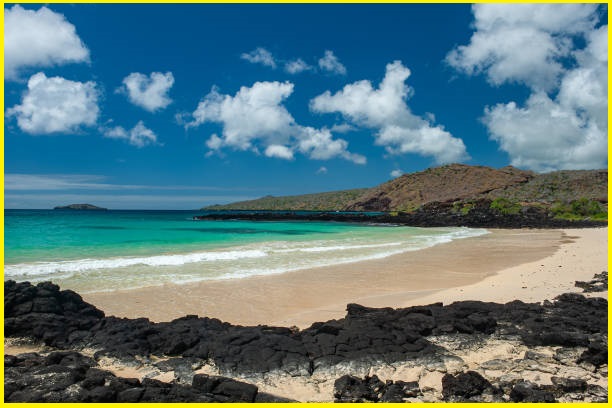
Punta Cormorant
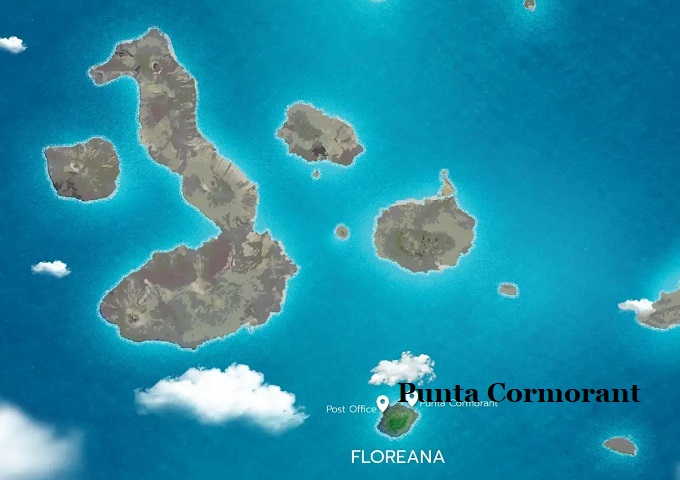
Punta Cormorant, situated on the northern tip of Floreana Island in the Galápagos Islands, is famous for its distinctive green sand beach formed by olivine crystals, alongside a contrasting white coral sand beach. It is an exceptional spot for observing wildlife such as Greater flamingos, white-cheeked pintails, green sea turtles, and white-tipped reef sharks, and is typically reached via a wet landing.
Punta Cormorant, located on Floreana Island in the Galápagos Islands, is known for its striking golden-green beach enriched with olivine. This sand is made up of volcanic crystals formed deep within the Earth’s mantle—containing aluminum, silica, magnesium, and iron—along with eroded tuff, all contributing to its distinctive color.
Migratory Bird
A short distance inland lies a brackish lagoon that supports a wide variety of migratory and coastal birds, making it an excellent spot for observing Galápagos flamingos. Remarkably, a significant portion of the archipelago’s total flamingo population—estimated at just 1,200 to 1,500 individuals—can often be found gathered in this single pond.
These flamingos frequently move between islands in search of food but do not migrate to mainland Ecuador. Their ancestral origins trace back to the Caribbean region.
Punta Cormorant Galapagos Trail
The trail leads onward to a pristine white-sand beach, one of the most important nesting grounds for Green sea turtles. Visitors are advised to avoid walking in the water, as stingrays often lie hidden beneath the sand and can be dangerous if stepped on accidentally. From the shore, you may spot sea turtles, blue-footed boobys diving into the ocean, and small reef sharks cruising along the coastline in search of food.
Also read- Green Sand Beach: The Rarest Hawaiian Secret
This coral-sand beach marks the end of the trail. From here, the return journey takes you back to the olivine beach where you first landed, offering opportunities to swim or snorkel among sea turtles, reef fish, sea lions, and white-tipped reef sharks on a good day. A small colony of Galápagos penguins also inhabits Floreana Island and can occasionally be seen.
Champion Islet, named after the whaler Andrew Champion, lies just off the coast of Floreana in the southern part of the Galápagos Islands. It is widely regarded as one of the most stunning snorkeling destinations in the region.
Punta Cormorant Beach
Punta Cormorant, situated on Floreana Island in the Galápagos Islands, is famous for its distinctive olive-green sand beach formed by olivine crystals, alongside a contrasting white coral sand beach. Reached by a wet landing, visitors can follow a 1.8 km trail to a lagoon that hosts flamingos, stingrays, white-tipped reef sharks, and nesting Green sea turtles.
Also read- Geotourism And Modern Geotechniques
Beaches: A green sand beach, Playa Verde, and a white sand beach, Playa Blanca, are linked by a short and easy walking trail.
Wildlife: Visitors commonly spot Greater flamingos, white-cheeked pintails, Sally Lightfoot crabs, stingrays, and Green sea turtles, especially between December and March.
Activities: The site is ideal for guided hiking, photography, and observing marine life.
Snorkeling: Snorkeling is allowed only in designated areas, typically near the green sand beach, and is prohibited at the white sand beach.
Swimming: Swimming is generally restricted at the white sand beach to help protect the surrounding marine ecosystem.
How to Reach Punta Cormorant
To reach Punta Cormorant on Floreana Island in the Galápagos, take a daily speedboat tour from Puerto Ayora (Santa Cruz Island), which takes 1–2 hours. Tours cost roughly $150–$200 USD and typically include transportation, guides, lunch, and stops at Devil’s Crown. Book in advance via local agencies.