 sutikshan
LOKTAK LAKE, Manipur
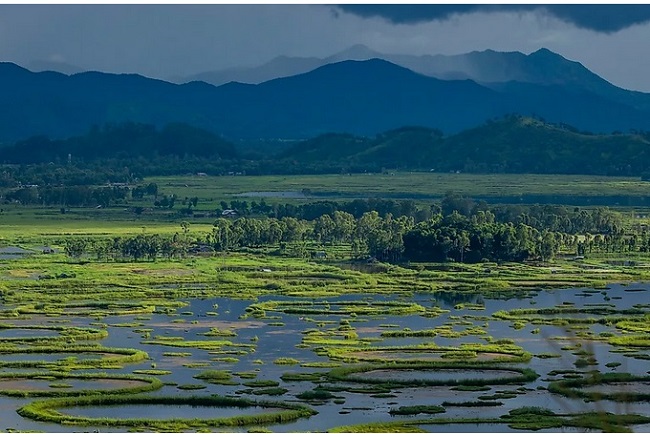
LOKTAK LAKE is located in northeast India’s Manipur state. It is about 40 km from the State capital Imphal, in the Bishnupur district. Loktak lake is recharged with the Manipur River and is the largest freshwater lake in the Northeast, with 111 square miles of area. what makes Loktak lake unique, is its collection of floating Phumdis. Phumdis appear to be a series of small, circular islands dotted in the shallow lake.
Loktak lake is a supervolcanic caldera. The area of the lake is 236.21 sq. km comprising large pockets of water and marshy land formed at the southern part of the Imphal valley up to the confluence of the Manipur River and Khuga. Cretaceous limestone, the Disang with serpentinites (Lower to Middle Eocene–Upper Cretaceous), the Surmas, and the Tipams (Miocene) are the dominant rock formations in the catchment of the Manipur basin. Higher reaches of hills have the Disang and Tipam groups of rocks while the Surma group occurs in the lower reaches.
Keibullamjao National park and Loktak lake
Loktak Lake, a Ramsar designated, is an internationally important wetland system and an adjoining 40 sq. km. the extent of Phumdis, known as KeibulLamjao National Park (KNLP) is the only floating national park in the world. The Phumdis and surrounding lake were declared a national park in 1977.
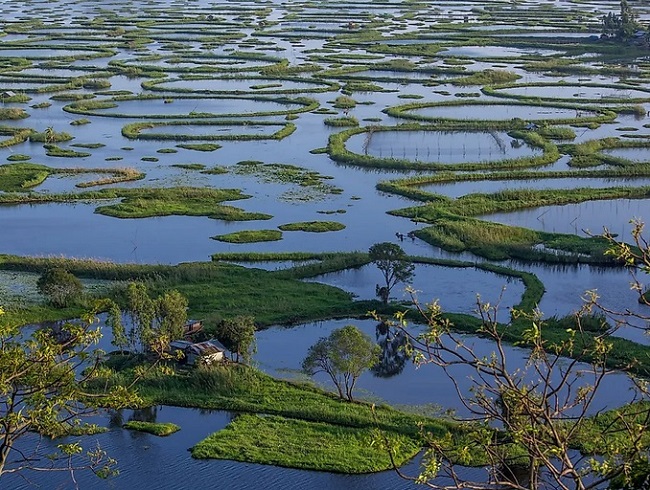
The KeibulLamjao and Loktak lake Conservation park is of superlative natural beauty and provides some of the most spectacular scenery on earth. Lake is located in Manipur State which is also called the Switzerland of the east and is famous for many peculiar features. Keibul Lamjao Conservation Area can be compared with the lake Baikal (Russia) which is also a freshwater lake that contains an outstanding variety of flora and fauna, which is of exceptional value to evolutionary science.
This national park is the natural home to the endangered and endemic species of Manipur’s brow-antlered deer. The lake has rich biological diversity with 132 species of plants and 428 species of animals. It also provides irrigation to about 32,400 ha of agricultural area. The annual benefits from the lake can be estimated to be about 2% of the state’s gross domestic product.
What is Phumdis
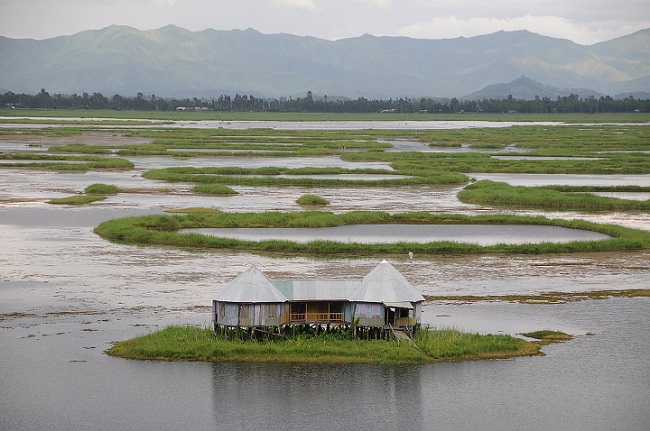
Keibullamjao and Loktak lake is the largest freshwater lake in the Northeast. The attractions of this lake are the ‘phumdis’ or floating biomass and the ‘phumsangs’ or huts of fishermen in the Lake.
Also, Read- The Magnificent “Welded Tuff” Geoheritage Site in the Jodhpur Fort area
Due to the Phumdis, Loktak Lake looks dotted with numerous small islands from above. Phumdis means a collection of floating heterogeneous masses of vegetation, decomposing organic matter, and soil. The phumdis floating in this lake are formed naturally. This phenomenon is formed when the foliage floating in the water piles up together over the course of thousand years.
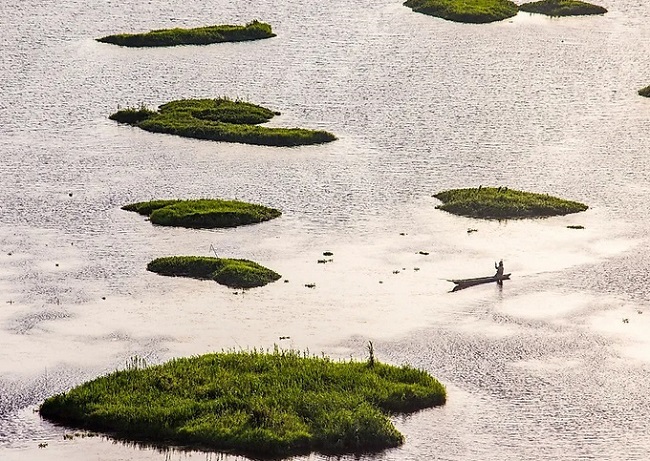
The mass of lush green phumdis sits below the surface of the lake during the dry season, they attach to the lake’s bottom with their roots gathering nutrients from the soil And, when the monsoon arrives, the living roots absorb nutrients from the lakebed and rise again. The thickness of phumdis can reach up to 2 m. The larger, circular phumdis are actually full of fish and serve as a major food source and livelihood for the surrounding community.
Due to the intense human activities resulted in large degradation of wetlands affecting the biotic and abiotic components of the freshwater ecosystems. The Loktak Lake of Manipur in the Indo-Burma Biodiversity region has been degraded and threatened due to an increase in population and the demand for more resources.