 sutikshan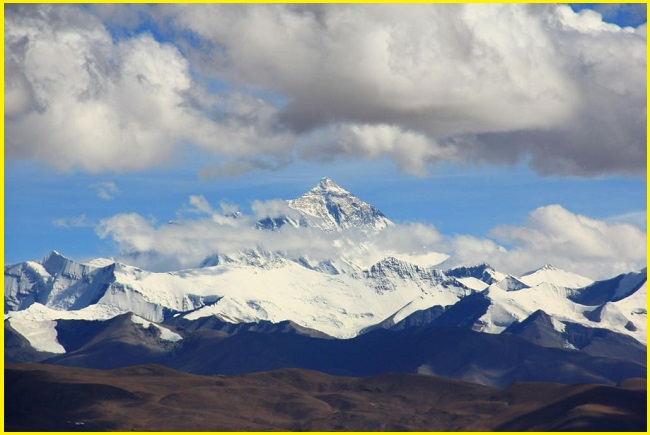
Mount Everest – The Tallest Mountain in the World
Mount Everest is the highest peak in the Himalaya mountain range, situated on the border between Nepal and Tibet, an autonomous region of China. Standing at 8,849 meters above sea level, it is recognized as the tallest point on Earth. In the 19th century, the mountain was named after George Everest, a former Surveyor General of India. However, it is also known by its local names: Chomolungma in Tibetan, meaning “Mother Goddess of the World” . Sagarmatha in Nepali, which carries multiple interpretations.
The first successful recorded ascent of Mount Everest took place in 1953, achieved by Sir Edmund Hillary, a mountaineer from New Zealand, and Tenzing Norgay, his Tibetan guide. This historic feat made them legends in the mountaineering world. The mountain’s prominence was recognized much earlier. In 1856, during the Great Trigonometrical Survey of the Indian Subcontinent, British surveyors confirmed that Everest was the tallest peak on the planet.
History and Geology
The Himalayas, located in the northern part of the Indian subcontinent in Asia, form an extensive mountain range that acts as a natural barrier between the Tibetan Plateau and the fertile alluvial plains of the Indian subcontinent. Mount Everest is not only the tallest peak on Earth but also the most prominent among the renowned Seven Summits of the World.
The Himalayan mountain range was formed around 50 million years ago due to the collision between the Indian-Australian tectonic plate and the Eurasian plate. This immense geological process caused the land to push upward, giving rise to the world’s tallest mountain range. During the early Miocene Epoch, the collision intensified, and the powerful compressional forces further uplifted the Himalayas to even greater heights. Later, in the Pleistocene Epoch, the Greater Himalayas began to take their present shape, forming the iconic peaks we see today—including Mount Everest.
Geological studies reveal that Mount Everest is composed of multiple layers of rock that have been folded and thrust back on themselves, forming undulating structures known as nappes.
Lower elevations of the mountain are primarily made up of metamorphic rocks, such as schists and gneisses, overlain by igneous granites.
Higher elevations consist of sedimentary rocks of marine origin, believed to be remnants of the ancient Tethys Sea.
One of the most notable features is the Yellow Band, a distinct limestone formation visible just below the summit pyramid.
Geologists have further subdivided the mountain’s rock composition into three main units, separated by low-angle faults:
Rongbuk Formation – Found at the base
North Col Formation – Located in the middle section
Qomolangma Formation – Found near the summit
These formations collectively illustrate the complex geological history of Mount Everest, shaped by tectonic forces over millions of years.
Glacier
The slopes of Mount Everest are blanketed by numerous glaciers, such as the Kangshung Glacier, the Rongbuk Glaciers (East, Central, and West), the Pumori Glacier, and the Khumbu Glacier. These glaciers give rise to several rivers, including the Lobujya River from the Khumbu Glacier, the Rong River from the Rongbuk and Pumori Glaciers, and the Kama River from the Kangshung Glacier.
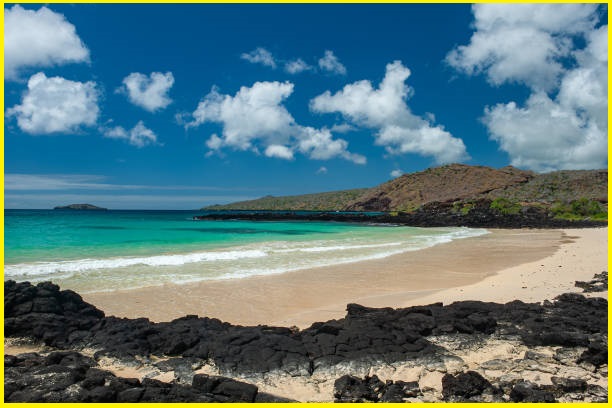
Also read- Fernando de Noronha Archipelago: A UNESCO World Heritage Gem
The Sherpa People and Life in the Himalayas
The Himalayan mountains have been home to various indigenous groups for centuries, the most well-known being the Sherpa people. Although the term “Sherpa” is often used to mean mountain guide, it actually refers to an ethnic community native to the high valleys of Nepal. Sherpas are highly skilled in mountain climbing, making their expertise invaluable for those attempting to summit Mount Everest. In fact, most Everest expeditions would be nearly impossible without their logistical support, guidance, and deep knowledge of the terrain.
Climbing Mount Everest – A Dangerous Adventure
Today, climbing Mount Everest is a dream for many mountaineers, but it remains an extremely challenging and dangerous endeavor. Successful ascents require:
-
Extensive prior mountaineering experience
-
Medical fitness certification
-
Specialized gear
-
Trained Nepalese guides
The climb is fraught with hazards. The snow and ice create risks of avalanches and falls, while unpredictable weather conditions limit the climbing season. The greatest threat, however, is the altitude. Above 8,000 meters lies the infamous “death zone,” where oxygen levels are dangerously low. Most climbers rely on bottled oxygen to survive here. Prolonged exposure can lead to altitude sickness, severe fatigue, and even brain swelling—making every step toward the summit life-threatening.
How to reach Mount Everest
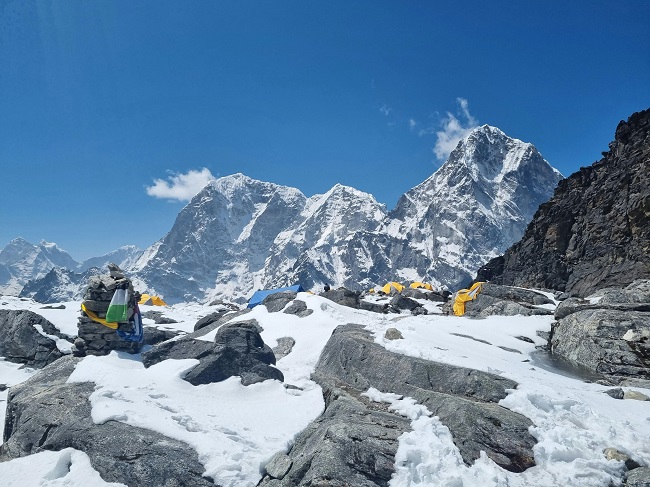
The journey to Mount Everest usually begins with a flight to Kathmandu, the capital of Nepal. From Kathmandu, travelers often take a short domestic flight to Lukla, the gateway to the Everest region. From Lukla, an adventurous trek to Everest Base Camp begins. This trek typically takes 10–14 days and offers stunning views of the Himalayas along the way. EBC sits at an altitude of about 5,364 meters and serves as the starting point for summit attempts.
Climbers then proceed through a series of acclimatization stages, moving between high-altitude camps before making the final push to the summit. This process is essential to adapt to low oxygen levels and reduce the risk of altitude sickness.