 sutikshan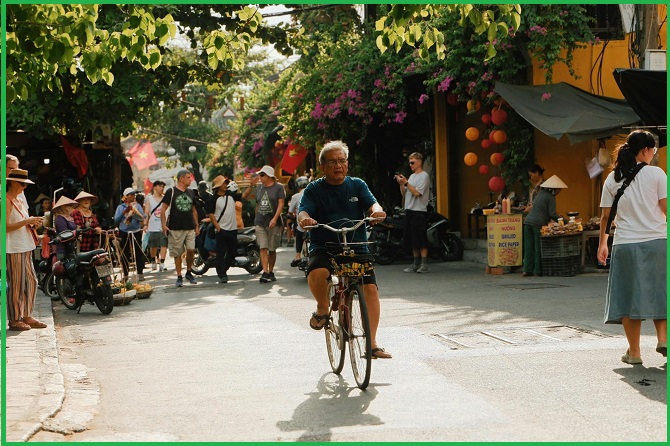
Hoi an Vietnam
Hoi An Ancient Town is an exceptionally well-preserved example of a Southeast Asian trading port from the 15th to 19th century. Its architecture and street layout reflect a blend of indigenous and foreign influences, creating a unique cultural and historical heritage site. Hoi An Ancient Town is located in Vietnam’s central Quang Nam Province, on the north bank near the mouth of the Thu Bon River. The inscribed property covers 30 hectares with a buffer zone of 280 hectares. This exceptionally well-preserved small-scale trading port was active from the 15th to 19th centuries, trading widely with Southeast and East Asia as well as other parts of the world. Its decline in the late 19th century helped preserve its traditional urban fabric to a remarkable degree.
The town reflects a fusion of indigenous and foreign cultures, mainly Chinese and Japanese, with later European influences, which together created its unique character.
Architecture and Culture
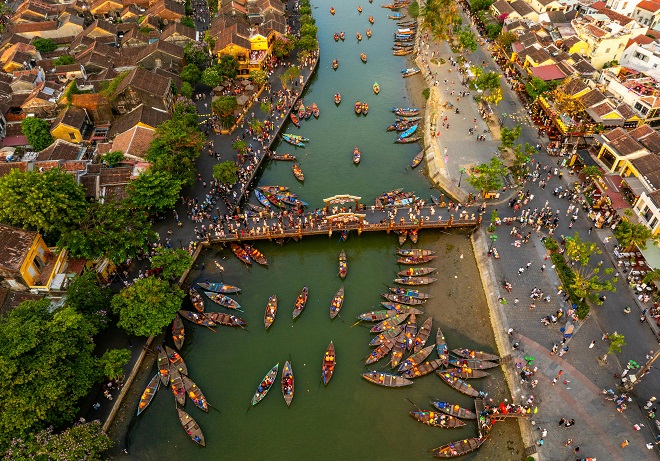
Hoi An comprises a well-preserved complex of 1,107 timber-frame buildings, including architectural monuments, commercial and domestic structures, religious buildings such as pagodas and family cult houses, as well as an open market and a ferry quay. The buildings feature tiled roofs and wooden components carved with traditional motifs, arranged side by side in tight, unbroken rows along narrow pedestrian streets. Notably, the 18th-century Japanese Bridge, complete with a pagoda, remains a highlight.
The original street plan, developed as the town grew into a trading port, still survives. Streets form a grid, with one main axis running parallel to the river and cross streets at right angles. Buildings typically front the streets for easy customer access, while their backs open onto the river, facilitating the loading and unloading of goods from boats.
Hoi An weather
Hoi An experiences two main seasons: a dry season from January to June with hot, sunny, and clear weather, and a rainy season from July to December, marked by high humidity, heavy rainfall, and the risk of storms and flooding, particularly from September to November.
Dry Season (January – June): Warm to hot temperatures with abundant sunshine and clear skies. This period is ideal for sightseeing, outdoor activities, and exploring the town’s historic streets.
Rainy Season (July – December): Temperatures remain warm, but high humidity and frequent heavy rainfall are common. The peak wet season occurs from October to November, often bringing heavy downpours, strong winds, and a risk of flooding.
Best Time to Visit-
For the most pleasant weather, plan your trip between February and August. While July and August can be the hottest months, with temperatures around 30°C, they generally offer sunny and dry conditions ideal for exploring Hoi An.
Things to do in Hoi An
In Hoi An, you can wander through the UNESCO-listed Ancient Town, soak up the sun at An Bang Beach, and immerse yourself in local culture with a Vietnamese cooking class. Don’t miss iconic landmarks like the Japanese Covered Bridge or the vibrant Hoi An Night Market. For a more leisurely experience, explore the town by bike, take a boat ride along the Hoai River, visit traditional villages such as Tra Que, and discover the historical My Son Sanctuary.
Walk or Bike: Stroll or cycle through the charming, pedestrian-friendly streets of Hoi An’s Ancient Town, soaking in its unique atmosphere. Visit Historic Houses: Step back in time at traditional homes like the Old House of Tan Ky, where centuries-old architecture and design tell the story of Hoi An’s past.
See the Japanese Covered Bridge: Admire this iconic landmark, a beautifully preserved symbol of the town’s history as a bustling trading port. Explore the Markets: Discover fresh produce and local goods at the Central Market, or wander the lively Night Market to shop for handicrafts and enjoy street food.
Relax at An Bang Beach: Enjoy sunbathing, swimming, or dining at charming oceanfront restaurants at this nearby beach. Visit Tra Que Vegetable Village: Explore a traditional farming village, learn about organic cultivation, and taste fresh local herbs and vegetables.
Also read- Ninh Binh-Vietnam’s Natural Wonderland
Hoi An Hotels
If you’re planning a trip to Hoi An, Vietnam, here are some top-rated hotels across various categories to consider:
Four Seasons Resort The Nam Hai
A 5-star beachfront resort offering private villas with pools, multiple dining options, and a renowned spa. It’s located along Ha My Beach, providing a tranquil escape.
Victoria Hoi An Beach Resort & Spa
This resort is designed to resemble a traditional fishing village and offers rooms with garden, river, or ocean views, along with a full-service spa and complimentary shuttle service to Hoi An.
Anantara Hoi An Resort
Situated along the Thu Bon River, this boutique luxury resort features charming garden and river view rooms and suites, riverfront dining, and blissful spa journeys.
La Siesta Hoi An Resort & Spa
Located near the beach, this resort offers elegant rooms, a spa, and a variety of dining options. It’s known for its excellent service and tranquil ambiance.
Hoi An Historic Hotel
Situated near the Old Town, this hotel combines modern amenities with traditional Vietnamese architecture. It’s within walking distance to major attractions.
Hoi An Lantern Festival
The Hoi An Lantern Festival is a magical monthly celebration held on the 14th day of each lunar month in Hoi An’s Ancient Town. During the festival, the streets are illuminated with vibrant lanterns, electric lights are minimized, and floating candles are released onto the Thu Bon River, creating a mesmerizing scene. Visitors can enjoy traditional performances, live music, and folk games, while locals honor their ancestors and make wishes for good fortune and peace. The festival reaches its most spectacular display during the first full moon of the Lunar New Year, offering an unforgettable cultural experience.
Hoi An Beach
Hoi An has several beautiful beaches, including the vibrant An Bang Beach and the quieter Ha My Beach. An Bang Beach is a popular, lively spot for tourists and locals with white sand and clear water, while Ha My Beach offers a more tranquil, pristine experience. Other options include the picturesque Binh Minh Beach and the unique Tam Thanh Beach, which is known for its vibrant painted village.
An Bang Beach: A highlight of Hoi An, known for its beautiful, clear stretch of sand and lively atmosphere, offering a perfect getaway from the city’s hustle and bustle. Ha My Beach: A tranquil and stunning coastal gem with soft golden sands, clear turquoise waters, and a relaxed ambiance. Binh Minh Beach: Translating to “sunrise,” this beach features signature white sand and crystal-clear water, perfect for relaxation.
Tam Thanh Beach: A peaceful beach in a coastal village, famous for its colorful wall paintings depicting local life in the Tam Thanh Painted Village. Cua Dai Beach: Once a very popular hotspot, this beach is still a viable tourist destination with white sands, though it has experienced erosion.
Da Nang to hoi an
Hoi An is just 30 kilometers from Da Nang practically next door! By car, the journey typically takes around 30 to 45 minutes, depending on traffic and the time of day.
Hanoi to Hoi An
The distance from Hanoi to Hoi An is roughly 800 kilometers, a significant journey. Because of this, many travelers prefer flying over driving or taking the train. Flying is the quickest way to reach the Ancient Town, with multiple daily flights connecting the two cities. The journey takes approximately 1.5 hours, and several airlines operate on this route, including Vietnam Airlines, Jetstar Pacific, Vietjet Air, and Bamboo Airways.