The Rock-Forests: Geology and Art at Tassili n’Ajjer, Algeria

Tassili n’ajjer Algeria

Set within a surreal, moon-like landscape of remarkable geological significance, Tassili n’Ajjer contains one of the world’s most important collections of prehistoric cave art. Over 15,000 drawings and engravings depict climatic shifts, animal migrations, and the evolution of human life along the edge of the Sahara from around 6000 BC to the early centuries of the modern era. The area’s eroded sandstone formations create breathtaking “rock forests,” adding to its extraordinary scenic beauty.

Geology

The geological structure of Tassili n’Ajjer comprises Precambrian crystalline formations and sedimentary sandstone layers, offering exceptional insights into ancient paleogeographical and paleoecological conditions. The range is primarily composed of sandstone, its surfaces coated with desert varnish—a thin layer of metallic oxides that tints the rock formations in shades ranging from deep black to muted red.

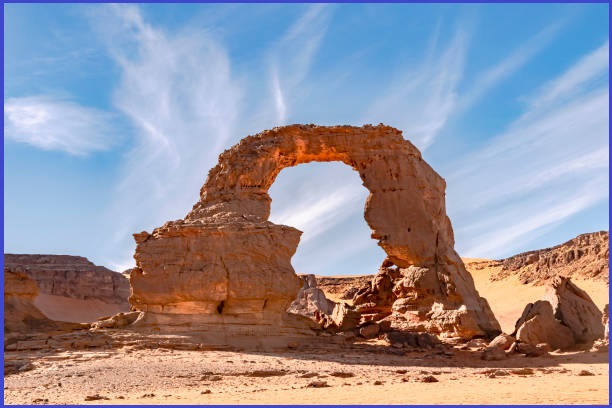
Erosion has sculpted the landscape into nearly 300 natural rock arches in the southeast, while in the north, it has created deep gorges and permanent water pools that add to the region’s striking natural beauty. The panorama of geological formations, featuring “rock forests” of eroded sandstone, creates a surreal landscape that closely resembles the surface of the moon.

Also read- A Unique volcanic field in Algeria-The Hoggar Mountains

With its eroded sandstone forming striking “rock forests,” the area possesses exceptional scenic beauty. The sandstone has preserved clear evidence of major geological and climatic events over time. The combined effects of water erosion followed by wind have shaped the landscape into a distinctive form—a plateau sculpted by water and later refined by the forces of the wind

Tassili n’Ajjer National Park

Tassili n’Ajjer National Park is one of the world’s most significant cultural and natural sites, renowned for its spectacular geological features and immense collection of prehistoric rock art.  Tassili n’Ajjer is an extensive plateau in southeastern Algeria, bordering Libya, Niger, and Mali, and spanning approximately 72,000 square kilometers. Prehistoric paintings, engravings, and archaeological remains offer a remarkable window into early human history.

Also Read- Business success story

From around 10,000 BC to the first centuries of the Common Era, successive cultures inhabited the region, leaving behind dwellings, burial mounds, and enclosures rich in stone and ceramic artifacts. However, it is the breathtaking rock art—discovered in 1933 and now comprising over 15,000 recorded engravings—that has made Tassili n’Ajjer world-famous.

Tassili n'Ajjer

Tassili n’Ajjer cave paintings

The Tassili n’Ajjer is one of the most important collections of prehistoric rock art in the world. The site features over 15,000 paintings and engravings that document the climatic changes, animal migrations, and the evolution of human life in the Sahara over a period of approximately 10,000 years. The rock art is generally categorized into distinct chronological periods based on style and content, which reflect the changing environment and cultures.

The park is most famous for its extraordinary open-air gallery of rock art, which documents thousands of years of human and environmental history.

Early Periods (c. 10,000 – 7,000 BCE): Depicts large wild animals that have since vanished from the region (e.g., elephants, rhinos, giraffes, and hippopotamuses), a testament to a much wetter climate.

Pastoral Period (c. 7,000 – 3,000 BCE): Shows scenes of domesticated cattle, sheep, and daily life, illustrating the shift to a herding culture. This period is famous for the enigmatic “Round Head” figures.

Later Periods (from c. 2,000 BCE): Depicts horses, chariots, and eventually the camel, marking the progressive aridification of the Sahara and the start of trans-Saharan trade.

How to Reach Tassili n’Ajjer

To reach Tassili n’Ajjer, travelers must first fly from Algiers to Djanet, the nearest town and official entry point to the park. From Djanet, access is only possible through organized tours—usually conducted in 4×4 vehicles—as independent travel within the park is restricted and requires special permits.

Related Posts

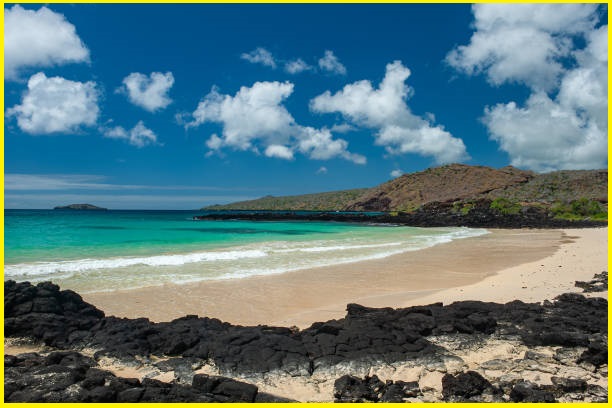
Ultimate Punta Cormorant: Hidden Beach & Wildlife Adventure

Punta Cormorant, situated on the northern tip of Floreana Island in the Galápagos Islands, is famous for its distinctive green sand beach formed by olivine crystals, alongside a contrasting white coral sand beach

Avery Island: A Stunning Salt Dome and Wildlife Sanctuary in Louisiana

Avery Island, historically known in French as Île Petite Anse, is a notable salt dome widely recognized as the birthplace of Tabasco hot sauce. It is located in Iberia Parish in the U.S. state of Louisiana, about three miles (4.8 km) inland from Vermilion Bay

Leave a Reply

Your email address will not be published. Required fields are marked *

You Missed

Taconic Unconformity: Shocking Earth’s Missing Strata Revealed!

Taconic Unconformity: Shocking Earth’s Missing Strata Revealed!

Hanging Rock Klint, Indiana: Stunning 400-Million-Year-Old Fossil Reef

Hanging Rock Klint, Indiana: Stunning 400-Million-Year-Old Fossil Reef

Ultimate Punta Cormorant: Hidden Beach & Wildlife Adventure

Ultimate Punta Cormorant: Hidden Beach & Wildlife Adventure

Epic Geological Wonder: Palisades Sill, New Jersey

Epic Geological Wonder: Palisades Sill, New Jersey

Fort Dodge Gypsum Gypsum, Iowa: A Hidden Mississippian wonder

Fort Dodge Gypsum Gypsum, Iowa: A Hidden Mississippian wonder

Spectacular Ardnamurchan Ring Complex: Hidden Volcanic Secrets of Scotland

Spectacular Ardnamurchan Ring Complex: Hidden Volcanic Secrets of Scotland