 sutikshan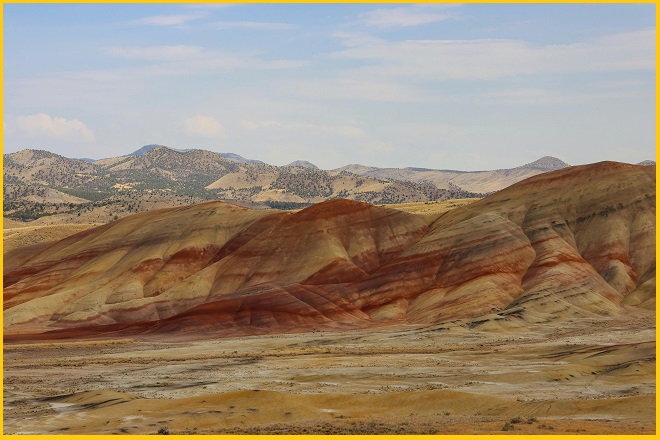
The Painted Hills
The Painted Hills, located in Wheeler County, Oregon, are one of the three units of the John Day Fossil Beds National Monument, along with Sheep Rock and Clarno. Covering 3,132 acres, it lies about 14 km northwest of Mitchell, Oregon, and is recognized as one of the Seven Wonders of Oregon. The striking bands of color that give the hills their name were formed during alternating wet and dry climate cycles spanning the transition from the Eocene epoch to the cooler Oligocene epoch. These vivid layers result from the varied composition of the soil, which includes mudstone, siltstone, shale, and lignite.
Geology
The Painted Hills began forming about 35 million years ago, when ash and pumice from volcanic eruptions in the Cascade Mountains traveled more than 100 miles east and settled in the region. These volcanic deposits mixed with other sediments through natural processes such as flowing water, plant growth, and animal activity. Over time, the ash at the surface oxidized, while buried layers underwent compaction and cementation, gradually transforming into soil. Continued weathering eventually shaped the outer surfaces into clay, leaving the Painted Hills today composed mainly of hardened claystone layers.
Reason Behind the Color
The vivid colors of the Painted Hills are the result of volcanic ash deposits rich in elements such as aluminum, silicon, iron, magnesium, manganese, sodium, calcium, phosphorus, titanium, potassium, oxygen, and hydrogen. When first deposited, the ash was pale, but as it mixed with soils and minerals over time, it produced the striking reds, yellows, and blacks seen today.
Also read- Danxia landform in Rainbow Mountain: Take a tour around colorful fairy tale of the world
The alternating red and tan bands reflect climate cycles that occurred between 34 and 28 million years ago, as the warm, humid conditions of the Eocene epoch gave way to the cooler, drier conditions of the Oligocene epoch. The red layers, formed during wetter, more tropical periods, consist of iron- and aluminum-rich laterite soils, their rust tones created by iron oxide. In contrast, the yellow layers developed during drier intervals and owe their coloration to iron and magnesium oxides.
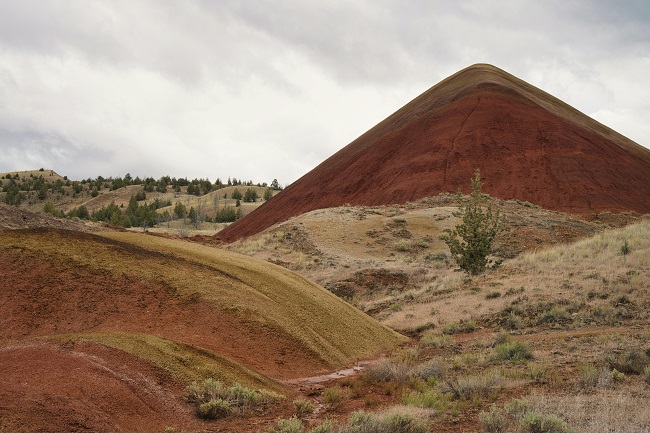
The darker hues tell another part of the story: black soils come from lignite, once vegetative matter along ancient floodplains, while gray tones represent mudstone, siltstone, and shale. The distinctive black streaks across the hills are the result of manganese oxide.
Fossils Assemblage
Fossils are relatively uncommon in the Painted Hills because the irregular deposition of volcanic ash created poor conditions for preservation, and most organic material decayed over time. However, leaf fossils from ancient lake beds have been discovered throughout the area. These impressions reveal the presence of plants such as redwood, cinnamon, fig, and alder, reflecting the warmer, more humid climate that characterized the hills’ early formation.
Despite the rarity of plant fossils, the larger Painted Hills unit is especially significant to vertebrate paleontologists. It has yielded abundant fossil remains of early horses, camels, and rhinoceroses, offering valuable insights into prehistoric ecosystems.
Visiting the Painted Hills
The Painted Hills, part of Oregon’s John Day Fossil Beds National Monument, offer a remote and unforgettable experience. Visitors should come prepared—fill up on gas beforehand and download offline maps, as cell service is limited in the area. The site features several short and easy trails, such as the Carroll Rim Trail and the Painted Cove Trail, which provide excellent viewpoints of the colorful hills. To help protect these fragile landscapes, it’s essential to stay on designated paths. Entry is free, and the area is open year-round, but the best times to visit are in spring, when wildflowers bloom, or during early mornings and weekdays to enjoy the scenery with fewer crowds.
The Painted Hills, Oregon Camping
Near the town of Mitchell, Oregon, Painted Hills Dispersed Camping offers a quiet retreat surrounded by striking geological formations. This free, no-reservation camping area is perfect for spontaneous getaways, though visitors should come fully prepared as there are no amenities on-site. Campers often praise the peaceful seclusion of the spot. One visitor shared, “I spent the hottest part of the day in my shade tent reading, and in the evening watched the fire under the stars from my hammock.” The trade-off for the lack of facilities is an atmosphere of pure tranquility, where it’s easy to disconnect and recharge. Just a short drive away, the Painted Hills themselves provide incredible opportunities for hiking and photography.
How to Reach Painted Hills
The Painted Hills are best accessed from the town of Mitchell, Oregon, where signs direct visitors to the Painted Hills Unit of the John Day Fossil Beds National Monument. From Portland, the drive takes approximately four hours and offers a scenic route through either the historic ghost town of Shaniko or the Mount Hood National Forest. Visitors coming from Bend can reach the site in just over an hour (around 1 hour and 20 minutes) by car.