 sutikshan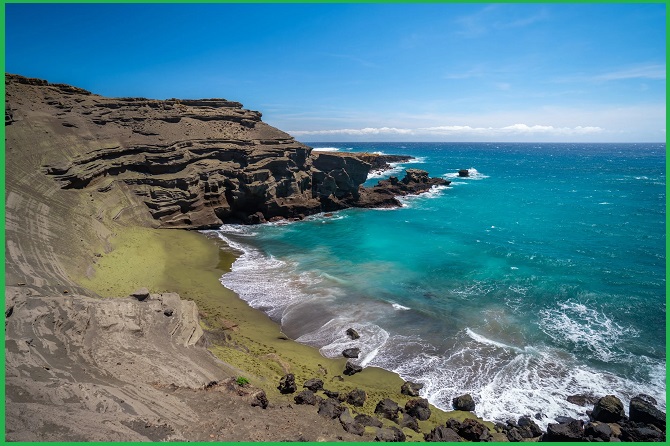
Papakolea Beach
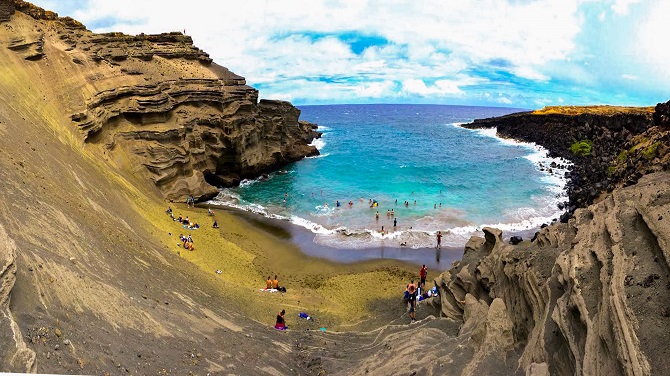
Papakōlea Beach, also known as Green Sand Beach or Mahana Beach, is a unique green sand beach in the Kaʻū district of Hawaiʻi near South Point. It’s one of only two green sand beaches globally—the other is Punta Cormorant in the Galápagos Islands—and gets its distinctive color from olivine sand eroded from the surrounding volcanic cone.
Papakōlea Beach is nestled in a bay partially encircled by Puʻu Mahana, a tuff ring over 49,000 years old associated with the southwest rift of Mauna Loa. Tuff rings, unlike cinder cones, are composed mainly of volcanic ash created by the violent interaction of magma and groundwater (similar to Diamond Head). Since its formation, the Puʻu Mahana tuff ring has partially collapsed and been significantly eroded by the ocean. The beach’s name, Papakōlea, originates from papa kōlea (plover flats in Hawaiian), referring to the area near the crater where Pacific golden plovers are occasionally observed during the winter.
Geology
The green color of Papakōlea Beach sand comes from olivine crystals eroded from the surrounding tuff ring’s fragmented volcanic material (pyroclastics). Olivine, a common silicate mineral containing iron and magnesium (and known as peridot when gem-quality), is one of the first crystals to form as magma cools. As the headland erodes, the sea winnows these dense, green crystals (colored by ferrous iron) onto the beach, while the less dense volcanic sand is swept away, causing the distinct accumulation of olivine. Locally, olivine is sometimes called “Hawaiian Diamond” and is notably found in Oʻahu’s Diamond Head landmark.
Papakolea Beach, Big Island
Hawaiʻi, officially called the Big Island, is the largest island in the U.S. Hawaiian archipelago and boasts remarkably diverse terrain, ranging from lush rainforests to unique colored-sand beaches like the green sands of Papakōlea and the black sands of Punaluʻu. The island is also home to two active volcanoes, Kīlauea and Mauna Loa, located within Hawaiʻi Volcanoes National Park. Furthermore, popular snorkeling spots such as Hāpuna Beach and Kahaluʻu Beach Park are found on the west side.
Also Read- The Hawaii Islands: younger volcanic hotspot near the Pacific Plate
The island spans 150 km at its widest point, but its most remarkable dimension is the height of Mauna Kea. Measured from its base on the sea floor to its peak, Mauna Kea reaches 10,000 meters, making it the world’s tallest mountain—exceeding Mount Everest, whose base sits above sea level.
Papakolea Beach Hike
The hike to Papakōlea Green Sand Beach, located near the southern tip of the Big Island, is a challenging out-and-back journey of approximately 5.5 miles total (2.5 to 2.8 miles each way). The route demands traversing rugged, exposed terrain and offers little shade, making sun exposure and uneven footing significant concerns for hikers. Alternatively, visitors can hire a local driver to transport them to the beach.
The trek to the beach is an approximately 5.5-mile round trip that generally takes between 2 and 2.5 hours to complete. Due to the lack of shade and the presence of uneven, rocky terrain, the hike is considered strenuous. Visitors should park at the designated lot near South Point Road before starting the trail.
Due to the relentless sun exposure on the trail, hikers should be prepared with ample water and sun protection. Furthermore, the path is challenging, consisting of rugged, uneven terrain, including rocks and soft sand, and the maze of converging dirt roads and smaller paths makes it easy to get lost.
Also read- Geotourism and Modern Geotechniques
Papakolea Beach Green Sand
Papakōlea Beach, commonly known as Green Sand Beach, is a rare marvel near South Point on the Big Island of Hawaii. Its distinctive green hue comes from the mineral olivine, a volcanic material eroded from the nearby Puʻu Mahana cinder cone by the relentless waves. Accessing this unique beach involves a challenging 2.7-mile hike each way, or visitors can opt for a local shuttle due to the rough, unpaved road.
The beach’s green color is caused by olivine crystals eroded from the collapsed Puʻu Mahana cinder cone, which erupted approximately 49,000 years ago. This unique geological feature makes it one of only four green sand beaches in the world.
How to get to Papakolea Beach
Access to Papakōlea Beach begins at a parking lot near South Point on the Big Island of Hawaiʻi, located about 3 miles east of Ka Lae. Visitors have two options: hiking the 5.5-mile round trip on rugged paths, or hiring a truck ride from locals. Given the area’s relentless sun exposure and complete lack of shade, taking the shuttle is the recommended and best option.