Pamukkale Travertine
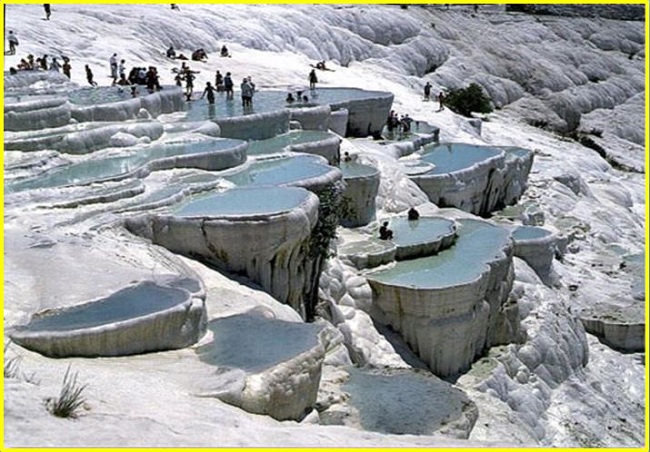
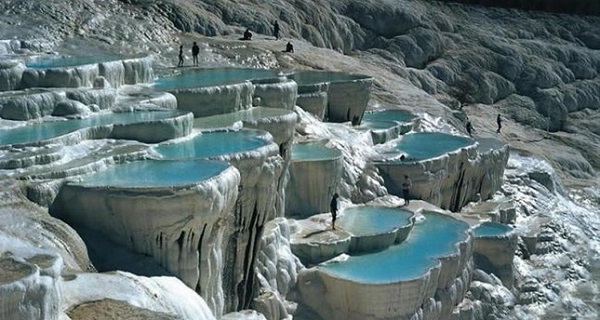
The Pamukkale travertine terraces are a natural wonder in Turkey formed by hot springs that deposit calcium carbonate, creating white, cascading pools and terraces that look like a “cotton castle”. Visitors can walk barefoot on the terraces to experience the mineral-rich waters and enjoy scenic views. Nearby are the ruins of the ancient city of Hierapolis, which is also part of the UNESCO World Heritage site.
Pamukkale, meaning “cotton castle” in Turkish, is a natural site in Denizli Province in southwestern Turkey. The city contains hot springs and travertines, terraces of carbonate minerals left by the flowing water. Brilliant white travertine terraces and warm, limpid pools of Pamukkale hang, like the petrified cascade of a mighty waterfall, from the rim of a steep valley side that truly surprises you. The travertine hot spring at Pamukkale is an incredible display of natural travertine deposits. Travertine is a type of limestone that is deposited by hot springs. The fibrous travertine forms from the precipitation of calcium carbonate from the solution.
The Pamukkale and the Hierapolis, an ancient city, were both recognized as part of the UNESCO World Heritage Sites in 1988. Pamukkale in Turkey is still one of the healthiest and most mysterious places in the world.
In terms of natural beauty, the travertine hot spring at Pamukkale is one of the most epic wonders. With its fluffy cotton pools and geologic heritage, it is beautiful from all angles. The snowy white calcium cascade terraces called travertines flow down into the Menderes Valley like golden hairs of the mountains in the sunset.
Pamukkale Travertine Geology
Pamukkale’s iconic white terraces are composed of travertine, a sedimentary rock formed by mineral-rich water from local hot springs. The region features 17 hot springs, with temperatures ranging from 35°C to 100 °C. The heated, calcium carbonate-supersaturated water travels 320 meters before reaching the terraces. When it surfaces, the water degasses carbon dioxide, causing the calcium carbonate to precipitate out as a soft gel. This gel then crystallizes, depositing travertine across a section 60–70 meters long and 24–30 meters wide, ultimately sculpting the famous layered formation.
How this Travertine Formed
Terraces of Travertine is a geological formation that is based on 17 main hot water springs that are sources of calcium carbonate, which gets deposited as a mineral rock on the surface. The geologic structure of it is a chemical and geological bond of hot water springing from 320 meters depth and deposits of calcium carbonate on the surface up to 60-70 meters above the ground surface.
Deep in the earth a vast source of water that is heated by volcanic lava, and as a result, the water dissolves pure white calcium and then becomes saturated with the calcium before appearing on the surface of the earth, where it bursts and runs down a steep hillside. As the calcium cools in the open air, the material precipitates from the water and adheres to the soil. And the result is a form of calcium cascades frozen in stone.
Medical benefit
The mineral-rich Pamukkale hot spring waters are high in calcium, magnesium sulfate, and bicarbonate. Water temperature is 36 to 38 degrees Celsius with a pH of 6, and total mineral content of 2,430 mg/lt.
Travertine hot spring water is said to help recovery from high blood pressure, kidney stones, stroke, rheumatism, nervous and physical exhaustion, eye and skin diseases, circulatory problems, digestive maladies, nutritional disorders, and chronic disorders.
Walk up through the formations on the travertine path, but you are not permitted to wear shoes or even sandals to do this to prevent eroding or staining the delicate calcite deposits.
What to Do in Pamukkale Travertine
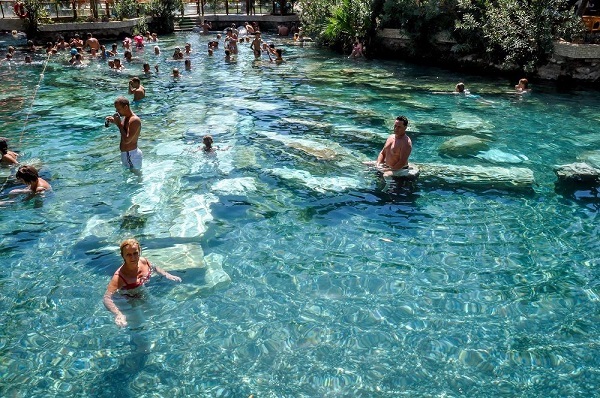
Walk barefoot: You can walk on the terraces in bare feet to experience the unique sensation of the mineral pools. Soak in the thermal waters: Many of the pools are warm and can be enjoyed by visitors.
Explore the ruins of Hierapolis: The ancient Roman city of Hierapolis is located at the top of the terraces, with many ruins and a large theater to explore. Take photos: The landscape offers many stunning and unique photo opportunities. Visiting early in the day can help you avoid crowds.
Read- An Eco-Adventure in Kabak Valley, Turkey
Best time to visit Pamukkale travertines for sunrise
The best time for a sunrise visit to Pamukkale’s travertines is during the shoulder seasons, especially April to June and September to October, to avoid peak crowds and extreme heat. For the best sunrise experience, use the Southern entrance, which opens earliest at 6:30 AM, to get direct access to the pools and start your walk as the sun rises.
How to get from Pamukkale travertine, Turkey
To get to the Pamukkale travertines, you can fly to the nearest airport in Denizli and take a minivan to Pamukkale, or take a bus to Denizli and then a minivan or dolmuş to the travertines. Once there, you can use one of the three entrances—north, south, or town—to access the site.

 sutikshan