 sutikshan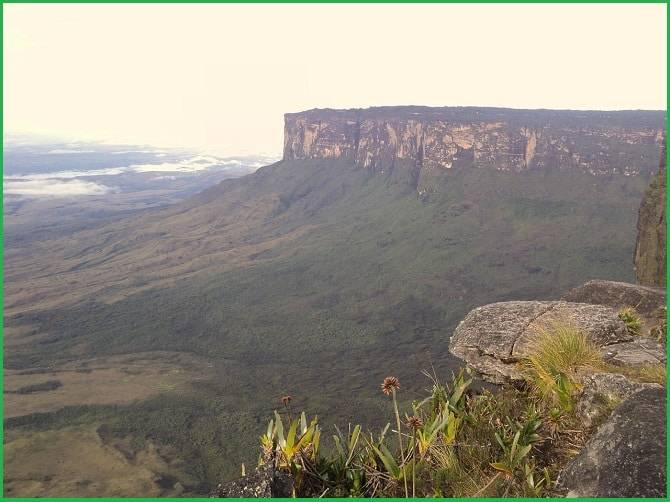
Mount Roraima
Mount Roraima is a massive, flat-topped mountain (tepui) situated at the junction of three nations: Brazil, Guyana, and Venezuela. As the highest peak in the Pacaraima tepui chain, it rises dramatically from the surrounding landscape, defined by cliffs between 400 and 1,000 meters high. While the overall highest elevation of 2,810 meters is found in Venezuela, the tri-country junction point on the northern plateau reaches 2,772 meters, marking the highest point in Guyana. The Pemon name means “great blue-green.”
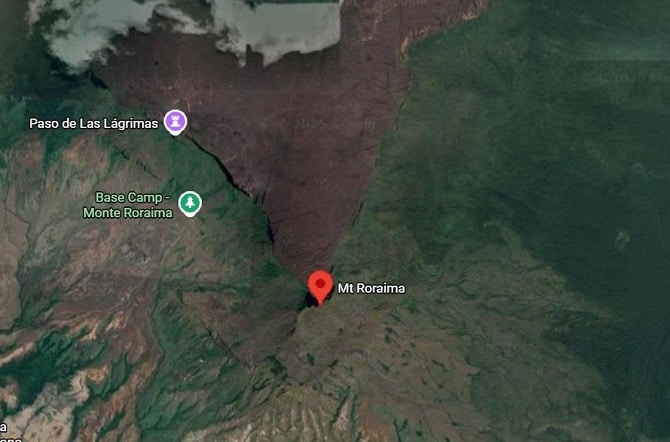
Mount Roraima Map
Here is the location of Mount Roraima on the map, along with some key details about this remarkable natural wonder:
Situated at the tripoint of Brazil, Guyana, and Venezuela. It is the highest of the Pacaraima tepuis (table-top mountains). One of the highest mountain peaks in Venezuela, known for its sweeping views and guided hiking trails.
Geology
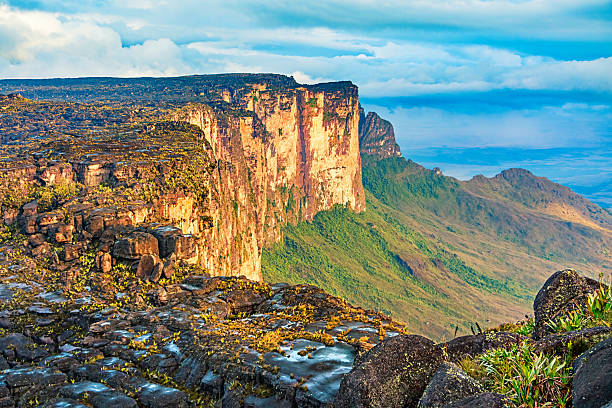
Mount Roraima Venezuela, is built from Proterozoic sandstone, which, having formed approximately 1.7 to 2 billion years ago, ranks among the oldest rocks on Earth. This sandstone is exceptionally pure, consisting of 98% silica (quartz), often presenting as white or pink crystals several centimeters long.
The mountain’s geological process began with this sandstone sitting on a granite and gneiss base, covered by younger Mesozoic layers. Over the last 180 million years, erosion and orogeny (mountain-building) exposed the ancient rock, allowing constant, intense rainfall to sculpt it into strange shapes. This heavy precipitation also results in a unique, highly acidic, nutrient-poor, and fine soil, actively preventing the formation of robust hilltop vegetation and deeper soil layers.
Mount Roraima Caves
The interior of Mount Roraima Venezuela is characterized by a pseudo-karst structure of numerous caves and rifts, created by the constant infiltration of surface water. The total cave network is vast, exceeding 15 km in length and including the world’s largest quartz cave. Water levels within these subterranean systems are directly tied to surface precipitation; during droughts, waterways may dry up, while heavy rain can turn dry chambers into underground rivers. The accumulated water eventually rushes out through fissures in the cliff face, feeding the many waterfalls and streams at the mountain’s foot.
Mount Roraima Hike
The Mount Roraima hike is a challenging, multi-day trek to the unique tabletop mountain (tepui) that borders Venezuela, Brazil, and Guyana. Typically requiring 6 to 8 days via guided tours from Santa Elena, Venezuela, the journey demands good fitness to navigate jungle, river crossings, and steep ascents in extreme conditions. The reward is access to an otherworldly “Lost World” landscape famous for its ancient rock formations and endemic life.
Tours often begin in Santa Elena de Uairén, Venezuela, near the Guyana/Brazil border. Varies from the savanna (La Gran Sabana) and jungle to rocky, alien-like summit terrain with waterfalls, rivers, and unique flora.
Also Read- Caño Cristales Tour- Know Why this River of Five Color
Mount Roraima Animals
Roraima is one of Brazil’s 26 states, situated in the North Region. It is distinguished as Brazil’s northernmost and most geographically isolated state. Its borders are shared with the Brazilian states of Pará (southeast) and Amazonas (south and west), and with the neighboring countries of Venezuela (north and northwest) and Guyana (east). The state’s diverse landscapes and biomes contribute to its varied fauna, which includes animals like jaguars in the Roraima Amazon rainforest.
Roraima Black Frog / Roraima Bush Toad: This is arguably the most famous endemic animal. It is a tiny, black amphibian that cannot swim or hop. To escape predators, it curls into a ball and rolls off rocks like a pebble.
Other Endemic Amphibians, including the Tepui frog (Anomaloglossus roraimae) and the Tree Frog (Stefania roraimae), all of which have adapted their breeding to the high altitude.
Mammals include Roraima Climbing Mouse (Rhipidomys macconnelli roraimae) and Roraima Mouse (Podoxymys roraimae), which is very rare.
Birds: Many birds seen on the plateau are endemic subspecies or species adapted to tepuis, such as the Tepui Goldenthroat hummingbird, the Greater Flowerpiercer (Diglossa major), and subspecies of the Andean sparrow. Invertebrates: Due to the cold and poor soil, most invertebrates are black or very dark, including millipedes, spiders, and a rare black carnivorous leech.
Read- Geotourism And Modern Geotechniques
Mount Roraima Dinosaurs
Although Mount Roraima Venezuela, never hosted dinosaurs, its unique, isolated tabletop landscape directly inspired Sir Arthur Conan Doyle’s novel, The Lost World, which featured fictional prehistoric creatures. While explorers did not find dinosaurs, the mountain’s ancient rocks and sheer cliffs still create a real-life “lost world” atmosphere due to the discovery of highly unique flora, strange frogs, and remarkable crystal formations.
How to Reach Mount Roraima
To begin the trek to Mount Roraima Venezuela, travelers first fly to Santa Elena de Uairén, Venezuela (typically via Caracas), then proceed to the village of Paraitepuy. This village serves as the starting point for guided treks, which usually last 6–9 days within Canaima National Park. The challenging journey requires crossing rivers and forests and necessitates hiring local Pemon guides for safety and navigation to reach the surreal, cloud-covered summit.