 sutikshan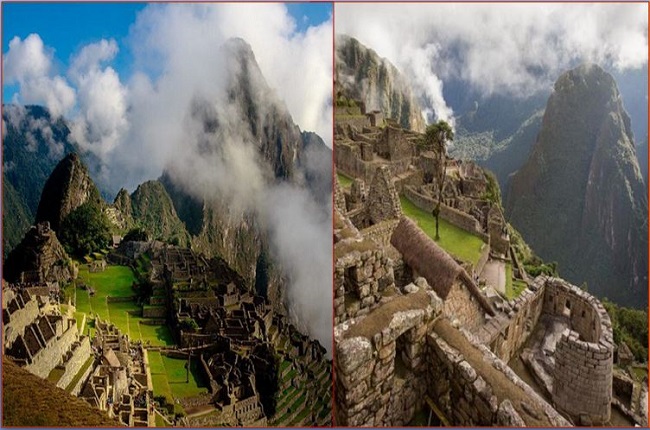
Machu Picchu Peru
Nestled in the Andes, the ruins of Machu Picchu are a 15th-century Inca citadel perched on a mountain ridge at 2,430 meters above sea level. Machu Picchu hides many mysteries of the Inca Empire. It is located in the Cusco Region, Machupicchu District in Peru. The Urubamba River flows through this region, creating a beautiful landscape around Cusco.
History of Machu Picchu
The historic sanctuary of Machu Picchu was built in the classical Inca style in the year between 1438 to 1472. It is mistakenly referred to as the “Lost City of the Incas”, as it is the most familiar icon of Inca civilization. The structure was built by the Inca Dynasty but was abandoned a century later at the time of the Spanish Conquest. The structure remains unknown to the outside world until American historian Hiram Bingham brought it to international attention in 1911.
The most famous archaeological site, Machu Picchu, was designated as a UNESCO World Heritage Site in 1983 and voted one of the New Seven Wonders of the World in 2007.
The Historic Sanctuary of Machu Picchu
The city of Machu Picchu is one of the seven wonders of the modern world. It is designated a World Heritage Site and “Historic and Natural Sanctuary of Machu Picchu,” Which has many archaeological sites. There are 32,592 hectares of valleys, mountains, and rivers, which house many of the most amazing Inca constructions.
The historic sanctuary houses the Inca City of Machu Picchu, the Inca Trail, and many other Inca and pre-Inca constructions; And a natural sanctuary, because it has all the conditions to become one of the best biosphere reserves in the world, with lush animals and plants, and some that can not be seen anywhere else.
The Structure of Machu Picchu
The marvel structure is made of mortar-free limestone and perched on a high plateau deep in the Amazonian jungle. With polished dry-stone walls, there are three primary structures in the Machu area- Inti Watana, the Temple of the Sun, and the Room of the Three Windows.
The historic sanctuary of the Inca was constructed atop two fault lines. It is said that when an earthquake occurs, the stones in an Inca building are to “dance,” and they bounce through the tremors and then fall back into place.
Many of the best-known buildings in the Machu Picchu area would have collapsed in the earthquake, but many of them still stand in their place. Most parts of the outlying buildings of Machu Picchu have been reconstructed and restored in order to give tourists a better view and style.
Geography
Machu Picchu is the most important archaeological site in South America. Situated above the bow of the Urubamba River, the structure surrounds the site on three sides, where cliffs drop vertically for 450 meters to the river at their base.
Also, read- A hidden Desert Oasis-Huacachina Peru
The area around the ruins consists of many rocky pinnacles with complex systems of old Inca-terraced land constructed to conserve the soil. Geologically, the area is very complicated. It consists of marine sedimentary rocks of the Cretaceous-Tertiary period and intrusive volcanic material, including lavas and granites.
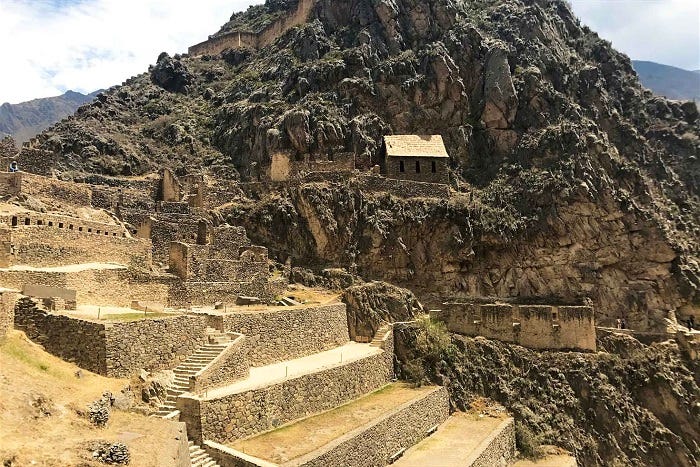
The city sits in a saddle between the two mountains, Machu Picchu and Huayna Picchu, with a commanding view down two valleys and a nearly impassable mountain at its back.
Huayna is the highest-peaked mountain in the Machu area with Inca structures on the top at 2,720m. Trekking on this mountain takes about 50 minutes to reach the top. The scenery from the mountain is spectacular; people can see the main square of Machu Picchu about 600 meters down, and the Urubamba River canyon all around.
Read- Geotourism And Modern Geotechniques
Tourist attraction
Unlike Rome’s Coliseum or China’s Great Wall, Machu Picchu is surrounded by temples, terraces, and water channels. It has been designated the cultural heritage of humanity during the age of the Incas. Seeing the sunrise at this site is a much-sought-after experience. Very heavy and dense clouds cover the Machu area in the early morning, and that makes the place the best visiting site.
Apart from this, the Inca Trail is also a tourist’s favorite location. The trail is challenging but accessible for most travelers to reach the Machu Picchu UNESCO sites. Required to be physically fit to hike the mountain, as the hike takes about 4 days. Along the Inca Trail, you’ll pass many other ruins and learn about Inca history in the surrounding area.
How to Reach Machu Picchu, Peru
To reach Machu Picchu, you first need to travel to Cusco, Peru (flying from Lima is ideal). From Cusco, the primary options are taking a train or bus to Aguas Calientes, followed by a short bus or hike to the entrance, or embarking on a multi-day hike like the Inca Trail or Salkantay Trek.