 sutikshan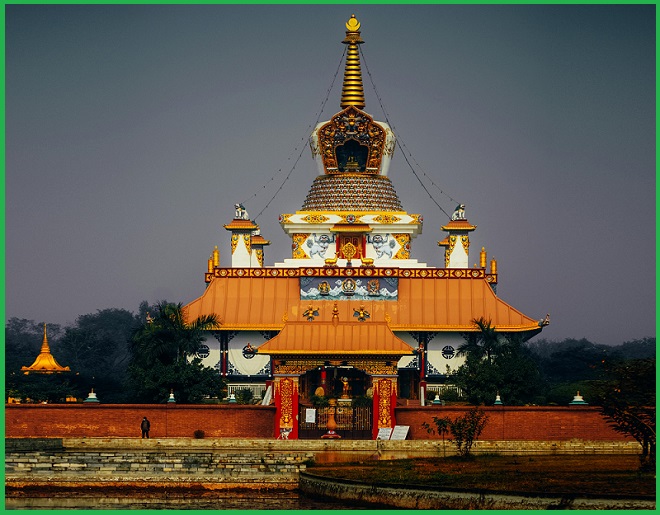
Lumbini Nepal
The Lord Buddha was born in 623 BC in the sacred area of Lumbini, located in the Terai plains of southern Nepal. This is confirmed by the inscription on the Ashoka Pillar, erected by the Mauryan Emperor Ashoka in 249 BC. Lumbini is one of the holiest sites of Buddhism, providing important evidence of the nature of Buddhist pilgrimage centres dating back to the 3rd century BC.
Siddhartha Gautama, known as the Lord Buddha, was born in 623 B.C. in the renowned gardens of Lumbini, which quickly became a major site of pilgrimage. Among the early pilgrims was the Indian emperor Ashoka, who erected one of his commemorative pillars at the site. Today, Lumbini Nepal, is being developed as a Buddhist pilgrimage center, with archaeological remains associated with Buddha’s birth serving as its central attraction.
UNESCO World Heritage Site
Lumbini Nepal, is designated a UNESCO World Heritage Site. It is a major pilgrimage destination, featuring the Maya Devi Temple, archaeological remains, ancient monasteries, and stupas. The archaeological remains of Buddhist viharas (monasteries) and stupas (memorial shrines), dating from the 3rd century BC to the 15th century AD, provide valuable evidence of the development and nature of Buddhist pilgrimage centres from an early period.
The Lumbini complex is divided into three main areas: the Sacred Garden, the Monastic Zone, and the Cultural Center and New Lumbini Village. The Sacred Garden serves as the spiritual heart of Lumbini, housing the birthplace of the Buddha, along with other significant monuments, including the Maya Devi Temple, Ashoka Pillar, Marker Stone, Nativity Sculpture, Puskarini Sacred Pond, and the ruins of Buddhist stupas and viharas.
Lumbini Map
Lumbini Province shares its borders with Gandaki and Karnali provinces to the north, Sudurpashchim Province to the west, and the Indian states of Uttar Pradesh and Bihar to the south.

Lumbini Park
Lumbini Park is part of the sacred Lumbini complex in Nepal, surrounding the birthplace of Gautama Buddha. The park features serene gardens, walking paths, and shaded areas for meditation and reflection. It provides a peaceful setting for pilgrims and visitors to explore the Maya Devi Temple, the Ashoka Pillar, and other archaeological and spiritual monuments within the Sacred Garden, allowing a contemplative experience amidst Lumbini’s historic and sacred environment.
Lumbini Temple- The Lumbini Temple, commonly known as the Mayadevi Temple, marks the exact birthplace of Gautama Buddha in Lumbini, Nepal. This sacred site also includes the Ashokan Pillar and Pushkarini Pond, making it a major pilgrimage destination for Buddhists worldwide. The Mayadevi Temple is the heart of Lumbini, built around the spot where Queen Mayadevi is believed to have given birth to Siddhartha Gautama in the 7th century BCE. The temple complex includes the Sacred Garden and Pushkarini Pond, where Queen Mayadevi is believed to have bathed before giving birth.
Also read- Janakpur, Nepal: The Spiritual Heart of Mithila
Lumbini Tour- Visitors typically explore the Maya Devi Temple—the sacred site of his birth—stroll through the tranquil Lumbini Garden, and visit a variety of international monasteries. Tour options range from half-day trips to extended multi-day Buddhist pilgrimage circuits linking Lumbini with other key sites like Bodhgaya.
Flights to Lumbini
There are no direct flights to Lumbini itself. Travelers must fly to either Gautam Buddha International Airport (BWA) near Bhairahawa or Tribhuvan International Airport (KTM) in Kathmandu, Nepal, and then continue to Lumbini by road or domestic flight. Gautam Buddha Airport (GBA) in Bhairahawa is located about 22 km from Lumbini. Direct and one-stop flights are available from several Indian cities, including New Delhi and Mumbai, to BWA, or to Kathmandu, followed by a domestic connection to BWA.
Kathmandu to Lumbini
To travel from Kathmandu to Lumbini Nepal, you can either take a domestic flight to Bhairahawa, near Lumbini, or opt for a luxury bus from Gongabu Bus Park in Kathmandu. Flights are the fastest, taking about 35 minutes, while buses are the most economical, taking 8–9 hours to cover the roughly 300 km distance. Driving yourself is also an option.