 sutikshan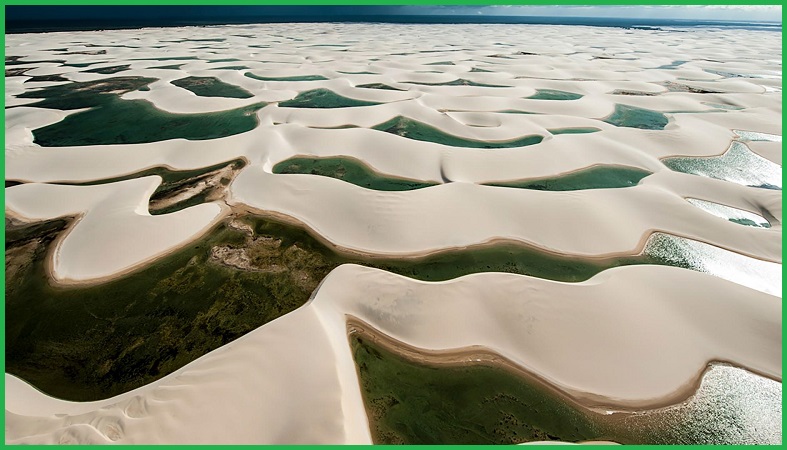
Lençóis Maranhenses
Lençóis Maranhenses National Park, located in Maranhão on Brazil’s northeastern coast, is renowned for its breathtaking expanse of white dunes that stretch across the landscape like a desert. What sets this region apart are the seasonal freshwater lagoons that appear between the dunes during the rainy months (January to June). These vivid blue and green pools transform the area into a surreal blend of desert scenery and tropical oasis, creating one of the most extraordinary natural landscapes in the world.
Lençóis Maranhenses National Park
Lençóis Maranhenses National Park (Parque Nacional dos Lençóis Maranhenses) is located in the state of Maranhão in northeastern Brazil, just east of Baía de São José. Established as a protected area on June 2, 1981, the park spans 155,000 hectares, featuring 70 km of coastline and vast stretches of sweeping dunes. During the rainy season, freshwater lagoons form in the valleys between the dunes, held in place by an underlying layer of impermeable rock.
Also read- The Sucuriú River: A Crystal-Clear Wonder of Brazil
The park supports a diverse array of wildlife, including four endangered species, and is a well-known destination for ecotourism. In July 2024, it was recognized as a UNESCO World Heritage Site for its extraordinary natural beauty and its globally unique landscape.
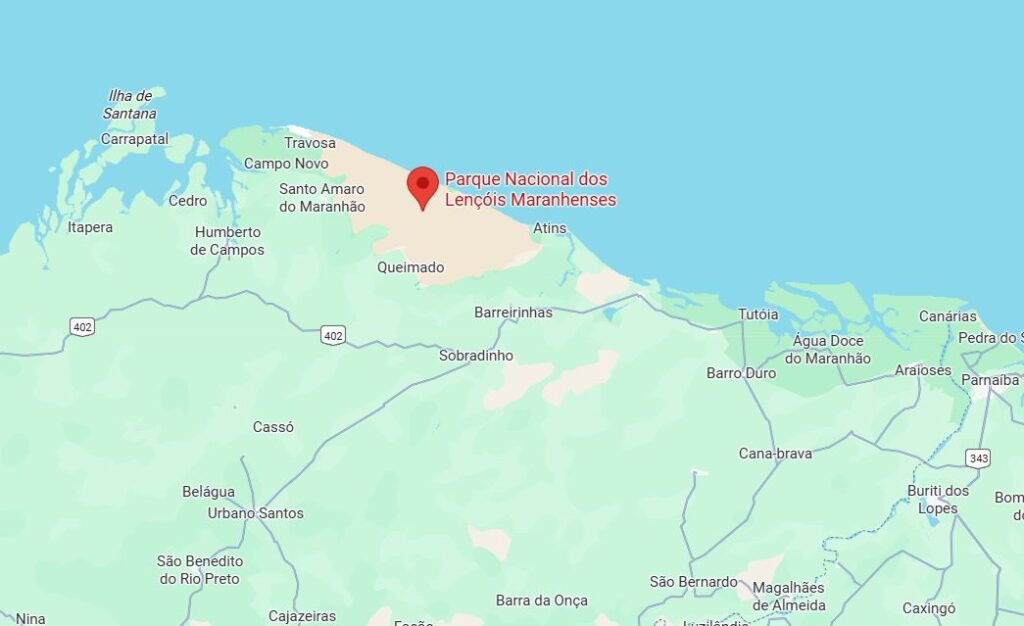
Lençóis Maranhenses Map
Maps of Lençóis Maranhenses National Park (in the state of Maranhão, Brazil) to help you see its location and internal layout. The park is located in northeastern Brazil, along the Atlantic coast of Maranhão.
Geology
The geology of Lençóis Maranhenses is characterized by vast, shifting coastal dunes sculpted by wind and seasonal rainfall, creating a rare landscape of sandy plains interspersed with freshwater lagoons. These crescent-shaped dunes were formed by wind-driven sand transported from the coast, while the heavy rains of the wet season fill the depressions between them, giving rise to the park’s striking temporary lagoons.
Formation of Dunes and Lagoons
Sand origin: Strong coastal winds transport sand inland, where it accumulates to form extensive dune fields. Much of this sediment is supplied by the Parnaíba River system. Dune dynamics: The region functions like a moving “sand treadmill,” with dunes constantly shifting and reshaping under the force of the wind. The absence of vegetation allows this continual movement, keeping the landscape active and ever-changing.
Also read- Business Leaders Success Story
Lagoon creation: During the rainy season, heavy rainfall fills the depressions between the dunes, forming clear freshwater lagoons that appear only for a few months each year. Unique ecosystem: This rare blend of mobile dunes and temporary water bodies supports a distinctive and highly adaptive ecosystem, home to specialized plant and animal species that thrive in these fluctuating conditions.
World’s Most Extensive Coastal Dune
Lençóis Maranhenses is home to one of the world’s most extensive and well-formed coastal dune systems. While individual dunes are primarily crescent-shaped, they often merge into long, continuous chains that stretch across the landscape. Between these dunes, thousands of stunning, temporary lagoons appear during the rainy season, filled with clear, freshwater that transforms the desert-like scenery into a mosaic of blue and green pools.
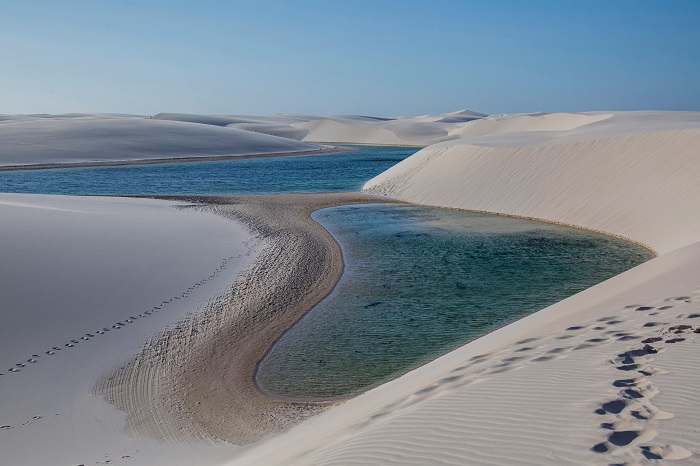
Lençóis Maranhenses Swimming
Yes, swimming is allowed in Lençóis Maranhenses, Brazil, especially during the rainy season when countless freshwater lagoons appear between the dunes. The ideal time to enjoy the crystal-clear, warm waters is from May to September, when the lagoons are at their fullest. However, they can still be visited shortly after the rainy season, generally between February and August. The lagoons are filled with calm, freshwater, and have no currents, making them ideal for relaxing and floating.
Lençóis Maranhenses Tours
Tours in Lençóis Maranhenses range from single-day excursions to multi-day hikes, with two of the most popular routes being the Lagoa Azul Circuit and the Lagoa Bonita Circuit. Most tours utilize 4×4 vehicles to navigate the sandy terrain, stopping at breathtaking lagoons where visitors can swim and take in the scenery, often accompanied by guided walks across the dunes. Another favorite option is a boat trip along the Preguiças River to destinations such as Atins and Caburé, offering a unique view of the area’s natural beauty and local culture.
Lençóis Maranhenses best time to visit
The ideal time to visit Lençóis Maranhenses is between May and September, when the rainy season has filled the dunes with freshwater lagoons, offering the most breathtaking scenery for swimming and hiking. The peak months of June to August are considered the best, with the lagoons at their deepest and the weather at its most pleasant. For a quieter experience with fewer visitors, May and September are great shoulder-season options that still allow you to enjoy the lagoons at near-full levels.
How To Reach Lençóis Maranhenses
To reach Lençóis Maranhenses, fly into São Luís (SLZ) and then travel by bus or shared van to one of the main gateway towns—Barreirinhas, Atins, or Santo Amaro. From any of these bases, entry into the park requires a guided 4×4 vehicle tour, as the dunes and lagoons are only accessible by off-road transport.