 sutikshan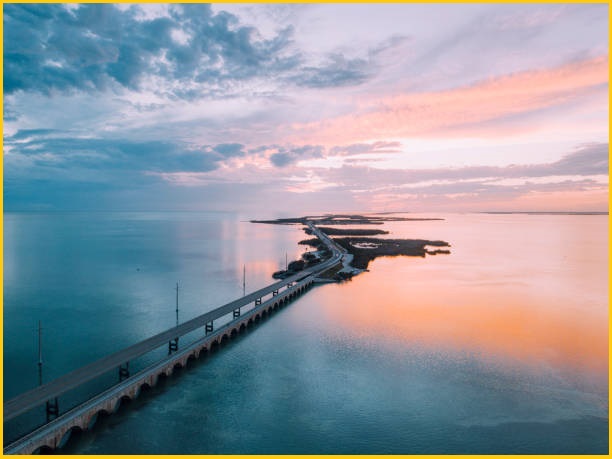
Florida Keys
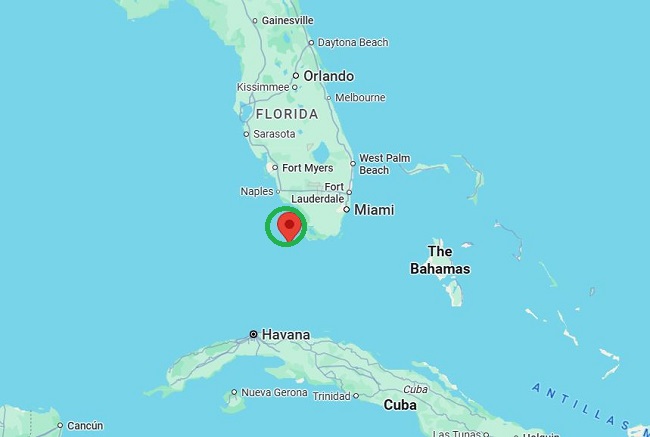
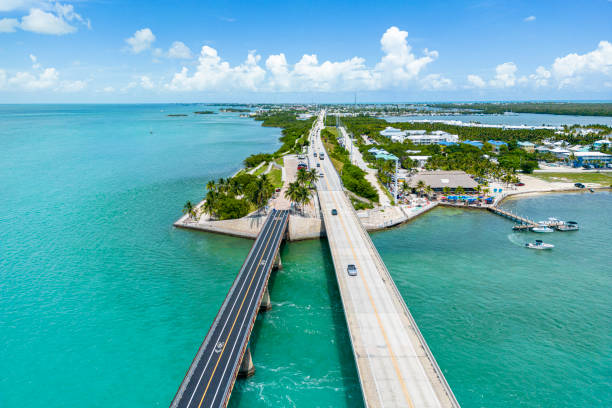
The Florida Keys are a coral cay archipelago off the southern coast of Florida, forming the southernmost part of the continental United States. They start about 24 km south of Miami at the southeastern tip of the Florida peninsula and curve south-southwest, then westward, ending at Key West, the last inhabited island, and the uninhabited Dry Tortugas beyond. The islands lie along the Florida Straits, which separate the Atlantic Ocean to the east from the Gulf of Mexico to the northwest, and mark one edge of Florida Bay. Key West is approximately 150 km from Cuba. The Keys span between 24.3° and 25.5° North latitude.
Key West is the county seat of Monroe County, Florida. The county includes a mainland section, which lies almost entirely within Everglades National Park, as well as the Florida Keys, stretching from Key Largo to Dry Tortugas National Park.
Florida keys Islands
The Florida Keys are a chain of over 1,700 islands, stretching about 120 miles from Key Largo to Key West and ending at the Dry Tortugas. They are divided into five main regions: Key Largo, Islamorada, Marathon, Big Pine & Lower Keys, and Key West.
Florida keys Map
Geographically, the Keys are an archipelago of about 1,700 islands extending south and southwest of the Florida mainland.
Geology
The northern and central Florida Keys are the exposed remnants of an ancient coral reef, primarily composed of Key Largo Limestone. The northernmost island formed from this ancient reef is Elliott Key, located in Biscayne National Park. North of Elliott Key, several small transitional keys consist of sand deposits built around exposed reef sections, while further north, Key Biscayne and islands beyond are barrier islands formed from sand.
The southwestern Keys, from Big Pine Key to the Marquesas Keys, are made up of Miami Limestone.
The present shape of the Keys is the result of dramatic sea-level fluctuations during recent ice ages. Around 130,000 years ago, during the Sangamonian Stage, sea levels were about 7.6 m higher than today, covering southern Florida with a shallow sea. Along the edge of the submerged Florida Platform, several reef lines developed from what is now Miami to the Dry Tortugas, forming the Key Largo Limestone seen today between Soldier Key and the southeastern part of Big Pine Key. Fossilized coral types that built this limestone are still visible on the exposed surfaces of these islands.
Florida keys weather
The Florida Keys enjoy a mild, tropical-maritime climate with warm temperatures year-round and consistently high humidity. Summers are long, hot, and mostly cloudy, while winters are short, comfortable, and generally clear. Average temperatures range from the mid-60s°F to mid-80s°F.
The region has a high risk of hurricanes and frequent summer showers and thunderstorms, especially during the wet season. The Florida Keys are highly vulnerable to hurricanes, particularly during the Atlantic hurricane season, which runs from June through November. These storms can bring strong winds, storm surges, and flooding, making it essential for visitors and residents to monitor weather updates during this period.
Climate Characteristics
-
Temperature: Narrow range throughout the year, with summer highs in the upper 80s to low 90s°F and winter highs around mid-70s°F.
-
Humidity: Persistently high year-round.
-
Rainfall: Heaviest between July and September during the summer wet season.
-
Cloud Cover: Summers are generally cloudy; winters are mostly clear.
Florida Keys Resorts
Key Largo
Playa Largo Resort & Spa, Autograph Collection
Bungalows Key Largo (Adults-Only)
Marathon
Isla Bella Beach Resort
Tranquility Bay Beachfront Hotel and Resort
Key West
Casa Marina Key West, Curio Collection by Hilton
Ocean Key Resort & Spa
The Reach Key West, Curio Collection
How to Reach The Florida Keys
You can reach the Florida Keys by driving from the mainland United States via the Overseas Highway (US 1), taking a public shuttle or bus from Miami or Fort Lauderdale, or flying into Key West International Airport or Florida Keys Marathon Airport. Travelers from Florida’s west coast can also take a ferry from Fort Myers or Marco Island to Key West.