 sutikshan
10 most significant Geological lakes
A lake is a body of water that is enclosed by land. Lake is found on every continent and in every kind of environment- in mountains, deserts, on plains, and near seashores. The primary difference between a lake and a river is that rivers are connected to another body of water, but Lakes are not. We brought you the 10 most significant Geological lakes around the world.
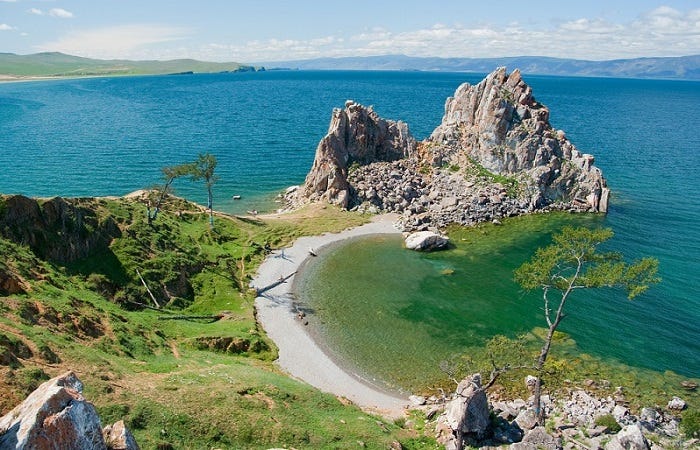
Lake Baikal, Siberia, Russia
Lake Baikal is located in the Irkutsk Province, Siberia, Russia. Lake Baikal holds the largest water volume of any continental lake on the planet, and it is the world’s deepest lake. It was declared a UNESCO World Heritage Site in 1996.
Lake Baikal is the world’s oldest (25 million years) and deepest (1,700 m) lake, containing a remarkable 20% of the planet’s unfrozen freshwater reserve. Known as the ‘Galapagos of Russia,’ its extreme age and isolation have fostered one of the world’s richest and Most Unusual Freshwater Faunas, providing exceptional value to evolutionary science.
Caspian Lake, Russia, and Iran
The Caspian Sea is an oceanic lake in central Asia. This lake is in both Russia and Iran. We all heard about the Caspian Sea, but many people might not know that it’s not a sea at all. In fact, it is an oceanic lake.
The Caspian Sea is the world’s largest inland body of water. This body of water is a major source of petroleum and is crucial for the region’s ecology and geopolitics, though it faces significant environmental challenges, including pollution and declining water levels.
Lake Tanganyika, Africa
Lake Tanganyika is a freshwater lake in Africa. Lake Tanganyika forms a boundary between Tanzania and Congo and also divides eastern and western Africa.
Lake Tanganyika is a massive African Great Lake, ranking as the world’s longest freshwater lake, the second-largest by volume, and the second deepest (after Lake Baikal). Its waters are politically divided among Tanzania, the Democratic Republic of the Congo, Burundi, and Zambia. The lake drains westward via the Lukuga River, feeding the vast Congo River system before its eventual discharge into the Atlantic Ocean.
Lake Superior, North America
Most of Lake Superior is located in America. In the south, it is bounded by Michigan and Wisconsin, and to the north, it is bounded by Minnesota and the Canadian province of Ontario.
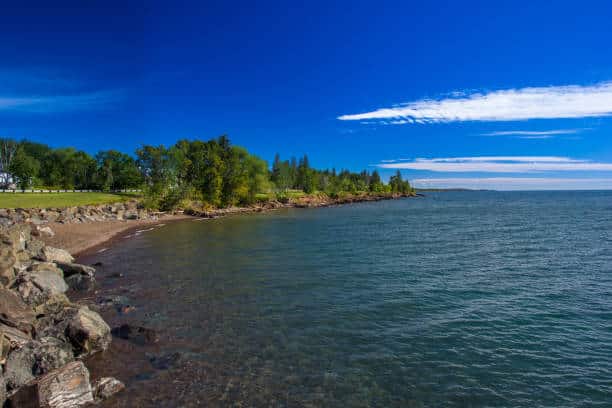
Lake Superior is a large freshwater lake in North America, straddling the border between Canada and the United States. It is the largest of the Great Lakes by surface area, with a length of 563 km, a maximum depth of 406 m, and an elevation of 183 m.
Lake Victoria, Africa
The Source of the famous Nile River, Lake Victoria, is located in East Africa. Lake Victoria occupies a shallow depression in Africa and has a maximum depth of 84 m. Lake was named after the then Queen Victoria, who was reins of England at that time. This lake is mainly in Uganda and Tanzania, but a small part of it is in Kenya.
Also Read- The Ultimate Adventure: Hiking Bulgaria’s Seven Rila Lakes
The formation of Lake Victoria, which occurred about 400,000 years ago, was a direct result of tectonic tilting along the Great Rift Valley. This geological movement lifted the western edge of a crustal block, thereby causing the backup and pooling of westward-flowing rivers, which ultimately created the massive lake basin.
Great Slave Lake
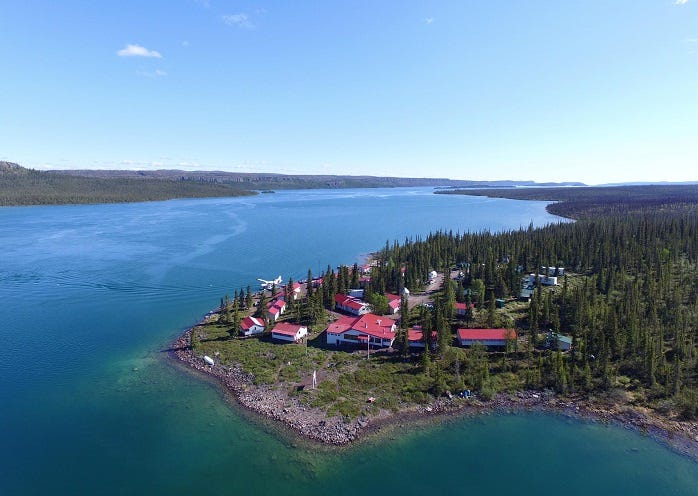
Great Slave is the second-largest freshwater lake in Canada. The lake is named after the Slavey people, an American Indian group in the region. The lake has a depth of 614 meters and is the deepest lake in North America.
The discovery of gold on the North Arm of Great Slave Lake in the 1930s directly led to the establishment of Yellowknife, which eventually became the capital of the Northwest Territories (NWT). Further developing the region, an all-season highway was constructed around the lake’s west side in 1960.
Dal Lake, Srinagar
Geological Dal Lake is located in Srinagar, India. The lake is surrounded by the snow-covered peaks of the Pir Panjal mountains.
Dal Lake is a vital urban lake and the second largest in Jammu and Kashmir, serving as the most visited location in Srinagar by both tourists and locals. The origin of this lake is explained by two primary theories: either it is the remnant of a large post-glacial lake that has shrunk significantly, or it has a fluvial origin, having formed from an ancient flood spill channel or ox-bows of the Jhelum River. Furthermore, the dendritic drainage pattern within the catchment area provides geological evidence that the underlying rock strata are characterized by low porosity.
Read- Geotourism And Modern Geotechniques
Lake Malawi, Africa
Lake Malawi, also known as Lake Nyasa, is an East African Rift Valley lake. In 1616, a Portuguese man, Casper Boccaro, discovered this lake. The lake is 563 kilometers long from its north to the south end.
The conservation status of Lake Malawi varies by country: the Mozambique portion was officially declared a reserve on June 10, 2011, while a section in Malawi is protected within the Lake Malawi National Park. Chemically, the lake is meromictic, meaning its water layers do not mix; this permanent stratification and the resulting oxygen-depleted (anoxic) lower boundary are maintained by moderately small chemical and thermal gradients.
Crater Lake, Oregon, US
Crater Lake is the deepest lake in the U.S. (592 meters). It was formed more than 7,000 years ago when a volcano collapsed following a violent eruption. The Crater is fed by a constant supply of rain and snow. The lake is best viewed from the top of the Cascade Mountain Range.
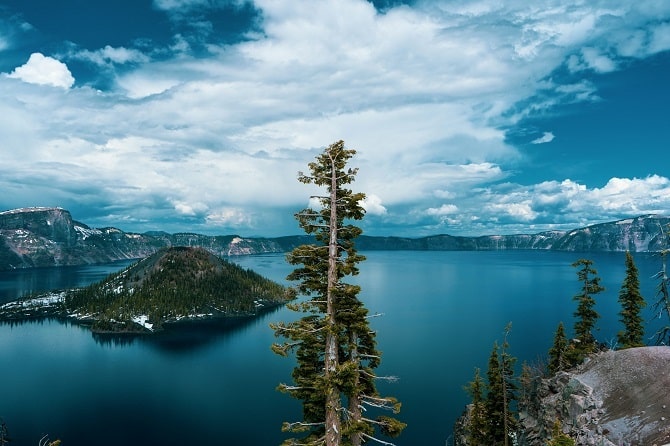
This volcanic crater lake, situated in south-central Oregon, is the iconic centerpiece of Crater Lake National Park and a major draw for tourists. Known in Klamath as Giiwas, the lake is celebrated specifically for its vivid deep blue color and remarkable water clarity.
Lake Titicaca, South America
Lake Titicaca is Located between Bolivia and Peru. The lake is the world’s highest navigable lake at a height of 3,810 meters. The lake is separated by two water bodies, Lake Huinaymarca in Bolivia and Lake Pequeno in Peru, which are connected by a narrow strait called Tiquina.
The Tinajani Basin, an intermontane basin containing Lake Titicaca, originated as a pull-apart basin due to strike-slip fault movement beginning in the late Oligocene and concluding in the late Miocene. The earliest evidence of this development is marked by volcanic rocks, which accumulated within the basin between 27 and 20 million years ago, lying unconformably upon the older pre-basin strata.