 sutikshan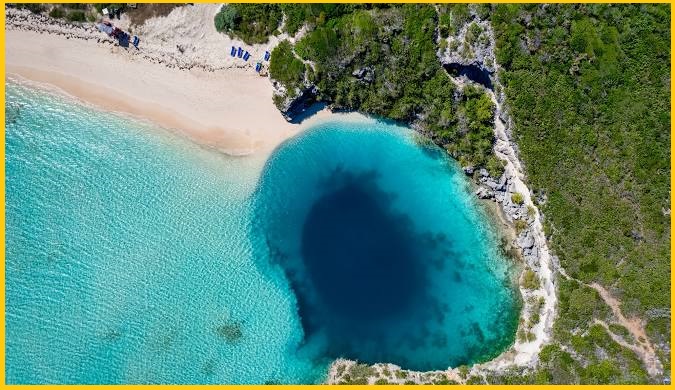
Dean’s Blue Hole
Dean’s Blue Hole, situated in The Bahamas near a bay west of Clarence Town on Long Island, ranks as the world’s third deepest blue hole. It plunges to 202 meters, following the Taam Ja’ Blue Hole in Chetumal Bay and the Dragon Hole in the South China Sea.
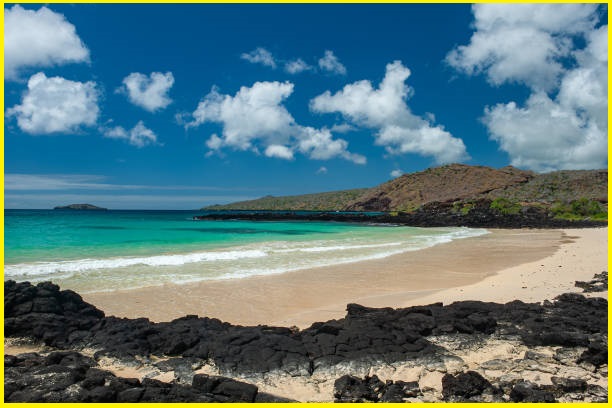
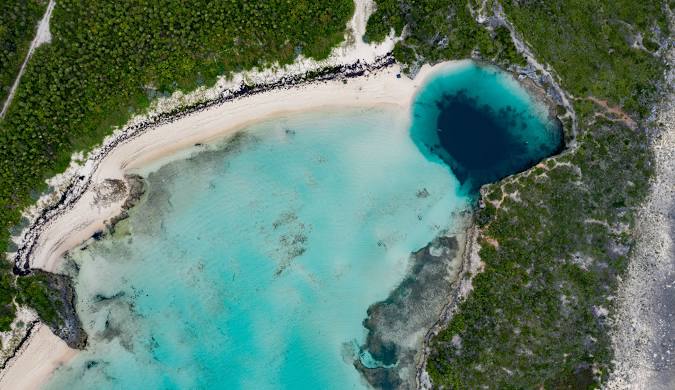
Divers describe it as being enclosed on three sides by a natural rock amphitheater, with the fourth side opening to a turquoise lagoon and pristine white sand beach. Inside the blue hole, the waters remain calm with no swell or waves, and visibility ranges from 15 to 30 meters.
The blue hole is a term used to describe deep, water-filled vertical caves or sinkholes with underwater entrances. While most blue holes and sinkholes typically reach depths of around 110 meters, Dean’s Blue Hole stands out with an extraordinary depth exceeding 200 meters. At the surface, the hole has a roughly circular shape, with a diameter ranging between 25 and 35 meters. However, upon descending 20 meters, it dramatically widens into a cavern with a diameter of approximately 100 meters, making it a truly remarkable geological feature.
Dare to be bold, adventurous, and fearless—climb the rocky pathway and take the plunge into the 202-meter depths of the world’s third-deepest blue hole. What makes this site truly breathtaking is the stunning beach that surrounds it. Enclosed on three sides by a natural rock amphitheater and bordered on the fourth by a turquoise lagoon and powdery white sands, it’s a scene of unparalleled beauty.
Why Known as Blue Holes
Blue holes derive their name from the striking contrast between the deep, dark blue of their depths and the lighter turquoise hues of the surrounding shallows. This intense blue color is a result of the water’s exceptional clarity and the bright white carbonate sand beneath it. As light penetrates the water, most wavelengths—such as red, yellow, and green—are absorbed, leaving only blue light to travel deeper. When the blue light reaches the white sand below and reflects, it creates the vibrant, mesmerizing hue characteristic of blue holes.
Also Read- Ngorongoro Crater: A UNESCO Treasure in the Heart of Africa
How Blue Hole Formed
Blue holes were formed during past ice ages when sea levels were 100 to 120 meters lower than they are today. Over time, deeper groundwater dissolved the limestone, creating vast underground voids. Eventually, the ceilings of these voids collapsed, forming the sinkholes we now see. As sea levels rose, these sinkholes filled with water, giving rise to the blue holes we recognize today.
Dean’s Blue Hole is a renowned destination for diving and snorkeling enthusiasts. In 2012, during the freediving world championship in the Bahamas, New Zealand diver William Trubridge set a remarkable world record by reaching a depth of 121 meters in Dean’s Blue Hole without the aid of breathing equipment.
Read- Geotourism And Modern Geotechniques
How to reach Blue Hole, Bahamas
To reach a Blue Hole in the Bahamas, you first fly into Nassau (NAS) or another major island, then take a smaller domestic flight (like Bahamasair) to islands like Andros (for Blue Holes National Park) or Long Island (for Dean’s Blue Hole). From the local airport, you’ll need a rental car or taxi to drive to the specific site, where you’ll follow signs to park and walk a short trail to the hole itself, often involving a boardwalk or steps for access.