 sutikshan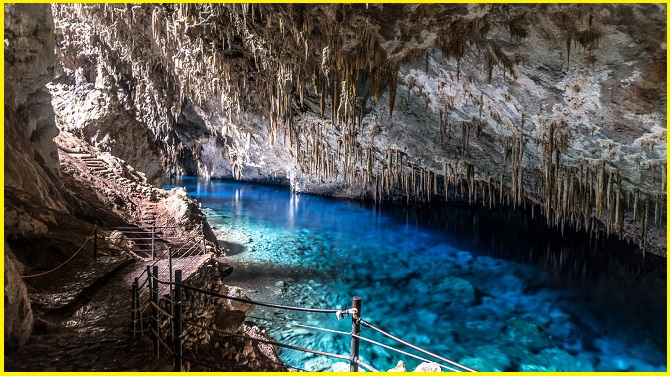
Blue Lake Cave, Brazil
Gruta do Lago Azul Natural Monument (Blue Lake Cave) in Bonito, Mato Grosso do Sul, Brazil, has been a protected natural site since 1978. It features two caves known for their fascinating yet delicate calcareous formations.
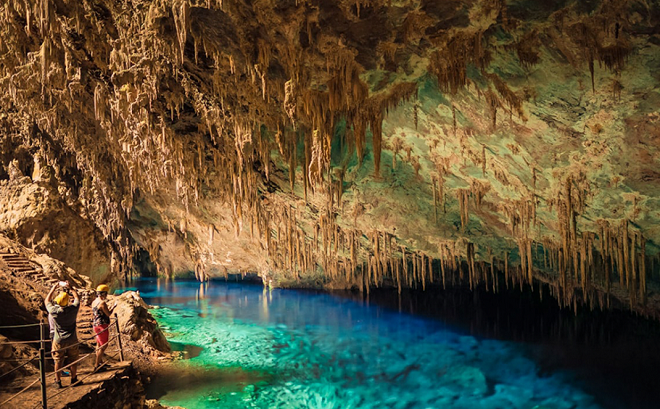
The Gruta do Lago Azul features a vast central chamber with a sloping floor that descends to an underground lake extending more than 50 meters. Sunlight filters through its circular entrance, roughly 40 meters wide, illuminating the waters that glow a deep, vivid blue from September to February, the source of the cave’s name.
Fossil remains of prehistoric mammals over 12,000 years old, including giant sloths, armadillos, and saber-toothed tigers, have been found within. In contrast, the Gruta de Nossa Senhora Aparecida contains no water and receives very little natural light. It consists of one large hall with a sloping floor, approximately 100 meters wide, decorated with remarkable speleothems, some of which are shaped like winged human figures known as “angels.” For safety reasons, this cave is closed to the public.
How was the Blue Lake cave formed?
The term “Blue Lake Cave” can refer to various sites with distinct formations. A well-known example, the Gruta do Lago Azul in Brazil, was created over thousands of years as water slowly dissolved limestone, forming a vast subterranean chamber now filled with water. In contrast, Australia’s Jenolan Caves Blue Lake is a surface lake supplied by an underground river running through limestone caverns. At the same time, Washington’s Blue Lake Rhino Cave originated when cooling lava solidified around the body of an ancient rhinoceros.
Geology
The Blue Lake Cave in Brazil is a vast limestone cavern featuring a deep, crystal-clear subterranean lake renowned for its striking blue hue and impressive formations of stalactites and stalagmites. The lake’s vivid color results from mineral content and the unique way sunlight filters into the cave. Scientifically significant, the site has yielded fossils of extinct Pleistocene animals, including giant sloths and saber-toothed tigers.
Also Read- The Sucuriú River: A Crystal-Clear Wonder of Brazil
Limestone formation: The cave was formed from limestone through natural geological processes that occurred over thousands of years. Speleothems: Inside, it features stunning formations like stalactites descending from the ceiling and stalagmites rising from the floor.
Ancient subterranean lake: At its heart lies a deep underground lake, thought to be supplied by an unseen river and estimated to be more than 10,000 years old.
Also read- Geotourism and Modern Geotechniques
How to Reach the Blue Lake Cave
To visit a Blue Lake Cave, you’ll need to join a guided tour suited to its location. In Montenegro, boat tours to the Blue Cave depart from coastal towns such as Kotor or Tivat. For Brazil’s Blue Lake Grotto, visitors must book a timed tour from Bonito, which includes a descent down numerous steps to reach the cave.