 sutikshan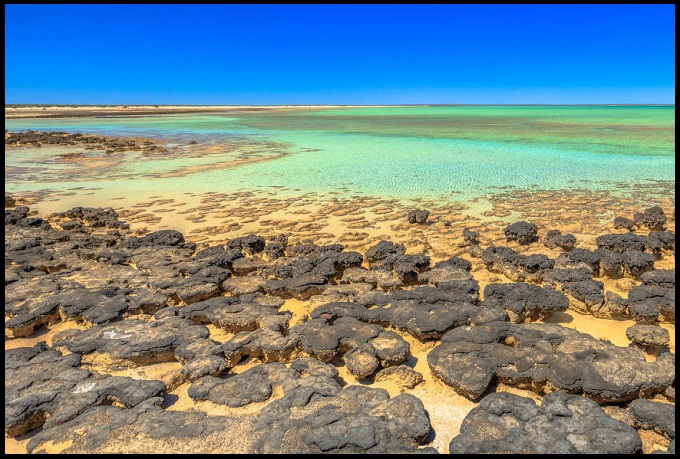
3.5 billion-year-old Stromatolites
In Western Australia, 3.5 billion-year-old stromatolites have been found, which are among the oldest Stromatolites discovered in Earth’s history. Stromatolites from Western Australia were first identified in 2000 by the National Center for Scientific Research (CNRS) in France. Researchers applied advanced high-resolution 2D and 3D imaging techniques to examine the internal layers of these structures closely.
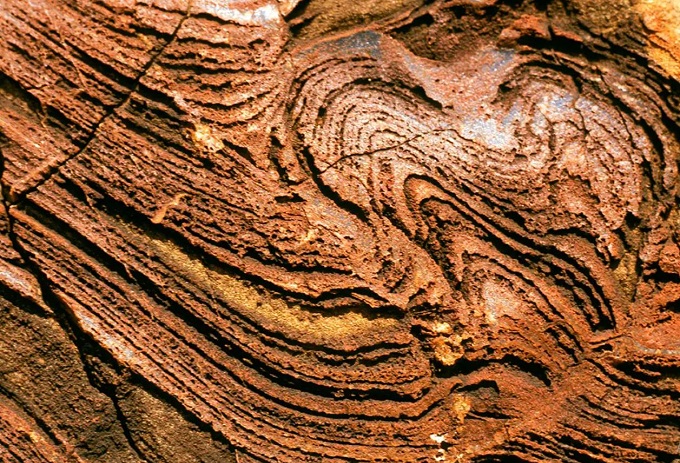
Stromatolites are irregular and uneven, with small dome-shaped formations—features commonly linked to photosynthesis, where microbes exposed to more sunlight grow more rapidly than those beneath. They also identified column-like structures similar to those found in modern stromatolites, which still exist in a few locations worldwide.
Microbial mats typically produce layers that vary in thickness and display wrinkled or crinkled patterns on very small scales. When these structural features are considered together, they strongly resemble the characteristics of a microbial mat.
How these Stromatolites form
Stromatolites, specifically discovered in the Pilbara Craton’s Dresser Formation, provide the earliest direct evidence of life on Earth. Formed by ancient microbial mats in a volcanically active, shallow marine environment, they offer vital insights into the origin of life.
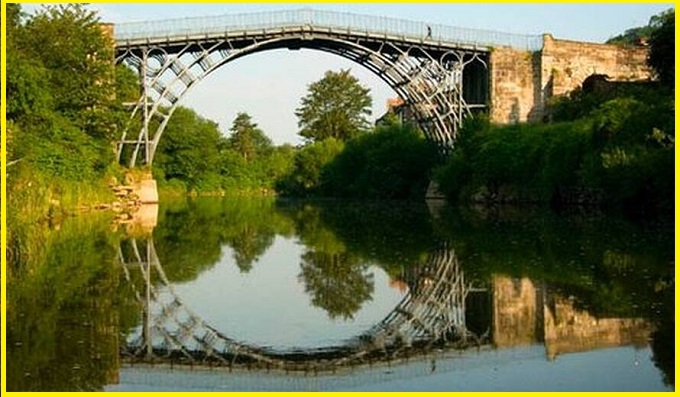
Also read- Breathtaking Ironbridge Gorge: A Must-Visit UNESCO Site
The Stromatolites located near Marble Bar, including sites such as the North Pole Dome, are fossilized rather than living and date back to the Archean Eon. They were created by early microorganisms (microbial mats) that trapped sediments and triggered mineral precipitation in shallow, hydrothermal coastal environments. Today, they appear as layered, crinkled rock structures, typically composed of chert or barite. Unlike these ancient fossilized examples, modern living stromatolites can still be observed in Hamelin Pool at Shark Bay, offering a rare glimpse into this primordial life-forming process.
Some Oldest Stromatolites
The Dresser Formation stromatolites provide strong evidence of ancient life on Earth, but they are not the oldest known. Some of the oldest stromatolites discovered in 3.7-billion-year-old rocks in Greenland and Canada that could date back as far as 4.29 billion years. However, distinguishing true biological signatures from non-organic processes in such ancient rocks is extremely challenging, making these findings—and others from the same era—highly debated.
Also Read- Geotourism And Modern Geotechniques
The Stromatolites became isolated around 4,800 years ago when sea levels dropped during the last major glacial period. As shorelines receded, coastal dunes trapped seawater inland, forming the lake. The stromatolites here—often called “stony oxygen producers”—are believed to have been growing for roughly 3,500 years.
A metal boardwalk extends over the lake, allowing visitors to observe the stromatolites below. Along the 1.5 km walking trail that circles the lake, visitors are advised to look but not touch, as many of these ancient formations have been damaged by people walking on them.
How to Reach Stromatolites in Western Australia
The Stromatolites are located in North Pole Dome, about 40 kilometres west of Marble Bar in Western Australia’s Pilbara region. The stromatolites are located within Shark Bay, a UNESCO World Heritage area about 800–850 km north of Perth. Fly into Perth, the main gateway city. From Perth, take a road trip north along the North West Coastal Highway.