 sutikshan
Amazon Rainforest
Amazon Rainforest is the largest tropical rainforest in the world. Most of the Amazon rainforest is occupied by Brazil; however, significant parts of it extend into Bolivia, Peru, Ecuador, Colombia, Venezuela, Guyana, Suriname, and French Guiana. The forest Area covers the drainage basin of the Amazon River and its tributaries in northern South America and covering an area of 60 00000 square km. It is bounded by the Guiana Highlands to the north, the Andes Mountains to the west, the Brazilian central plateau to the south, and the Atlantic Ocean to the east.
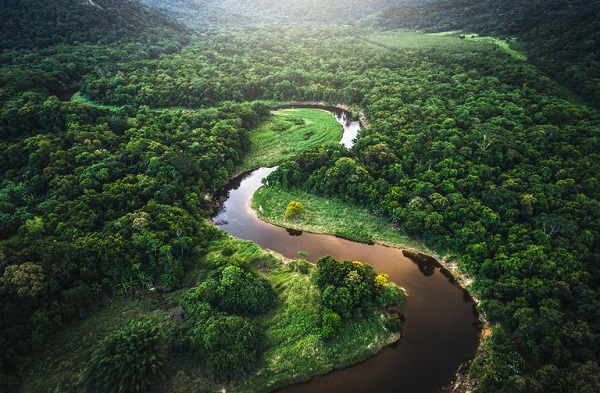
The Amazon Rainforest is also known as Amazonia, is the world’s richest and most varied biological Biosphere. The Amazon jungle is one of the last unexplored regions on Earth. Containing over 300 different Indigenous and Ethnic species, the forest has 50 such groups that have not yet to contact with the rest of the world. It is believed that the name Amazon was given by Europeans, who fought wars with the indigenous tribes of this region.
The forested land of the Amazon is surprisingly not an impenetrable jungle, and only a few roads have been made. In fact, the story of the Amazon River is very interesting; the Amazon rainforest is about 55 million years old, and in earlier geological times South American landmass drained into the Pacific Ocean. After the formation of the Andes mountain range blocked this flow, resulting in a huge lake formed that covered much of the South American continent.
Also Read- The Sucuriú River: A Crystal-Clear Wonder of Brazil
After millions of years due to the process of erosion, this lake escapes eastwards and discharges into the Atlantic Ocean. The Amazon River is the largest river in terms of water volume and the second longest river in the world after the Nile.
Amazon River basin
The Amazon drainage basin covers roughly 40 percent of the South American continent. It begins in the Andes Mountains with its main tributary, the Marañón River, in Peru. The highest point in the watershed of the Amazon is the peak of Yerupajá at 6,635m.
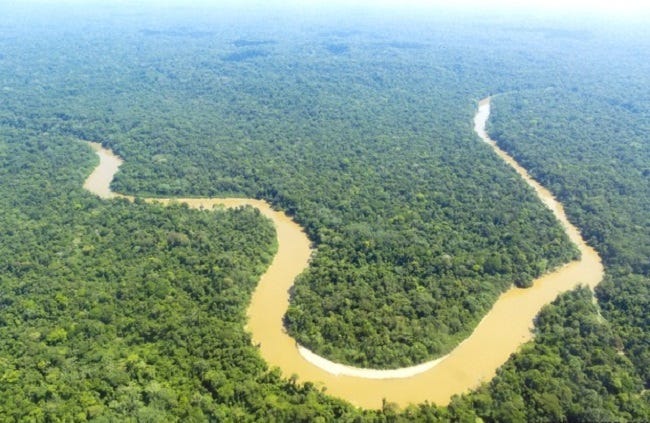
With a length of about 6,400 km. The Amazon River system transports the largest volume of water, with 20% of the total water carried to the oceans. The great continuity of this rainforest results from high rainfall, high humidity, and high temperatures that prevail in the region.
Attraction in the Amazon rainforest
Amazon rainforest has a lot of attractions. This includes a glimpse of primal Earth as it was a few million years ago, and seeing the diverse and interesting wildlife.
National Parks
The Amazon rainforest is the place where many UNESCO World Heritage sites and National Parks are located. The Pacaya-Samiria National Reserve is the most famous and biodiverse area of the Peruvian rainforest. Brazil consists of the Anavilhanas Archipelago, which is a complex of over 400 unique islands in the middle of the Amazon. In Ecuador, the Yasuni National Park is an extremely remote and untouched rainforest wilderness that is filled with marshlands. It’s also home to a number of Amazonian tribes, including the Hauronai and the Taegari tribes.
Read- Geotourism And Modern Geotechniques
Jungle Walk
A jungle walk through the Amazon rainforest is a wonderful experience. Here we can see Amazon’s unique wildlife and various medicinal plants that have been used for centuries. Anaconda snakes, poison dart frogs, rubber trees, tarantulas, and pineapple flowers are the natural wonders of the rainforest.
The Port of Manaus and the water meeting point
The Manaus port is a bustling spot having hundreds of arrivals and departures of large cargo vessels. The boat is the best way to explore the Amazon rainforest from the Manaus port.
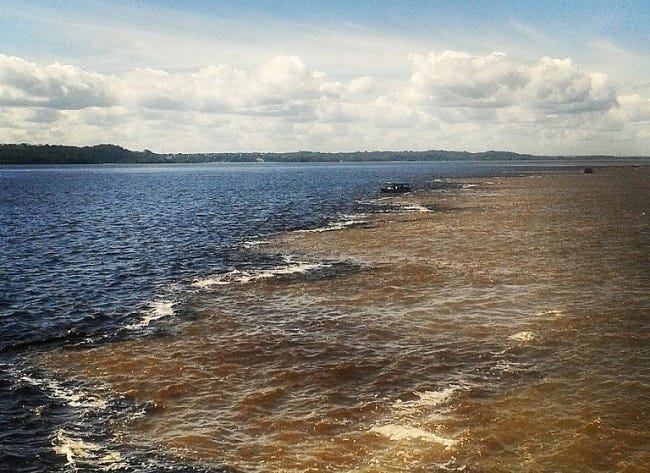
Apart from this one spot in the Amazon forest always wonder the people. This natural place knew locally as the Encontro das Aguas. It is the point where the brown-colored Rio Solimões (Amazon River) and the black-colored Rio Negro run side by side in two distinct shades for 6 km. before finally merging into one. The varying levels of sediment, temperature, and water flow make it a unique spectacle not found anywhere else in the world.
Source-World: wildlife, Britannica, UNESCO