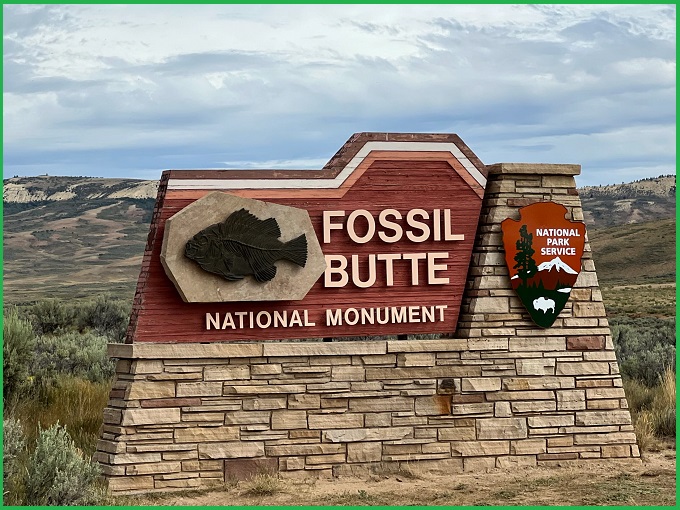
Fossil Butte National Monument contains one of the most complete paleontological records of Cenozoic aquatic ecosystems in North America-and possibly the world-within the 50-million-year-old Green River Formation, an ancient lake bed. The site contains preserved fossils of fish, alligators, bats, turtles, a dog-sized horse, insects, and numerous plant and animal species, indicating that the region was once a low-lying, subtropical freshwater basin. These sediments accumulated over a period of roughly 2 million years.
Three Great Lakes
During the Eocene Epoch, this region of Wyoming was part of a lush, subtropical lake ecosystem. Around 50 million years ago, three great lakes—Lake Gosiute, Lake Uinta, and Fossil Lake—covered parts of present-day Wyoming, Utah, and Colorado, with Fossil Lake being the smallest. These lakes have long vanished, leaving behind rich fossil deposits. Fossil Butte is a remnant of the ancient deposits left behind by Fossil Lake, which once stretched about 64 to 80 km from north to south and roughly 32 km in width. Over its two-million-year existence, the lake’s size fluctuated, expanding and contracting over time.
Fossil Butte and Geology
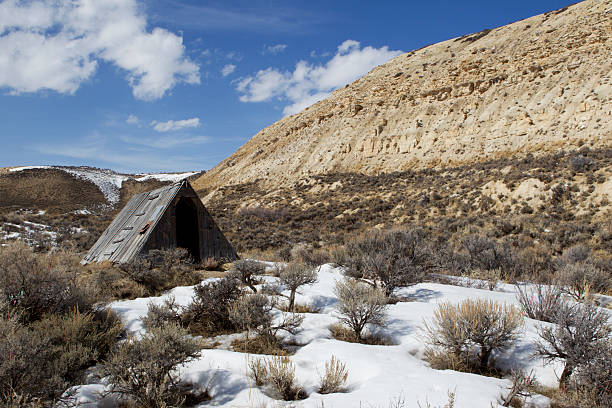
The lake sediments are known as the Green River Formation, composed of finely layered limestone, mudstone, and volcanic ash. These deposits contain some of the most exceptionally preserved fossils of ancient plant and animal life in the world. Today, remnants of Fossil Lake appear as a flat-topped rock butte at the center of the former lake, protected since 1972 as Fossil Butte National Monument.
Also read- Steamboat Geyser, Wyoming: The World’s Tallest Explosive Natural Wonder
The fossils found here are remarkable for both their abundance and diversity, including plants, insects, reptiles, birds, mammals, and more than 20 species of fish.
These fossils are preserved in extraordinary detail—many fish retain complete skeletons, teeth, and even skin. They reveal a very different landscape during the Eocene Epoch of the Cenozoic Era. At that time, Fossil Lake was surrounded by lush subtropical forests of palms, figs, cypress, and other vegetation. Lower slopes supported willows, beeches, oaks, maples, and ferns, while cooler mountain areas were covered with spruce and fir.
Also read- Geotourism And Modern Geotechniques
How to Reach Fossil Butte, Wyoming
 sutikshan