sutikshan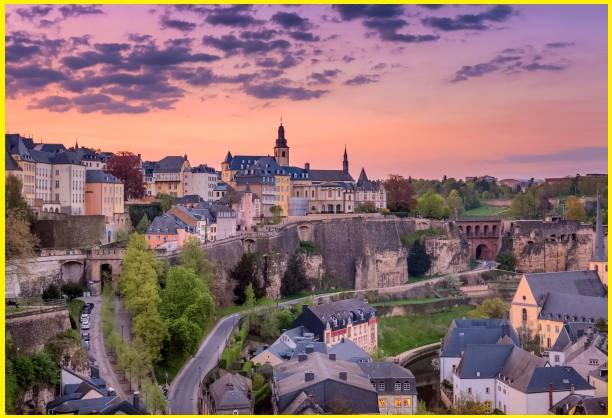
Luxembourg
Luxembourg, officially known as the Grand Duchy of Luxembourg, is a small landlocked country in Western Europe. It shares borders with Belgium to the west and north, Germany to the east, and France to the south. Its capital and largest city, Luxembourg City, is one of the four official seats of the European Union and hosts several EU institutions, including the Court of Justice of the European Union, the EU’s highest judicial authority.
As part of the Low Countries, Luxembourg has strong historical, political, and cultural ties with Belgium and the Netherlands. Both France and Germany deeply influence their culture, population, and languages. Luxembourgish, a Germanic language, is the sole national language of the Grand Duchy and its people. French is the official language of legislation, while Luxembourgish, French, and German are all used in administration.
Geography
Luxembourg is one of Europe’s smallest countries, ranking 168th in size among the 194 independent countries of the world; it is approximately 2,586 square kilometres in size, measuring 82 km in length and 57 km in width. It lies between latitudes 49° and 51° N, and longitudes 5° and 7° E. Luxembourg shares its eastern border with the German states of Rhineland-Palatinate and Saarland, and its southern border with France’s Grand Est region (Lorraine). To the west and north, it borders Belgium’s Wallonia, specifically the provinces of Luxembourg and Liège—the latter partly home to Belgium’s German-speaking Community.
The northern third of Luxembourg, known as the Éislek or Oesling, forms part of the Ardennes. This region is characterized by hills and low mountains, including the Kneiff near Wilwerdange—the country’s highest point at 560 metres. Other notable peaks are the Buurgplaatz 559 metres near Huldange and the Napoléonsgaard 554 metres near Rambrouch. Sparsely populated, the area has only one town, Wiltz, with a population exceeding five thousand.
The northern third of Luxembourg, known as the Éislek or Oesling, forms part of the Ardennes. This region is characterized by hills and low mountains, including the Kneiff near Wilwerdange—the country’s highest point at 560 metres. Other notable peaks are the Buurgplaatz 559 metres near Huldange and the Napoléonsgaard 554 metres near Rambrouch. Sparsely populated, the area has only one town, Wiltz, with a population exceeding five thousand.
Luxembourg Garden
The Luxembourg Garden, overseen by the French Senate, set a new attendance record with 6.2 million visitors, up from just over 5 million in 2021. It was also voted by internet users as the most beautiful garden in Europe. Covering 25 hectares, the garden features both French formal and English-style landscapes, 3,000 trees of diverse species, 5,000 m² of flower beds, and an orchard with more than 500 heritage varieties of pear and apple trees. It also houses a remarkable orchid collection, 102 statues and monuments—including the renowned Médicis Fountain—and 4,500 distinctive “Sénat” chairs. The garden is maintained using eco-friendly practices, with selective waste sorting further supporting environmental sustainability.
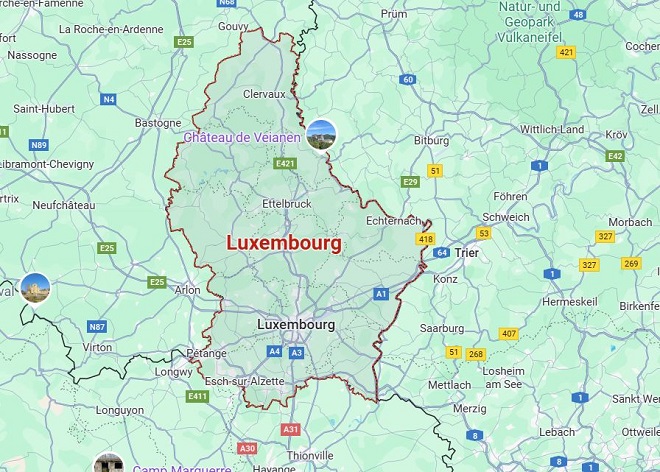
Luxembourg Map
Luxembourg is a small nation in the Low Countries of Northwestern Europe, sharing a 148-kilometre border with Belgium to the west and north.
Things to do in Luxembourg
In Luxembourg, visitors can discover remarkable historic sites such as the Bock Casemates and Vianden Castle, stroll along the Chemin de la Corniche for breathtaking city views, and pay tribute at the Luxembourg American Cemetery Memorial. Outdoor enthusiasts can hike the scenic Mullerthal Trail, while cultural highlights include the Grand Ducal Palace, Notre-Dame Cathedral, and the panoramic Pfaffenthal Lift.
Bock Casemates
Explore the underground tunnels of this historic fortification, which offer fascinating tours and sweeping views over the city.
Chemin de la Corniche
Stroll along the “most beautiful balcony in Europe” for spectacular vistas of Luxembourg City and the Alzette River valley.
Vianden Castle
Take a day trip to this hilltop fortress, one of Luxembourg’s most iconic landmarks, where you can dive into centuries of history.
Grand Ducal Palace
Visit the official residence of the Grand Duke of Luxembourg. Open to the public in summer, guided tours reveal its grandeur and heritage.
Notre-Dame Cathedral
Admire this 17th-century masterpiece, which houses the tombs of Luxembourg’s royal family.
Mullerthal Trail
Hike through dramatic rock formations, gorges, and lush forests on this scenic route, often called “Little Switzerland.”
Pfaffenthal Lift
Ride the panoramic glass elevator for stunning views of the Pfaffenthal district and the cityscape.
Grund
Wander the picturesque lower town, with its colorful riverside houses, cozy cafés, and charming atmosphere.
How to Reach Luxembourg
To go to Luxembourg from India, you must apply for a Schengen visa through an authorized Visa Application Centre (VAC) or Luxembourg’s embassy/consulate, providing documents like a valid passport, a completed application form, photographs, a travel itinerary with flight and hotel bookings, travel insurance, and proof of sufficient funds. After submitting your application and providing biometrics, you will receive a notification to collect your passport with the visa for your planned travel.