 sutikshan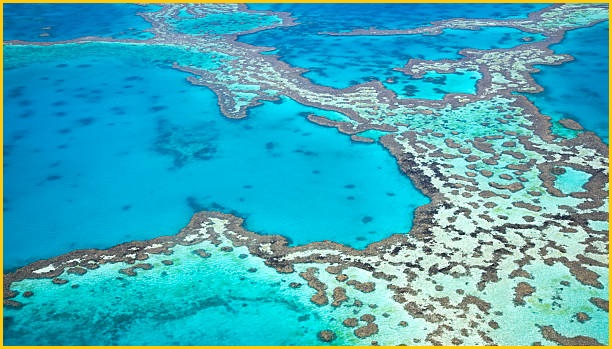
Great Barrier Reef
The Great Barrier Reef is a group of more than 2,800 distinct entities of coral. It stretches over 2,000 kilometers north to south and covers some 350,000 square kilometers. It sprawls off the east coast of Queensland, Australia. The Great Barrier Reef is a site of the variety and beauty of Coral reefs. It contains the world’s largest collection of coral reefs, with 400 types of coral, 1,500 species of fish, and 4,000 types of mollusks.
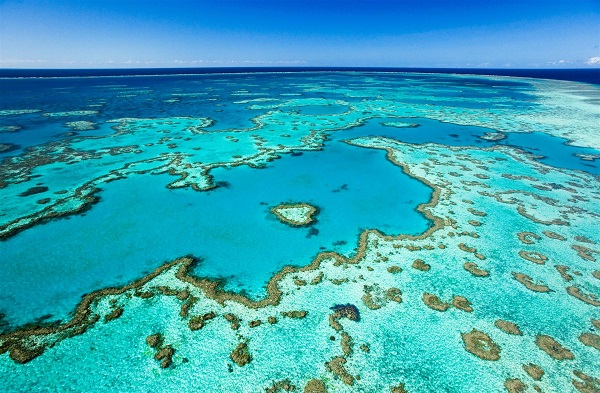
The Coral reef system is the largest structure on Earth built by living organisms. When corals die in countless numbers, their limestone-secreted skeletons build upon one another to form the bedrock of the reef. A slow process produced the amazing structures of reefs that played out over millions of years. Reefs grow only about 1.3 centimeters a year.
Apart from the reef, 2,000 different species of fish have been identified on the Great Barrier Reef. Scientists estimate that the reef is home to 4,000 mollusk species and over 250 shrimp species. Corals that construct the reef itself are a diverse group and comprise approximately 400 species. This diversity of species and habitats makes the GBR one of the richest and most complex natural ecosystems on earth.
The Great Barrier Reef is one of the seven natural wonders of the world; viewing it from a greater distance, you can understand why. It is larger than the Great Wall of China and the only living thing on Earth visible from space. The Great Barrier Reef was declared a World Heritage Area in 1981 because of its ‘outstanding universal value’.
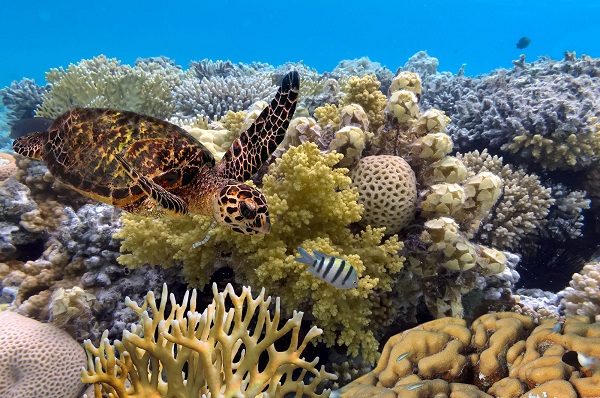
The Great Barrier Reef has become one of the world’s most visited tourist destinations. A visitor to the Great Barrier Reef can enjoy many activities, including snorkeling, scuba diving, aircraft or helicopter tours, bare boats, glass-bottomed boat viewing, cruise ship tours, whale watching, and swimming with dolphins. The Great Barrier Reef has over 100 islands, from unique and exotic islands to the Whitsundays and the remarkable Northern Islands.
Also, read- Port Douglas Australia-The gateway to two UNESCO World Heritage
Whitehaven Beach
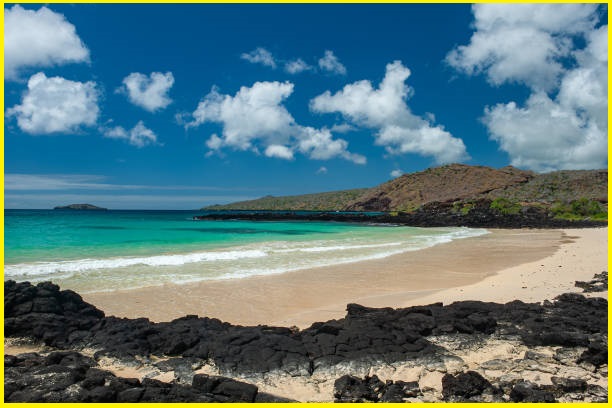
Another wonder of Queensland is Whitehaven Beach on Whitsunday Island. It is reputed for its sun-kissed silica sand that stretches for nearly seven kilometers. Unlike other beaches, the sand in this area never becomes increasingly hot despite the weather, which enables you to enjoy a comfortable barefoot stroll in the middle of summer. The Whitsunday Islands provide a magnificent scene of green vegetated islands and spectacular sandy beaches spread over azure waters.
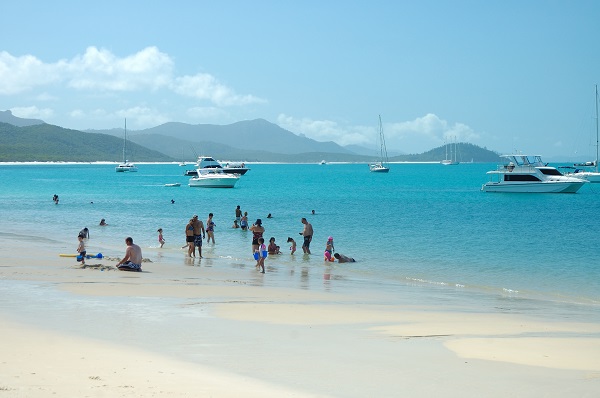
Whitehaven Beach is an excellent diving spot, especially if you want to explore the Great Barrier Reef. It is reputed for its scenic camping spots where people spend the night in the middle of nature, with an excellent day of visiting the Great Barrier Reef.
The Great Barrier Reef lies in tropical waters where temperatures are warm, which offers an exotic swimming experience. Peak tourism time on the reef is April through November. The reefs can be reached via waterways from the Queensland towns of Port Douglas and Cairns, or the archipelago that exists within the bounds of and near the reef.
Read- Geotourism And Modern Geotechniques
How to Reach the Great Barrier Reef
To reach the Great Barrier Reef, fly into major Queensland airports like Cairns (CNS), Townsville (TSV), or Hamilton Island (HTI), then take a boat, catamaran, helicopter, or seaplane for the final leg to the reef itself, with popular jump-off points including Cairns, Port Douglas, and Airlie Beach for diverse reef experiences.