 sutikshan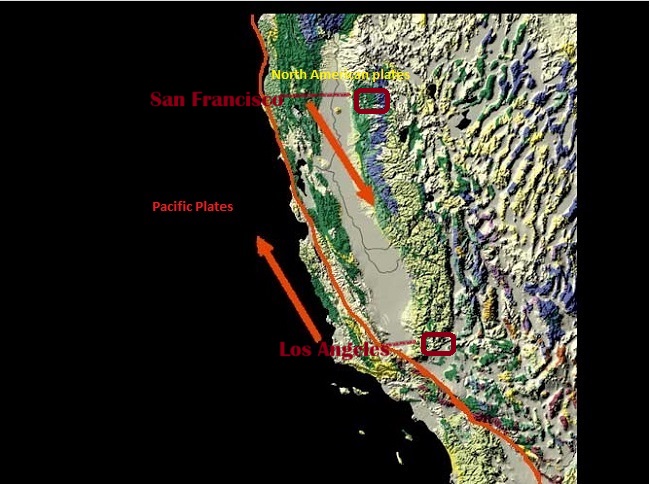
LA and SF Will Be Neighboring Cities
One day in the distant future, the movement of the Pacific Plate along the San Andreas Fault will cause Los Angeles and eastern San Francisco to converge and become neighbors. The San Andreas Fault in California shifts nearly 2 inches each year. If humanity endures for another 15 million years, Los Angeles and San Francisco residents could find themselves as neighbors.
15 Million Years Later
The Earth’s crust in Southern California constantly shifts due to tectonic activity. At the heart of this dynamic movement lies the San Andreas Fault, the primary surface feature marking the boundary between the North American and Pacific plates. This boundary, known as a transform fault, allows these massive plates to grind past each other, shifting the land by nearly two inches each year.
Over millions of years, this relentless motion will have dramatic consequences. Eventually, the Pacific Plate’s gradual movement along the San Andreas Fault will bring Los Angeles and eastern San Francisco closer together. If humans are still around in 15 million years, these two iconic cities may sit side by side, forming unexpected neighboring cities. It’s a fascinating glimpse into the immense power of tectonic forces shaping our planet’s future.
The San Andreas Fault
The San Andreas Fault is a transform fault between the Pacific and North American Plate. The Fault is a Strick-slip fault that slides from one to another. It slices California in two from Cape Mendocino to the Mexican border. San Diego, Los Angeles, and Big Sur are on the Pacific Plate while San Francisco, Sacramento, and the Sierra Nevada are on the North American Plate. Many world-famous features like Desert Hot Springs, San Bernardino, Wrightwood, Palmdale, Gorman, Frazier Park, Daly City, Point Reyes Station, and Bodega Bay lie squarely on the fault line. San Andreas Fault is considered one of the most dangerous faults in the world because it is responsible for several earthquakes over the years.
Also Read- The San Andreas Fault-Geotourism around the world’s most dangerous fault
How was the San Andreas fault formed?
San Andreas fault is an example of a Transform Fault, where two tectonic plates slide past one another. At the San Andrea fault, both plates Pacific and North America are slowly moving past one another at a couple of inches a year.