 sutikshan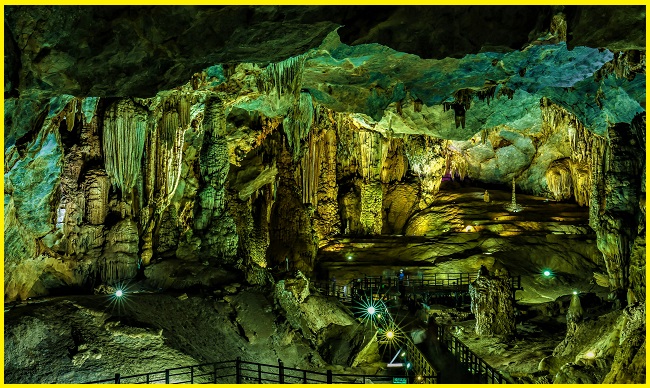
Sơn Đoòng Cave
Sơn Đoòng Cave located in Phong Nha–Kẻ Bàng National Park, Quảng Trị Province, Vietnam, is recognized as the world’s largest natural cave. It is situated near the Laos–Vietnam border,and features a fast-flowing subterranean river and holds the record for the largest cross-section of any cave on Earth. By volume, it is the largest known cave passage in the world. Its name translates to “cave of the mountain behind Đoòng,” with Đoòng referring to a nearby Vân Kiều village. Formed as a solutional cave in soluble limestone, Sơn Đoòng is estimated to be between 2 to 5 million years old.
Geology
Formed in Carboniferous–Permian limestone, the caave Stretching over 5 kilometres in length, the passage rises up to 200 metres high and spans 150 metres wide—its cross-section is thought to be twice that of Deer Cave in Malaysia, the next largest. Altogether, the cave runs for about 9 km and is interrupted by two massive dolines—sinkholes where the roof has collapsed. These openings allow sunlight to pour in, creating lush patches of trees and vegetation deep underground.
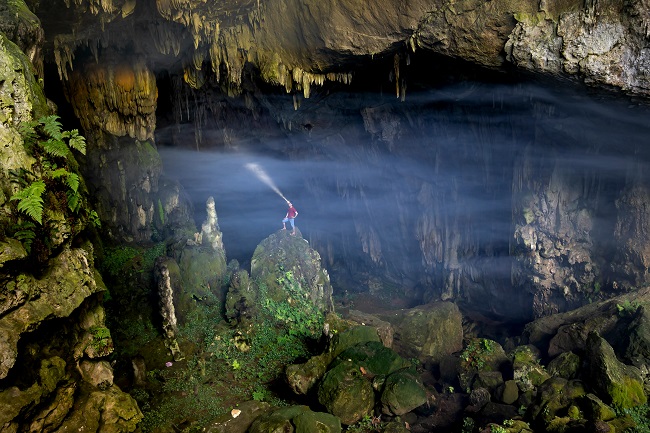
In mid-2019, explorers discovered that Sơn Đoòng’s underground river connects it to the nearby Hang Thung Cave, potentially increasing its total volume by more than 1.6 million m³
Inside, the cave shelters some of the tallest stalagmites in the world, reaching up to 80 metres. Beyond the so-called “Great Wall of Vietnam,” explorers found cave pearls the size of baseballs—an unusually large formation. The space is so vast it could fit an entire New York City block, complete with skyscrapers, or allow a Boeing 747 to fly through without touching the walls.
Sơn Đoòng Cave is recognized as the largest cave in the world by volume, as well as the biggest cave in Vietnam. It was first discovered in 1990 by Hồ Khanh, a jungle resident of Phong Nha. Their findings were verified by leading karst geologists, including Dr. Tony Waltham, and published in collaboration with National Geographic, which named Sơn Đoòng the largest natural limestone cave on Earth that same year. In 2013, the Guinness World Records Organization confirmed its status as the world’s largest natural cave.
Also Read- Kaziranga National Park: A World Heritage Haven for Wildlife
Son Doong Cave Map
Map is a valuable reference for visualizing the subterranean landscape of Sơn Đoòng—highlighting its vast passages, unique natural formations, and the interplay of light, water, and geology.
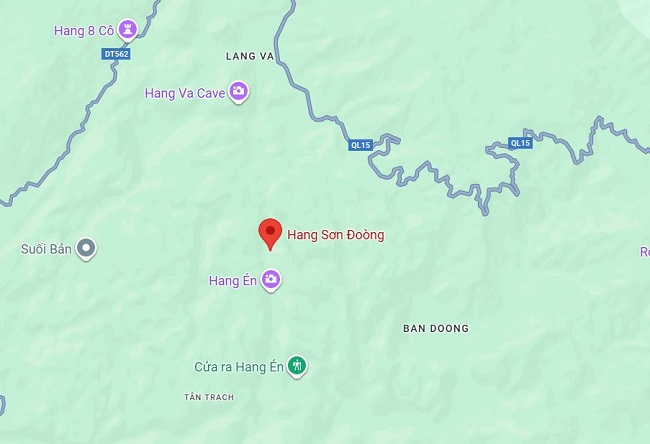
Son Doong Cave how to get there
To visit Sơn Đoòng Cave — the largest cave in the world — you must first travel to Phong Nha, located in Quảng Bình Province, Vietnam. The most convenient route is to fly into Đồng Hới Airport (VDH), then take a shuttle bus or private transfer to Phong Nha. From there, you’ll need to book a guided expedition with Oxalis Adventure, the only company licensed to operate tours to Sơn Đoòng Cave.