 sutikshan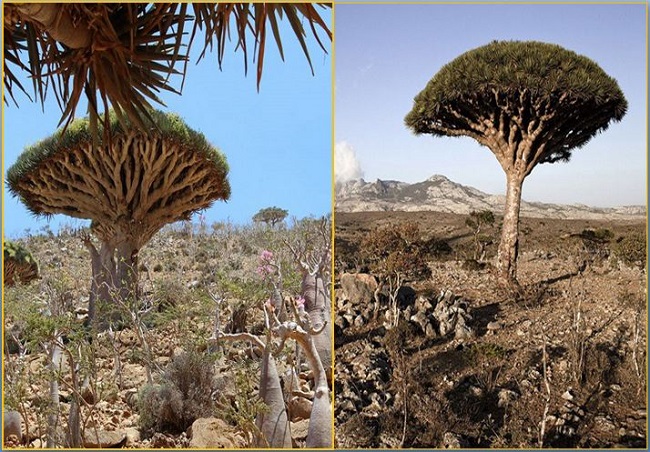
Socotra Island
Socotra Yemen, is the entrance to the Gulf of Aden, located between the Gaurdafui channel and the Arabian Sea. It is the largest of the four islands of the Socotra archipelago. The desert island, off the coast of Yemen, is considered to be a wonderland of sparkling, clear blue beaches, rare ‘dragon blood’ trees, and frankincense forests. The territory is officially part of Yemeni Government.
A Geological and botanical treasure, the Socotra Island is also called the “Galapagos of the Indian Ocean.” Nearly 825 plant species are found on Socotra, of which 37 percent are endemic, meaning they live nowhere else in the world.
The squat and bulbous subspecies of Adenium obesum, commonly called the desert rose tree. It produces beautiful, gigantic pink flowers that paint the landscape with color and oddity in Socotra Island. The islands play host to as many as 11 unique bird species, and over 90 percent of reptiles and mollusks are endemic in nature.
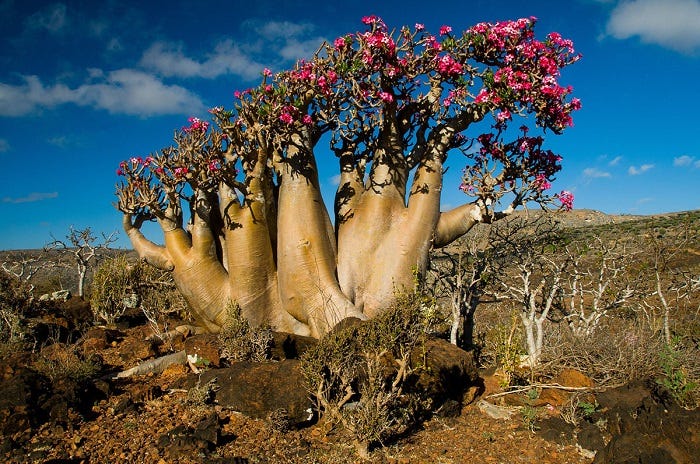
In eras gone by, Greek and Arab sailors connected this peculiar and plentiful land with paradise. Some even regarded Socotra as part of the lost mythical continent of Atlantis.
Socotra Island Mystery
Socotra Island is nicknamed the “alien island” because its extreme isolation has produced an otherworldly landscape and an isolated ecosystem that seems to defy earthly norms. This “mystery” is defined by its abundance of endemic species, like the iconic Dragon’s Blood Tree, which thrives alongside ancient cultural traditions and local legends.
Socotra’s extreme biological and geological uniqueness stems from its history as a continental fragment that broke away from Gondwana millions of years ago. This isolation fostered an abundance of endemic species, giving the island an alien-like flora that is found nowhere else on Earth, including the iconic, umbrella-shaped Dragon’s Blood Tree with its red sap, as well as the bottle tree and Socotra’s cucumber tree. The fauna is equally unique, featuring various endemic species of crabs, birds, and reptiles.
Also Read- The Red Sea Rift: New Mid-Ocean Ridge Formation and its Geology
Socotra Island Trees
One of the popular species of the island is the dragon tree or dragon blood tree. An odd and alien-looking tree is so-called due to the red sap that the trees produce. The wonder tree is also known as the “upside-down umbrella tree” due to the unique shape of its branches and leaves. It is composed of bunches of dark green lance late leaves resting on the ends of short and fleshy twigs. It has very slow growth, and its older specimens reach millions of years old.
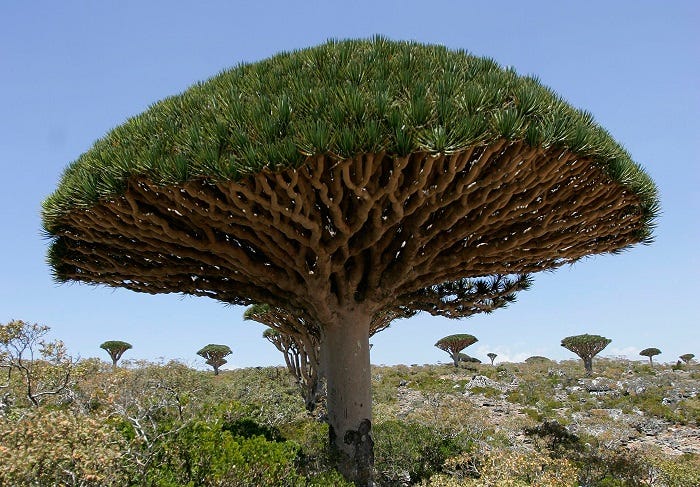
The Socotra dragon tree is an iconic tree with a long history of commercial use. It is known only from the island of Socotra, Yemen, where it lives within remnants of prehistoric ‘Dragon’s blood’ forest on the Granite Mountains and limestone plateaus.
Geography and Geology
Only 60 miles from the Horn of Africa, Socotra is one of the most isolated landforms on Earth of continental origin. The archipelago was once part of the Gondwana supercontinent and detached during the Miocene epoch. It has the same set of rifting events that opened the Gulf of Aden to its northwest. For those interested in island evolution and biogeography, Socotra has become a fascinating case study.
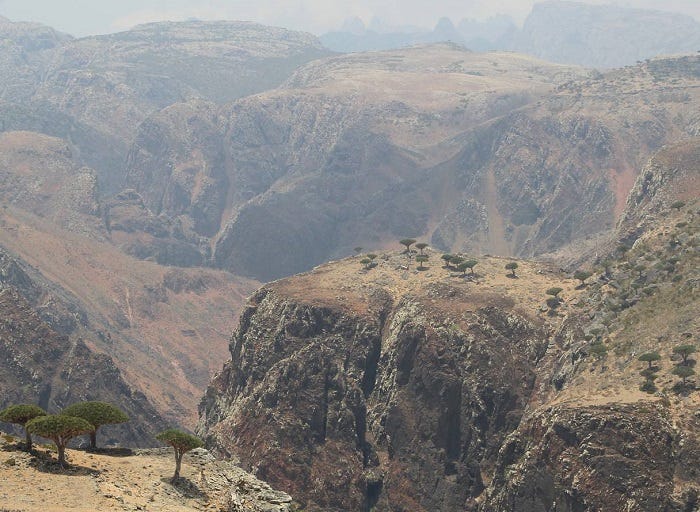
The main Socotra Island has three geographical the narrow coastal plains, a limestone plateau with karst topography, and the Hajar Mountains of Granite. The mountains rise to 1,503 meters. The island is about 125 kilometers long and 45 kilometers its width.
The Diksam Plateau is the center of the Socotra Island and encompasses deep, winding limestone gorges and a Huge Granite mountain. The terrestrial nature sanctuaries, national parks, and areas of special botanical interest included about 75% of the total land area declared as a UNESCO World Heritage Site in 2008.
The Socotra archipelago, particularly its main island, is the most neglected tourism destinations in the world. However, if you are looking for an adventurous vacation, this is the right destination. Socotra is also a perfect destination for nature-loving travelers. The island takes pride in its Eco-tourism, spectacular plants, and wildlife that can only be found on this island.
Socotra Island Animals
Socotra, Yemen, is famous for its biological diversity, which is why describing its animals often requires highlighting their uniqueness. The island has been known as the “Galápagos of the Indian Ocean” due to the large number of species found nowhere else on Earth (endemic species). This includes:
Several species of reptiles (lizards, snakes). Unique insects and spiders. Important populations of seabirds and unique land birds. A marine environment teeming with diverse coral, fish, and crustaceans.
Read- Geotourism And Modern Geotechniques
How To Reach Socotra Island
Reaching Socotra requires a charter flight into Socotra Airport (SCT), as commercial ferry services are unavailable. The most common limited-availability route is via Air Arabia from Abu Dhabi, and flights must be booked well in advance through a local travel agency. This agency will also arrange the required Yemeni visa.