 sutikshan
Sendra Granite
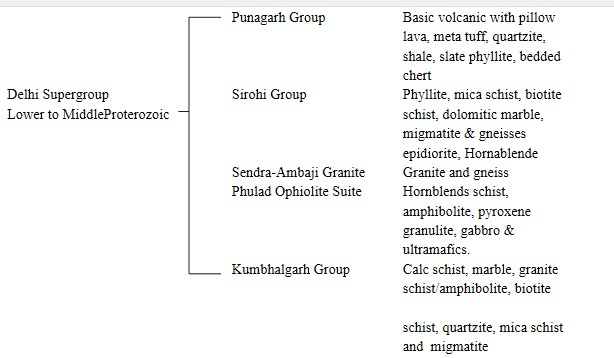
The unique nature of the sculptor Sendra granite is a plutonic igneous rock about 900 million years old, which intrudes into the Delhi Supergroup of meta-sedimentary rocks. Large bodies are concordantly emplaced in the calc gneiss, while small bodies are mostly distributed in and around the hornblende schists.
The Sendra Granite is part of the widespread occurrence of the Precambrian syn-orogenic Ambaji Granite, recognized in geological studies as one of the oldest granite formations in Rajasthan. The landscape features an impressive range of granite outcrops such as hills, hillocks, boulders, and extensive sheet rocks. Structural and weathering features, including joints, cracks, and potholes.
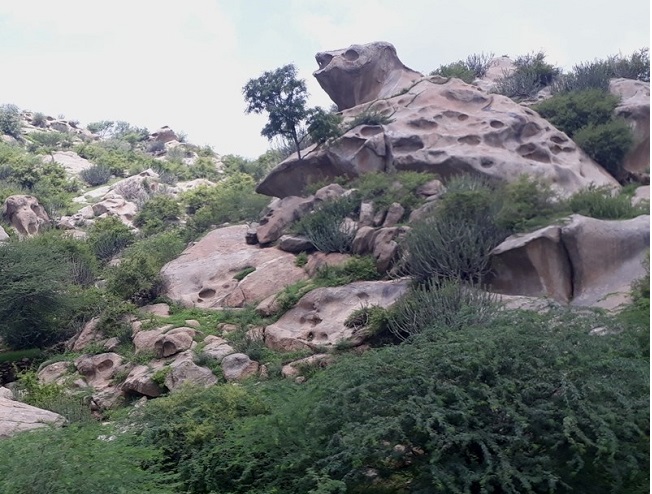
The wind and water erosion have shaped unique animal-like rock forms such as Owl Rock and Lion Rock. Located beyond the desert boundary, the area enjoys abundant greenery and plantation cover. The area includes villages like Sendra, Shergarh, Chitar, Amarpura, Lalpura, Chang, and Khera Sagrotan.
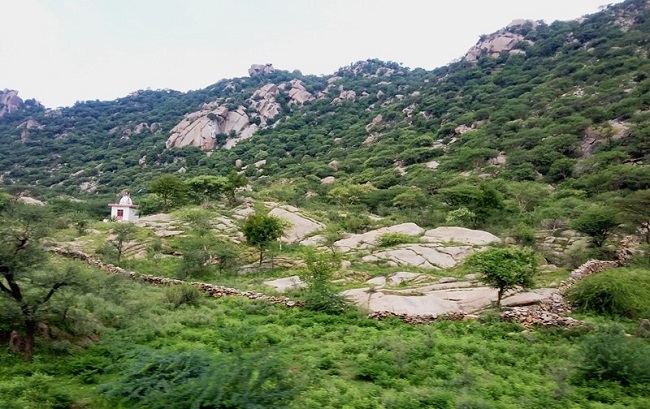
The area is located on the Sendra-Pali Road and is exposed on either side of NH-8 near Sendra. Wind and water, acting over thousands of years, sculpted the granite into marvellous structures. Sendra Granite is a plutonic igneous rock that is part of the Delhi supergroup of meta-sedimentary rocks. It was declared as a Geoheritage Site by the Geological Survey of India in 1977.
Geology
Sendra Ambaji granite refers to a major igneous intrusion belt in Rajasthan, India, known for its ancient, sculpted rock formations. This 360-km-long belt, part of the Delhi Supergroup, showcases impressive natural sculptures formed over millennia by wind and water, representing significant geological processes during the assembly of the Rodinia supercontinent. It’s studied for its complex petrogenesis (A-type, I-type granites) linked to ancient tectonic events. Intrudes metasedimentary rocks of the Delhi Supergroup within the South Delhi Fold Belt, along a major fault zone (Phulad Shear Zone).
The uniqueness of this Geo-heritage site is that all the varieties of granite outcrops are present here in the form of hills, hillocks, boulders, and sheet rocks. Apart from these physical attributes, the structural and weathering features are also exhibited in the form of joints, cracks, and potholes. The effects of wind and water erosion have converted part of the granite into animal-like forms like Owl rock, Lion rock, etc.
Also read- Varkala: Discover the Ultimate Cliffside Paradise & Soul-Soothing Beaches
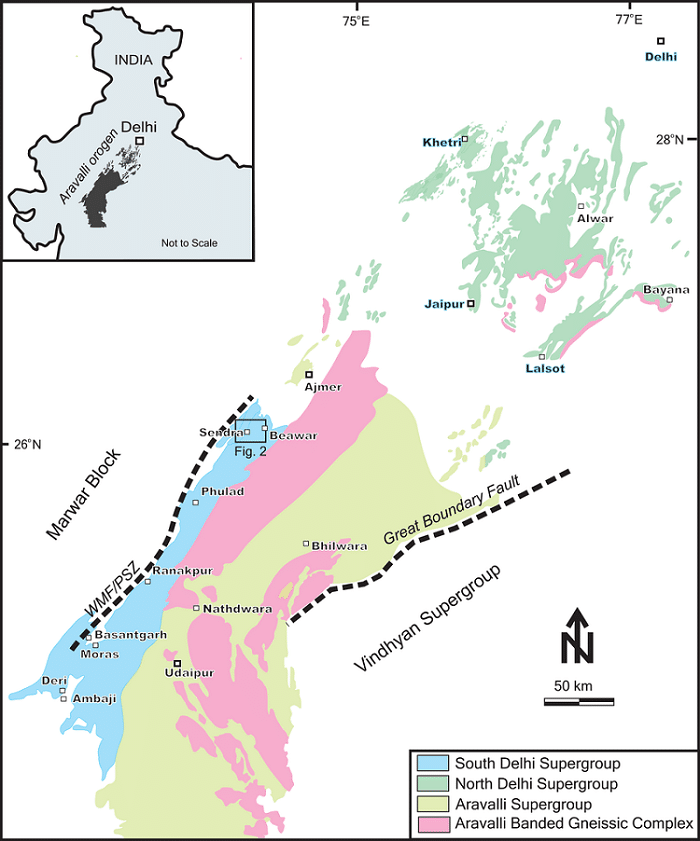
Sendra granite is an igneous batholith, covering roughly 11 km in length and 5 km in width. The general trend of the formation is NE-SW. This area includes villages like Sendra, Shergarh, Chitar, Amarpura, Lalpura, Chang, and Khera Sagrotan. Sendra Granite Complex is the ideal site for geology, geography students, and environmentalists.
Location
It is located in the Pali district, lying in the central part of Rajasthan state, but very near the Ajmer district boundary. The nearest town is Beawar, which is 15 km away. This area is approachable around the year by train and rail. The Jaipur –Ahmedabad broad-gauge rail line passes through the centre of this area.
Trains halt at Sendra station, one can also alight at Bar station, Best known for Bar Conglomerate, a Geo-Heritage Site which is 10 km from Sendra. The Pindwara-Ajmer national highway no. 25 via Beawar also passes through the centre of this granite area. As a matter of fact, the granite outcrops occur along both the left and right sides of the train as well as road routes.
Read- Geotourism And Modern Geotechniques
The best time is from September to March, but one can also go in the rainy season, as you get a better view of greenery and some small waterfalls. Woollens are required during the winter months. Entry to these granite areas is free of cost.
How to Reach Sendra Granite
To reach Sendra Granite, a geoheritage site in India’s Pali district, Rajasthan, you’ll likely travel by road along NH-8 (National Highway 8) (now NH-48), often breaking journey from major cities like Jodhpur or Jaipur, taking a bus or car to the specific location near Sendra village in the Pali region, and then finding local transport or walking to the granite formations themselves, as it’s a natural geological site.