 sutikshan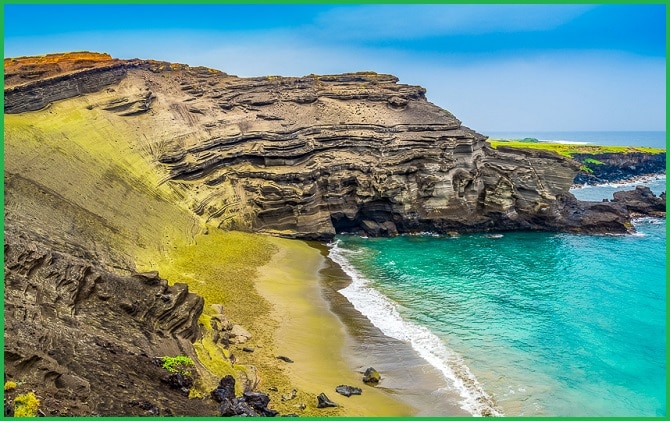
Green Sand Beach
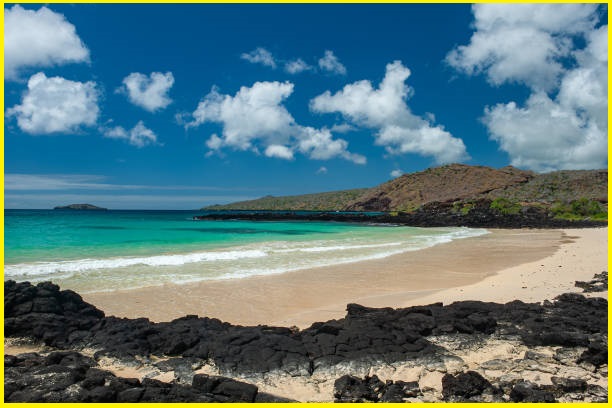
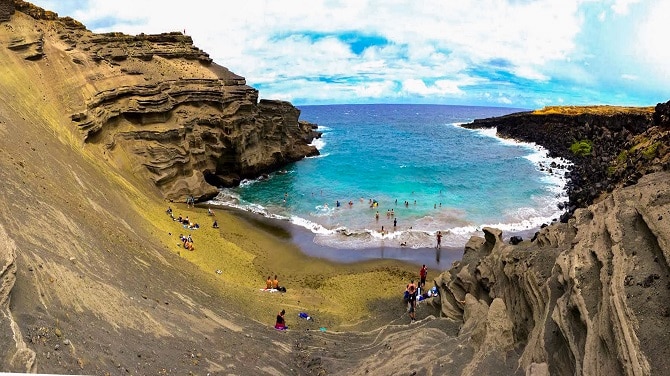
Green Sand Beach (Papakōlea Beach), a famous and rare natural wonder, is situated near South Point in the Kaʻū district of the Big Island of Hawaii. The beach gets its distinctive color from the mineral olivine, eroded from an ancient volcanic cinder cone. The beach is a result of a volcanic event that occurred approximately 49,000 years ago. The distinctive green color comes from the mineral olivine, a heavy crystal that eroded from the Puʻu Mahana cinder cone. Lighter sand is washed away, leaving the dense, green olivine crystals behind. Reaching the beach requires a moderate hike from the nearest accessible place.
Geology
Papakōlea Beach is situated within a bay partially encircled by Puʻu Mahana, a tuff ring formed over 49,000 years ago as part of the southwest rift of Mauna Loa. Unlike cinder cones, tuff rings (like Oʻahu’s Diamond Head) consist mainly of volcanic ash produced by violent interactions between magma and groundwater. Since its formation, ocean erosion has partially collapsed and worn down the tuff ring.
The source of the beach’s unique green color is the mineral olivine—a silicate mineral containing iron and magnesium (gem-quality olivine is called peridot). Olivine is a common component of Mauna Loa’s lava and was abundant in the Puʻu Mahana tuff ring’s fragmented volcanic material (pyroclastics).
The beach concentrates the green, ferrous-iron-rich olivine crystals because of their density. As the sea erodes the headland, the dense olivine crystals accumulate on the beach, while the less dense volcanic ash and sand are swept out to sea. This winnowing process is unique; elsewhere on the Big Island, olivine is enclosed in solid lava rock and tends to weather away instead of concentrating as beach sand. Olivine is locally nicknamed “Hawaiian Diamond” and is also found in Oʻahu’s Diamond Head landmark.
Also Read- Papakōlea Beach: Hawaiʻi’s Ultimate Rarest Olivine Sands Green Beach
Papakōlea Beach
Located in the Kaʻū district near South Point, Papakōlea Beach (known alternatively as Green Sand Beach or Mahana Beach) is a geological marvel. It derives its distinctive green hue from olivine sand eroded from the surrounding tuff ring. It shares the rare distinction of having green sand with only one other major beach worldwide: Punta Cormorant in the Galápagos Islands.
The Green Sand Beach in the World
Only a few green sand beaches exist globally, with the color derived from the mineral olivine eroded from the surrounding volcanic rock of Igneous origin. The most famous example is Papakōlea Beach in Hawaii. Other notable locations include:
Talofofo Beach in Guam
Punta Cormorant in the Galápagos Islands
A specific location in Norway
How to get to Green Sand Beach, Hawaii
The closest major airport to Green Sand Beach is Ellison Onizuka Kona International Airport (KOA) in West Hawaii. From KOA, the drive takes approximately 2.5 hours. To reach Green Sand Beach (Papakōlea) on the Big Island of Hawaii, drive to the South Point Road turnoff and park in the designated lot. From Parking, a 5.5-mile round-trip coastal hike is required.
Read- Geotourism And Modern Geotechniques
Despite an easy 275-foot elevation gain, the terrain is uneven, necessitating proper hiking shoes. Since the area lacks amenities, be sure to pack adequate water and snacks. To begin, park at the trailhead and walk 2.8 miles northeast. Although the trek across the hot and windy landscape requires effort, the unique destination and stunning views more than justify the work. Note that the trail down to the beach itself is very steep; please use caution and stick to the established path.