 sutikshan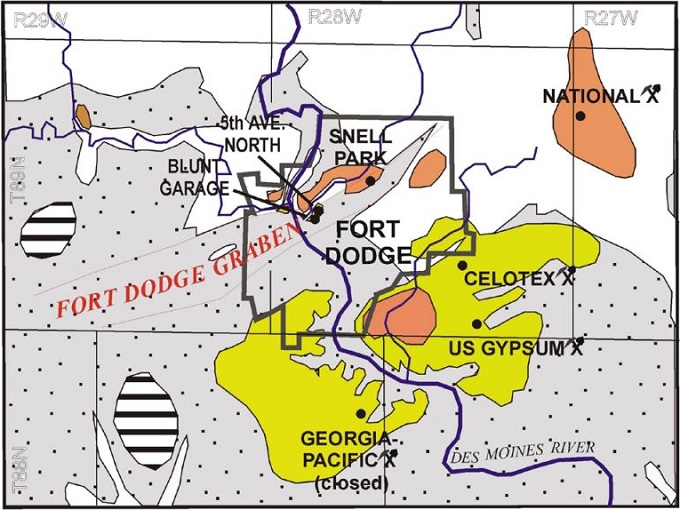
Fort Dodge gypsum deposit
The Fort Dodge gypsum deposit in Webster County is a major, high-grade industrial mineral resource, first discovered in 1849 and formally documented in 1852. Exposed along the Des Moines River, it remains one of Iowa’s main gypsum-producing regions, with ongoing mining supporting products such as drywall. Its strategic location, supported by an extensive network of railroads and highways, makes it ideal for efficient regional distribution of gypsum products.
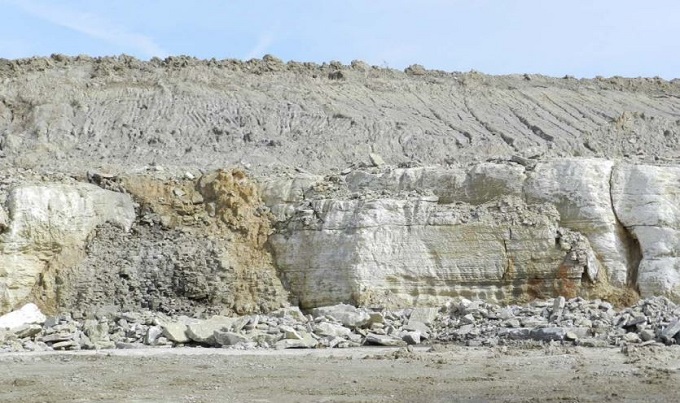
The gypsum occurs within a single, nearly horizontal bed, with a thickness ranging from about 10 to 25 feet. It is overlain by a mantle of drift approximately 60 to 80 feet thick, except where it is exposed along the Des Moines River and its tributaries. The deposit, along with the associated rocks, is believed to be of Permian age.
Geology
Gypsum discovered within the Mississippian rocks of Permian age (~250 million years old) of southern Iowa is of considerable scientific interest. However, its economic potential is still uncertain. Available evidence suggests that the deposit may be extensive and that the gypsum is of good quality. The presence of anhydrite, however, reduces its suitability for producing wall plaster and similar materials, and the proportion and relationship between gypsum and anhydrite will significantly influence its commercial value.
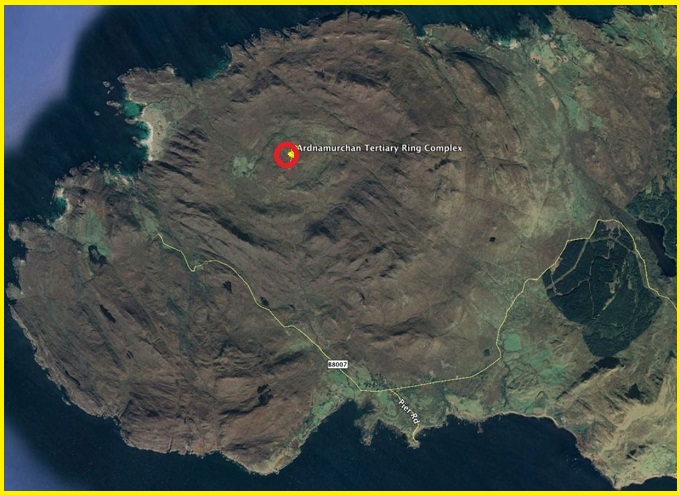
Also Read- Spectacular Ardnamurchan Ring Complex: Hidden Volcanic Secrets of Scotland
Although anhydrite is regarded by some manufacturers of Portland cement as nearly as useful as gypsum, certain factors hinder mining operations. These include the deposit’s depth—more than 500 feet below the surface—and the occurrence of substantial artesian water. On the positive side, the deposit is favorably located with respect to fuel sources and transportation networks, suggesting that, if developed, a strong regional market for gypsum products could emerge.
The “Fort Dodge” Formation
The gypsum in Webster County is unique because it is an outlier. While much of Iowa’s surface is covered by glacial till or limestone, this specific pocket of gypsum is a remnant of an ancient evaporating sea. It spans a relatively small area (roughly 90 square miles), but the beds are remarkably thick, sometimes reaching 20 to 30 feet.
Also read- Geotourism And Modern Geotechniques
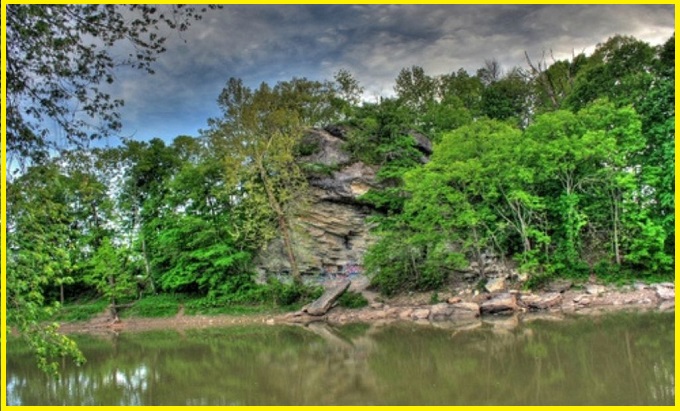
The Des Moines River acted like a natural “excavator.” Cutting a deep valley through the center of the deposit, it exposed the layers of gypsum and the underlying Coal Measures (Carboniferous strata), making it easy for early geologists to study without deep drilling.
How to reach Fort Dodge gypsum
Gypsum City OHV Park, located at 2390 Mill Road, Fort Dodge, IA 50501, is accessible via U.S. Routes 20 and 169. The 800-acre park offers 60 miles of trails for ATVs, dirt bikes, and UTVs. It operates from April 15 to October 15, featuring a campground with full hookups and requiring Iowa DNR registration.