 sutikshan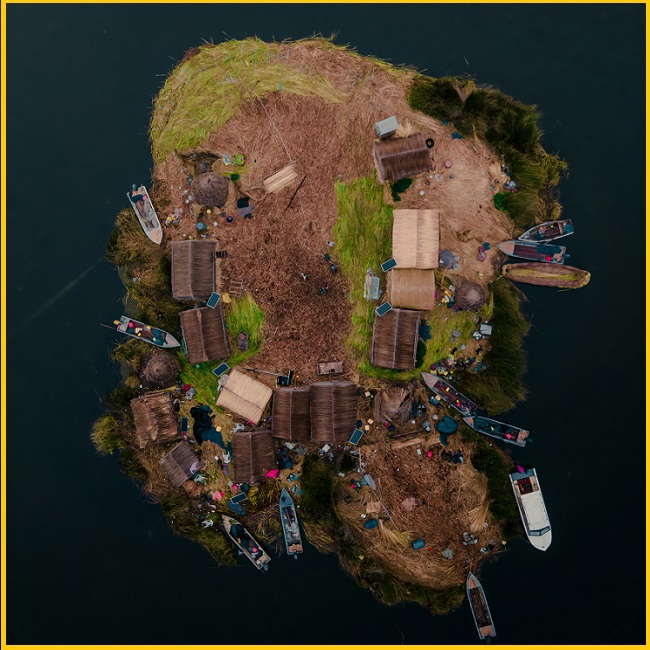
Lake Titicaca
Lake Titicaca is a vast freshwater lake located in the Andes on the border between Bolivia and Peru. Known as the world’s highest navigable lake, it is also the largest in South America by both surface area and water volume, sitting at an elevation of 3,812 meters. Lake Titicaca sits at the northern end of the endorheic Altiplano basin, high in the Andes along the border of Peru and Bolivia. The western shore lies within Peru’s Puno Region, while the eastern shore is part of Bolivia’s La Paz Department.
The lake is made up of two nearly separate subbasins, linked by the Strait of Tiquina, which narrows to 800 meters at its tightest point. The larger subbasin, Lago Grande (also called Lago Chucuito), has an average depth of 135 meters and reaches a maximum of 284 meters. The smaller subbasin, Wiñaymarka, averages 9 meters deep, with a maximum depth of 40 meters. Overall, Lake Titicaca has an average depth of 107 meters.
Lake Titicaca is fed by five major river systems—Ramis, Coata, Ilave, Huancané, and Suchez—listed in order of their flow volume. In addition, over 20 smaller streams flow into the lake. It contains 41 islands, several of which are densely populated. Covering 8,372 km² and sitting at 3,812 meters above sea level, Lake Titicaca is often called the highest navigable lake in the world—a distinction generally referring to commercial vessels.
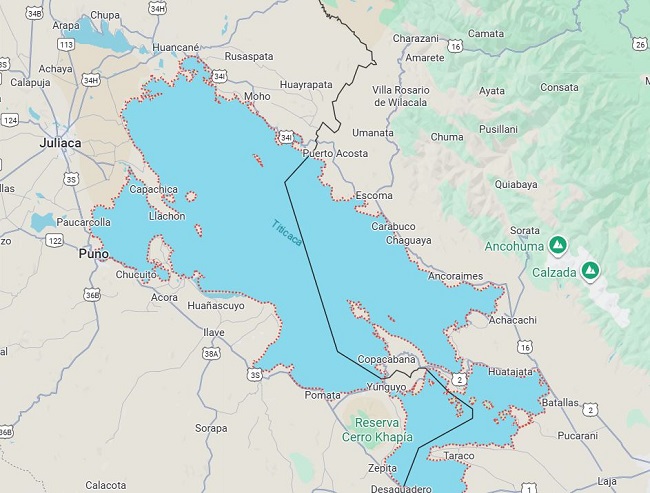
Lake Titicaca Map
Lake Titicaca, located at an elevation of 3,810 meters above sea level, straddles the border between Peru to the west and Bolivia to the east.
Lake Titicaca Tours
Lake Titicaca offers a variety of tour options, from short visits to the Uros Floating Islands to multi-day excursions including homestays on Amantani Island. Popular destinations include the Uros Islands, Taquile Island, and Isla del Sol (on the Bolivian side).
Destination
Uros Floating Islands:
Explore these extraordinary man-made islands crafted from reeds, and learn about the history, culture, and traditions of the Uros people.
Taquile Island:
Discover the island’s renowned textile traditions while enjoying breathtaking views of Lake Titicaca.
Amantani Island:
Immerse yourself in local life with a homestay experience, connecting with a family and exploring the island’s culture.
Isla del Sol (Bolivian side):
Visit the legendary island said to be the birthplace of the sun in Inca mythology, featuring ancient ruins and spectacular lake vistas.
If you like, I can also make an even snappier, travel-guide style version that feels more like quick highlights for tourists.
Lake Titicaca Floating Islands
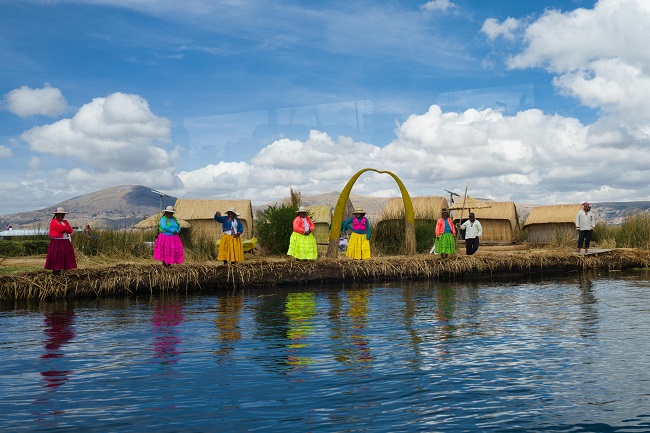
The “floating islands” of Lake Titicaca are man-made structures created by the Uros people using layers of totora reeds, a buoyant plant native to the lake. Constructed by weaving reed blocks, these islands serve as both homes and a means of preserving Uros cultural traditions. Visitors can explore this unique lifestyle through boat tours, which access islands located on both the Peruvian and Bolivian sides of the lake.
Totora Reeds:
The islands rest on a dense mat of totora reed roots, which give them their buoyancy.
Layered Construction:
Fresh totora reeds are continually added to the islands’ surfaces to replace the older reeds at the bottom, which gradually decompose.
Layered Construction:
Fresh totora reeds are constantly added to the islands’ surfaces to replace the lower layers, which gradually decompose over time.