 sutikshan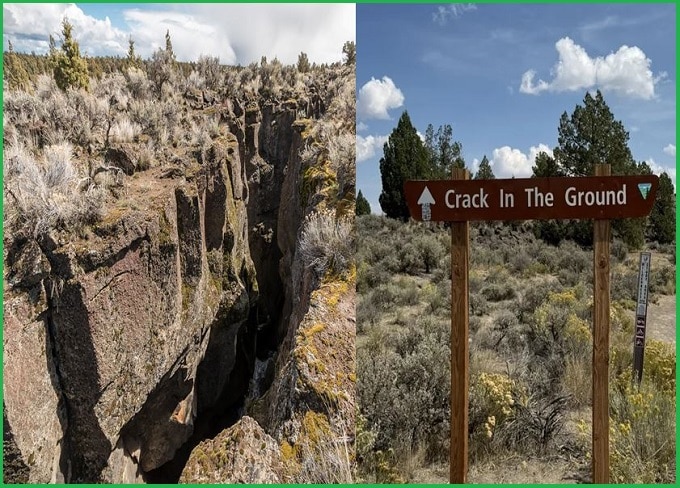
Crack in The Ground, Oregon
Crack-in-the-Ground, a 2-mile-long volcanic fissure in central Oregon near Christmas Valley, offers a unique and challenging hiking experience. The trail descends into the crack, which is up to 70 feet deep, providing a noticeable temperature drop.
Formed approximately 14,000 years ago, the feature resulted from a tension fracture in the basalt rock. This fracture occurred when lava flows from the Four Craters Lava Field created a shallow depression, and movement along a hidden fault caused the overlying rock to bend and snap. The arid climate has been key to its survival, limiting erosion and sedimentation, thus retaining its near-original state.
While the initial approach is easy, hikers should be prepared for steep sections and climbing within the fissure. A 4WD vehicle is recommended for navigating the bumpy dirt road to the trailhead.
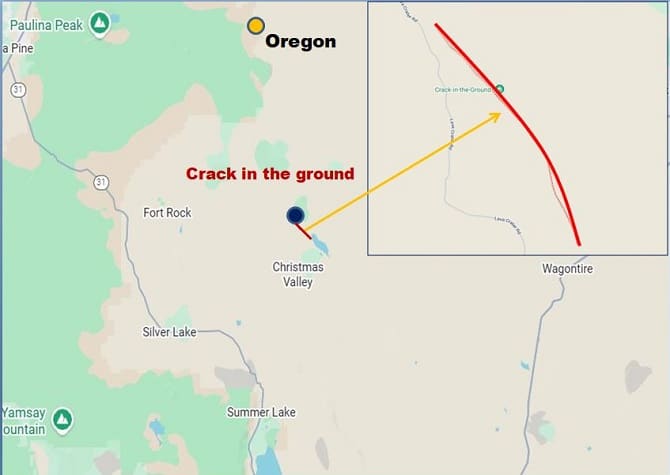
Crack in the Ground, Oregon Map
Crack-in-the-Ground is a major geological feature in the High Lava Plains of Central Oregon, located in northern Lake County, just north of the town of Christmas Valley. The site is accessed via rural, unpaved roads, and a high-clearance or 4WD vehicle is highly recommended due to the bumpy, dirt/gravel road conditions.
Geology- Crack in The Ground, Oregon
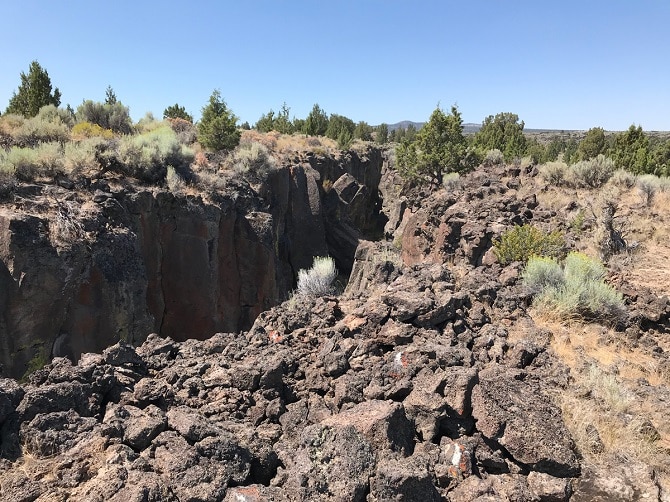
Crack-in-the-Ground presents a rough, irregular fissure wall with no lateral displacement and only minor vertical movement. Although the fissure is visibly open for over two miles, it continues invisibly to the northwest and southeast, traceable via aerial photographs. Where the crack is most defined, it measures 10 to 15 feet wide at the top, narrowing toward the bottom, with depths reaching up to 70 feet in some areas. Despite the minimal erosion typical of northern Lake County’s desert climate, rock has sloughed off the walls, and sand has accumulated at the base over time. Slumping walls have created natural bridges, providing access to the deeper, more cavernous sections where winter ice can sometimes be trapped and preserved through the summer.
Crack-in-the-Ground is directly associated with the Four Craters lava field, one of several recent volcanic centers scattered across the high lava plains of central Oregon. The fissure cuts through and disrupts the area’s older bedrock, which includes various ages of pre-existing volcanic rocks and lake-bed sediments.
Geological Explanation of the Crack-in-the-Ground Fissure
Crack-in-the-Ground is a prominent volcano-tectonic feature in Central Oregon, marking the western edge of a shallow, graben-like depression. This 3.2 km volcanic fissure, nearly 9 m deep, formed between 700,000 and 12,000 years ago as eruptions from the Four Craters Lava Field caused the older rock surface to slightly sink. The crack itself is a tension fracture created where Green Mountain lava flows draped over the uplifted side of a concealed fault zone, located at the southwest corner of the lava field. Hikers can walk the entire length of the main fissure and explore its smaller tributaries.
Crack-in-the-Ground is directly associated with the Four Craters lava field, one of several recent volcanic centers scattered across the high lava plains of central Oregon. The fissure cuts through and disrupts the area’s older bedrock, which includes various ages of pre-existing volcanic rocks and lake-bed sediments.
Length and difficulty of the Crack-in-the-Ground Trail
Crack-in-the-Ground is a rough, six-mile off-road journey featuring ruts, mud, and washboards; while 4WD isn’t essential, it significantly aids travel. A key difficulty is the lack of site information: though a wooden kiosk exists, it only offers material on native bats, not maps or trailhead directions, making locating the starting point difficult.
The hike into Crack-in-the-Ground was challenging and potentially dangerous due to conditions well below the surface. The shaded trail floor, averaging twenty degrees cooler than the surface, was still covered in packed snow and black ice, making the descent treacherous (I slipped immediately). Hikers are strongly advised to bring traction devices. While cell service is decent for emergencies, be prepared for a slow self-rescue or wait time for assistance. We used a surface trail north of the fissure to find a safer, middle entry point, which was less deep and drier. Crucially, the fissure has no guardrails or safety signage; exercise extreme caution, especially with young children or unleashed pets.
Also read- A Mysterious Hole in Basaltic shoreline-Thor’s Well Oregon
Crack-in-the-Ground Oregon Hiking Hours and Parking – Crack-in-the-Ground is a natural area open year-round with no official hiking hours or parking fees. However, accessing the trailhead requires driving approximately 7.5 to 8 miles down a rough, bumpy gravel road from Christmas Valley, Oregon. Due to the poor conditions, visitors should check road reports before heading out and be prepared for a difficult ride, particularly if driving a low-clearance vehicle.
Closest city with lodging to Crack-in-the-Ground- The closest city with lodging to the Crack-in-the-Ground in Oregon is Christmas Valley. Christmas Valley has lodging, campgrounds, and other services, and is the closest service center to the geological site.
Is 4WD necessary for Crack-in-the-Ground road access?
Yes, 4WD is recommended for accessing the Crack-in-the-Ground road as it’s a gravel or dirt road, which provides better traction and safety than a 2WD vehicle. Engaging your 4WD (specifically in 4H or high-range 4WD) will give you increased grip, shorter braking distances, and more control, which is especially important on loose surfaces like gravel, as well as during wet or other slippery conditions.
Also read- Geotourism and Modern Geotechniques
Hiking inside the Crack-in-the-Ground Temperature Difference- Hiking at Crack-in-the-Ground in Oregon offers a significant temperature difference, with the bottom of the fissure being up to 20 to 30 degrees Fahrenheit cooler than the surface. This is because the fissure’s depth provides shade and traps cooler air, offering a welcome respite from the heat of the surrounding desert.
Best time of year to visit Crack-in-the-Ground, Oregon- The best times of year to visit Crack-in-the-Ground, Oregon are spring (March–May) and fall (September–November). These seasons offer moderate temperatures, avoiding the intense heat of summer and the possibility of winter storms.